
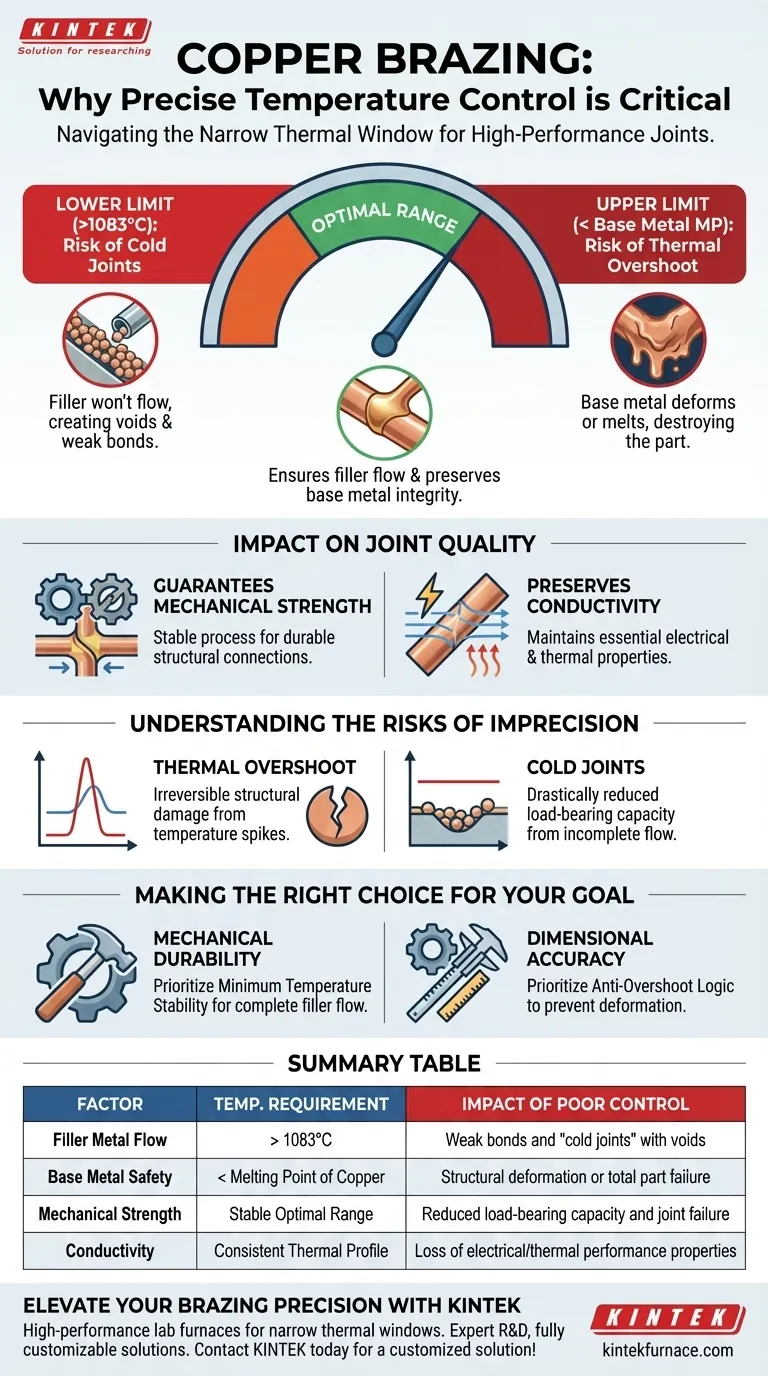
Precision is the difference between a high-performance joint and a scrapped component. In copper brazing, you are operating within a strictly limited thermal range. A precise temperature control system is critical because it ensures the heat is high enough to melt the filler metal for proper flow, yet strictly low enough to prevent the base metal from melting or deforming.
Precision temperature control navigates the narrow operating window required for copper brazing. It maintains the delicate balance between liquefying the filler and preserving the structural integrity of the base metal, ensuring the final joint possesses the necessary mechanical strength and conductivity.

Navigating the Narrow Operating Window
The Lower Limit: Ensuring Proper Flow
To create a successful braze, the system must reach a specific thermal threshold.
According to standard process requirements, the temperature must typically exceed 1083°C to melt the filler metal. If the control system allows the temperature to dip below this point, the filler will not flow correctly, resulting in a weak or incomplete bond.
The Upper Limit: Preventing Material Failure
While high heat is necessary, there is a hard ceiling that cannot be breached.
The temperature must remain strictly below the melting point of the base metal. If an imprecise control system allows the temperature to overshoot this limit, the base copper will suffer deformation or even melt completely, destroying the part.
The Impact on Joint Quality
Guarantees Mechanical Strength
The primary goal of brazing is a durable structural connection.
An accurate control system stabilizes the process within the optimal range. This consistency is required to form a bond that meets mechanical strength specifications, preventing failure under stress.
Preserves Conductivity
Copper is frequently selected for its electrical and thermal properties.
Precision heating ensures these properties are not compromised during the joining process. Proper temperature management guarantees the electrical or thermal conductivity of the resulting joint remains intact.
Understanding the Risks of Imprecision
The Danger of Thermal Overshoot
In systems with poor control logic, "overshoot" is a common failure mode.
If the system reacts too slowly to rising heat, the temperature may momentarily spike above the safe window. Even a brief excursion above the base metal's melting point can cause irreversible structural damage.
The Risk of Cold Joints
Conversely, inconsistent heating leads to "cold joints."
If the system fluctuates and fails to maintain the minimum required temperature (above 1083°C), the filler metal may bead up rather than flow. This creates voids in the joint, drastically reducing its load-bearing capacity.
Making the Right Choice for Your Goal
To apply this to your production environment, assess your priorities based on the component's end-use:
- If your primary focus is mechanical durability: Ensure your control system prioritizes minimum temperature stability to guarantee complete filler flow and bond penetration.
- If your primary focus is dimensional accuracy: Prioritize a control system with anti-overshoot logic to ensure the base metal never approaches its deformation point.
The quality of your temperature control system is the single most important factor in securing the reliability of your copper brazed assemblies.
Summary Table:
| Key Factor | Temperature Requirement | Impact of Poor Control |
|---|---|---|
| Filler Metal Flow | > 1083°C | Weak bonds and "cold joints" with voids |
| Base Metal Safety | < Melting Point of Copper | Structural deformation or total part failure |
| Mechanical Strength | Stable Optimal Range | Reduced load-bearing capacity and joint failure |
| Conductivity | Consistent Thermal Profile | Loss of electrical/thermal performance properties |
Elevate Your Brazing Precision with KINTEK
Don’t let thermal overshoot or inconsistent heating compromise your production quality. KINTEK provides high-performance lab high-temp furnaces, including vacuum and tube systems, specifically designed to handle the narrow thermal windows required for copper brazing.
Backed by expert R&D and manufacturing, our systems are fully customizable to meet your unique metallurgical needs. Ensure the mechanical strength and conductivity of your assemblies—Contact KINTEK today for a customized solution!
Visual Guide
References
- Er. RoshanY. Gonnade. Copper Brazing Technology. DOI: 10.22214/ijraset.2025.73740
This article is also based on technical information from Kintek Furnace Knowledge Base .
Related Products
People Also Ask
- How does vacuum heat treating affect the grain structure of metal alloys? Achieve Precise Microstructure Control
- What is one of the most important uses of vacuum heat treating furnaces in aerospace? Achieve Superior Strength in Aircraft Alloys
- What are the benefits of using vacuum heat treating furnaces for metal alloys? Achieve Superior Metal Properties and Performance
- What is the temperature of a vacuum furnace brazing? Optimize Your Joint Strength and Cleanliness
- What are the steps involved in a typical vacuum brazing treatment? Master the Process for Strong, Clean Joints
