The final density of your sintered alumina component is determined not by the furnace, but by the invisible network of organic molecules you select for your slip.
The choice of organic binder and dispersant directly governs whether your slurry can be cast into a dense, homogeneous green body and whether that green body survives the critical burnout phase in a high-temperature lab furnace. Without the right dispersant, particles flocculate and trap water, creating stress concentrations that lead to cracks during drying and sintering. Without the right binder, the green part lacks sufficient strength to be handled, and its subsequent pyrolysis may release gases violently, leaving internal voids or catastrophic defects. Every subsequent furnace step—burnout, sintering, final densification—depends absolutely on the chemical foundation you lay in the liquid slurry.
The selection of organic dispersants and binders is not a routine formulation step; it is the key to achieving uniform particle packing, preventing catastrophic burnout failures, and ensuring the final ceramic reaches its designed density and mechanical properties. Everything else in high-temperature processing is downstream of this initial chemistry.
Why Alumina Slip Casting Demands a Perfect Chemical Foundation
The High‑Solids, Low‑Viscosity Paradox
To produce a dense, distortion‑free component, an alumina slip must carry 40–50 volume percent solid particles while remaining fluid enough to flow smoothly into a porous mold.
Alumina alone has no natural plasticity in water; it forms a dense, non‑flowing sediment unless intervened upon by a carefully tailored additive system.
Achieving this paradoxical combination of high load and low viscosity is the first gate the formulation must pass, and it is wholly dependent on the dispersant.
How Dispersants Unlock Maximum Green Density
A polyelectrolyte dispersant such as ammonium polyacrylate prevents the fine particles from agglomerating into flocculated clusters that trap water and generate low‑density, heterogeneous packing.
When particles are held apart by strong interparticle repulsive forces—both electrostatic and steric—they can rearrange into a tightly packed, uniform configuration during mold consolidation.
Well‑dispersed slurries reach maximum green density at relatively low applied pressures (above 0.5 MPa), a density that becomes pressure‑independent, whereas flocculated slurries remain pressure‑sensitive and riddled with microstructural inhomogeneities.
The pH Tipping Point for Polyelectrolyte Dispersants
The performance of a carboxylate‑based dispersant such as ammonium polyacrylate is intimately tied to suspension pH.
At low pH values around 3.5, the carboxylic acid groups remain largely non‑dissociated; the polymer chains collapse into tight coils that provide minimal electrostatic repulsion.
Raising the pH above 8.5 fully dissociates those groups into charged COO⁻ species, causing the chains to expand and establish both a strong electrostatic barrier and a steric hindrance layer.
Controlling this pH ensures the negatively charged polyelectrolyte strongly adsorbs onto the positively charged alumina surfaces, preventing early flocculation and guaranteeing a uniform particle arrangement that minimizes differential shrinkage during later heat treatment.
The Hidden Danger: What Happens During Furnace Heat Treatment
Organic Binders: From Temporary Glue to Critical Structural Partner
Once water is drawn out by the plaster mold, the green body must retain its shape and withstand handling. Methyl cellulose or polyvinyl alcohol binders coat the particles and, after drying, provide green body strength through polymer bridges.
This temporary network holds the delicate particle arrangement in place until the body enters the high‑temperature furnace, where the binder’s second, less visible role—cleanly disappearing—becomes paramount.
The Pyrolysis Window: Why “Clean Burnout” Is Non‑Negotiable
During the initial heating stage in a lab furnace, the organic additives undergo complete, controlled thermal burnout before sintering temperatures are reached.
If the binder degrades too rapidly or unevenly, the sudden internal gas pressure can cause surface blisters, internal cracks, or trapped porosity that persist into the final sintered part.
Proper selection of binder chemistry and its thermal decomposition profile ensures a gentle, stepwise removal that leaves the green microstructure intact, paving the way for uniform volumetric shrinkage and maximum theoretical density without residual carbon.
The Cost of Inorganic Contamination
The exclusive use of organic additives is non‑optional for technical alumina destined for high‑temperature sintering.
Inorganic binders or dispersants that contain sodium, phosphate, or other ions cannot be removed by heat; they remain as residual ionic impurities in the furnace.
At sintering temperatures, these impurities react with alumina to form unintended liquid phases that trigger uncontrolled grain growth and degrade the material’s electrical insulation, mechanical strength, and thermal performance.
Organic additives, by contrast, pyrolyze almost completely, leaving virtually no contamination behind.
Understanding the Trade‑offs in Additive Selection
Viscosity vs. Green Strength
A higher binder concentration boosts green strength and makes the dried part more robust, but it also increases slurry viscosity and can hinder particle packing if overdone.
Excessive binder leads to a thicker polymer film between particles, which during burnout evolves more gas and raises the risk of delamination or cracking.
The formulation must balance just enough binder to survive demolding and handling, with the minimum that still permits a clean, defect‑free thermal debinding.
The Burnout Profile – Too Fast, Too Slow, or Just Right?
A binder that burns out over a very narrow temperature range may generate an abrupt pressure pulse even if its total char yield is low.
Formulators often combine methyl cellulose (which has a specific decomposition onset) with plasticizers like glycerin and lubricants like ammonium stearate to broaden the burn‑off window and make the gas evolution more gradual.
The ultimate goal is a controlled pyrolysis schedule that the lab furnace’s ramp rate can accommodate without subjecting the part to mechanical stress.
Making the Right Choice for Your High‑Temperature Process
Each processing goal demands a slightly different emphasis in the organic additive system. Align your selection with the primary objective:
- If your primary focus is achieving maximum theoretical density: Prioritize a polyelectrolyte dispersant (like ammonium polyacrylate) at a fully dissociated pH (>8.5) to create a well‑dispersed, high‑packing slurry that yields a uniformly dense green body, and combine it with a clean‑burning binder that leaves no carbon residue.
- If your primary focus is complex, thin‑walled geometries: Emphasize binder systems and plasticizers that provide high green strength and flexibility, but always verify that the expanded burnout cycle still fits within your furnace’s thermal profile without cracking the delicate walls.
- If your primary focus is electrical or thermal insulation performance: Use only high‑purity organic additives to eliminate the risk of sodium or phosphate contamination; even trace inorganic residues can form a glassy grain‑boundary phase that ruins dielectric strength and thermal conductivity.
- If your primary focus is process reliability and yield: Invest in characterizing the exact pH‑viscosity curve of your suspension and the TGA‑derived decomposition profile of your binder blend; a well‑understood additive system turns burnout from a source of scrap into a predictable, repeatable furnace step.
Your alumina’s journey from powder to precision component hinges on the invisible, meticulously chosen chemistry that burns away without a trace.
Summary Table:
| Additive Type | Slurry & Green Body Role | High-Temp Furnace Impact | Key Selection Tip |
|---|---|---|---|
| Polyelectrolyte Dispersant | Prevents agglomeration; achieves low viscosity with high solid loading | Enables uniform green density & minimizes differential shrinkage | Maintain pH > 8.5 to maximize particle charge repulsion |
| Organic Binder | Connects particles to provide structural green strength for handling | Pyrolyzes fully during burnout to leave a defect-free structure | Select clean-burning polymers to eliminate carbon residue |
| Plasticizers & Lubricants | Imparts flexibility & reduces internal stress in complex shapes | Broadens gas evolution window to prevent cracking or blistering | Blend with binders to soften thermal decomposition rate |
Optimize Your Ceramic Debinding & Sintering Process with KINTEK
Achieving defect-free, high-density alumina components requires both precise slurry chemistry and exact thermal control. KINTEK delivers industry-leading, customizable high-temperature furnace solutions—including muffle, tube, rotary, vacuum, CVD, and controlled-atmosphere furnaces—specifically engineered to accommodate precise debinding ramp rates and high-temperature sintering cycles.
Whether you are refining lab R&D slurries or scaling high-purity ceramic production, our technical experts are here to support your precision heat treatment needs. Contact us today to discuss your tailored furnace solutions!
Related Products
- High Temperature Muffle Oven Furnace for Laboratory Debinding and Pre Sintering
- 1400℃ High Temperature Laboratory Tube Furnace with Alumina Tube
- Spark Plasma Sintering SPS Furnace
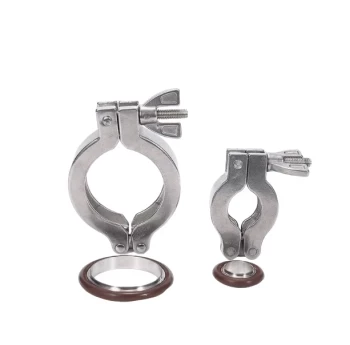
- Stainless Steel Quick Release Vacuum Chain Three Section Clamp
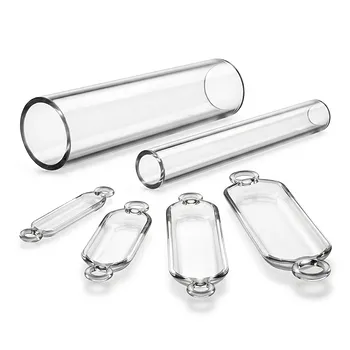
- High Purity Quartz Tube and Quartz Boat for Laboratory Furnaces
People Also Ask
- What thermal phenomena occur during polymer binder burnout in ceramic green bodies? Lab Furnace Guide
- Why is controlled heat treatment in a muffle furnace necessary for calcined clay? Achieve Optimal Pozzolanic Activity
- What role does a high-temperature muffle furnace play in STFO synthesis? Achieve Pure Perovskite Results
- How does a high-temperature muffle furnace facilitate the formation of LaNbxAl1−xO3+δ perovskite structures? Key Roles
- What role does a high-temperature muffle furnace play in the formation of biochar catalysts? Master Catalyst Synthesis