Without monitoring electrophoretic mobility and zeta potential, a ceramic slurry’s journey through a high-temperature atmosphere furnace begins with a structural time bomb. These measurements quantify the electrostatic repulsion between particles in suspension—the decisive factor that prevents uncontrolled clustering during casting. Stable, well-dispersed slurries pack particles into a dense, geometrically uniform green body. That microstructure directly determines whether the subsequent controlled-atmosphere thermal cycle will produce a fully dense, crack-free component or an internally fractured reject riddled with trapped porosity.
The core problem is not merely slurry stability. It is that every void defect or density variation locked into the green compact becomes a near-irreversible flaw during rapid solid-state diffusion and late-stage pore closure. Optimizing zeta potential is how you give the atmosphere furnace a green body that can actually be refined into a reliable advanced ceramic.
The Hidden Link Between Colloidal Stability and Furnace Performance
Electrostatic Repulsion: The Force That Defeats Aggregation
Electrophoretic mobility measurements let you calculate the zeta potential, the electrical potential at the slip plane where the particle’s bound liquid layer ends. When the magnitude of this potential is high, strong electrostatic double-layer repulsion dominates and overcomes the ever-present van der Waals attraction. Particles glide past one another as independent entities instead of crashing together into loose, fractal aggregates.
If the zeta potential drifts close to zero—near the isoelectric point (IEP)—those repulsive barriers collapse. Rapid coagulation traps micrometer-sized voids inside the clusters. These voids, once formed, are difficult to remove through mechanical casting forces alone. Every flocculated unit becomes a defect seed that will haunt the high-temperature stage.
From Stable Slurry to Densely Packed Green Body
A high-magnitude zeta potential directly translates into a low-viscosity slurry even at high solids loading. Because particles can rearrange easily under shear, they settle into a tightly packed configuration during casting or tape casting. The result is a green compact with maximized density and minimal pore size variation.
In this state, the particle network allows uniform shrinkage paths. There are no large aggregate-boundary pores, and the distribution of capillary forces during drying is symmetrical. You get a geometrically predictable precursor—the only kind of precursor that can survive a demanding sintering cycle without distortion.
Why Green Density is Non-Negotiable for High-Temperature Sintering
The Diffusion Highway Must Be Unobstructed
Densely packed green compacts bring particles into intimate contact across the entire volume. During heating in an atmosphere furnace, this contact network accelerates solid-state volume diffusion. Material moves efficiently from grain boundaries into neighboring pores, smoothly eliminating them. When the green body is already dense, you also dramatically reduce the risk of grain growth anomalies—large pores that don’t shrink but instead coarsen grains around them, permanently damaging mechanical properties.
The primary reference makes this chain explicit: optimal zeta potential ensures maximum green density, which promotes rapid diffusion and prevents thermal stress cracking. That stress arises precisely because diffusion pathways are disrupted by irregular porosity. A body that shrinks unevenly develops internal tension that no amount of post-sintering annealing can truly erase.
Killing Differential Shrinkage Before It Starts
A heterogeneous green body—one with sporadic dense and porous zones created by flocculation—does not shrink uniformly. During the ramp-up in a high-temperature atmosphere furnace, those differential strains cause warping, cracking, and outright fracture. Even inert gas purges and vacuum cycles cannot mechanically fix a body that is tearing itself apart from within.
Supplementary references stress this point repeatedly: uniform particle packing prevents differential shrinkage. But uniformity isn’t an aesthetic preference. It is a physical requirement to keep the macroscopic shape intact as the part loses 15–40% of its linear dimensions during solid-state sintering.
The Synergy with Controlled Atmosphere Furnaces
Atmosphere Furnace Capabilities: Gas Escape and Phase Control
High-temperature atmosphere furnaces do more than just apply heat. Vacuum, argon, nitrogen, or controlled reducing environments serve two critical roles. First, they enable insoluble gases trapped inside closed pores to escape when the pore network is still open. Second, they suppress oxidation, phase decomposition, and volatile element loss in non-oxide and specialized ceramics like Si₃N₄, SiC-reinforced composites, or lead-based ferroelectrics.
Yet these furnaces have no magic to fix poor packing. A late-stage closed pore filled with argon will stop densification permanently if the gas’s solubility in the ceramic matrix is low. A vacuum or highly diffusive gas atmosphere helps only if the pore is small and isolated, with a path for gas diffusion through the solid. Larger, irregular pores from agglomeration simply persist or expand, causing compact swelling.
The Critical Point: Green Body Structure Dictates Atmospheric Efficiency
If the green compact enters the furnace with a network of large, interconnected voids created by flocculation, no atmosphere trick can erase them. Those voids close late and trap gas when the surrounding matrix is already nearly dense. The diffusion distance becomes too large, and the furnace’s ability to chemically adjust stoichiometry or accelerate vacancy migration is wasted on a part that can never reach full density.
Monitoring zeta potential is therefore the first and most cost-effective process control for high-temperature atmosphere processing. You optimize the colloidal state to produce a green body with a narrow pore size distribution and a high fraction of open porosity—exactly the condition that allows the furnace atmosphere to finish the job. You are engineering the precursor so that the furnace’s atmospheric capabilities become a final densification tool, not a desperate salvage operation.
Understanding the Trade-offs
The Over-Stabilization Trap
Chasing an excessively high zeta potential can backfire. A large excess of deflocculant or an extreme pH might initially disperse particles beautifully, but it can also swell electrical double layers so much that the maximum achievable solids loading drops. You end up with a stable but too-dilute slurry that produces a low green density after drying—defeating the entire purpose. The goal is an optimum zeta potential that balances repulsion with achievable particle crowding.
Multicomponent Systems and Heterocoagulation
Advanced ceramics often mix oxides, non-oxides, and sintering aids, each with a different isoelectric point. A pH that gives one component a +30 mV zeta potential might push another to its IEP, causing selective flocculation. Zeta potential measurement is the only way to map these interactions and find a processing window where all components repel each other simultaneously. Ignoring this leads to cryptic density variations that appear only after sintering.
Measurement Conditions and Real-World Correlation
Zeta potential is measured in dilute suspensions, often far from the high solids loading of a real casting slip. Changes in ionic strength, counterion concentration, and even dissolved species from the atmosphere can shift the IEP. The value you measure on a lab instrument is a reliable indicator but not a standalone guarantee. It must be coupled with rheological tests on the actual slurry to confirm that the stability predicted by zeta potential translates into practical flow and packing behavior.
Applying This Insight to Your Process
Electrophoretic mobility is not an academic curiosity; it is a direct lever you can pull to build a green body that the atmosphere furnace can successfully densify.
- If your primary focus is achieving maximum final density: Routinely verify that the absolute zeta potential exceeds 30 mV at your chosen processing pH and additive level before casting. Confirm this stability persists at the intended solids loading.
- If your primary focus is processing non-oxide ceramics under inert or vacuum conditions: Prioritize zeta potential optimization even more aggressively. Any green density deficit or agglomerate will be locked in by the rapid diffusion kinetics of these often-covalently-bonded materials, where no forgiving glassy phase will flow to heal the damage.
- If your primary focus is complex shape forming (tape casting, intricate slip casting): Use zeta potential versus pH curves to select a combination of dispersant and pH that yields both high stability and a yield stress low enough to fill every mold detail without trapping air.
- If your primary focus is batch-to-batch reproducibility: Treat zeta potential as a critical quality metric. A gradual shift signals a change in powder surface chemistry—perhaps from humidity exposure or milling contamination—that will silently alter green density and cause sintering rejects even when the furnace atmosphere recipe is unchanged.
When you control the colloidal electrostatic state first, you hand the high-temperature atmosphere furnace a green body that can actually be perfected, pore by pore, into a reliable engineering ceramic.
Summary Table:
| Process State | Colloidal & Green Compact Condition | Sintering Outcome in Atmosphere Furnace |
|---|---|---|
| **Optimal Zeta Potential (> | 30 | mV)** |
| Low Zeta Potential (Near IEP) | Particle coagulation, loose fractal aggregates, trapped micro-voids | Differential shrinkage, structural warping, trapped porosity & cracking |
| Over-Stabilization (Excess Additives) | Electrical double-layer swelling, low achievable solids loading | Lower green density, degraded final mechanical properties |
| Atmospheric Gas Purge/Vacuum | High open porosity with narrow pore size distribution | Effective gas evacuation, phase control, and suppressed oxidation |
Achieve flawless sintering results and maximize material density with advanced thermal technology. At KINTEK, we supply high-performance laboratory equipment and customizable high-temperature furnaces—including atmosphere, vacuum, muffle, tube, rotary, CVD, and induction melting systems—tailored to meet the strict processing requirements of advanced ceramics. Don't let green body defects compromise your thermal cycles. Contact our experts today to find the ideal furnace solution for your lab!
Related Products
- Multi Heating Zones CVD Tube Furnace Machine for Chemical Vapor Deposition Equipment
- Multi Zone Laboratory Quartz Tube Furnace Tubular Furnace
- Electric Rotary Kiln Small Rotary Furnace for Activated Carbon Regeneration
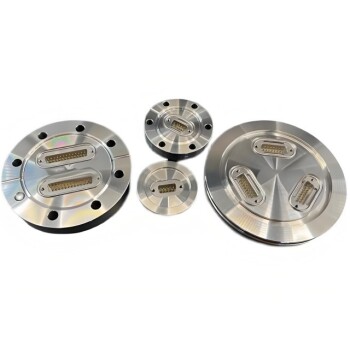
- CF KF Flange Vacuum Electrode Feedthrough Lead Sealing Assembly for Vacuum Systems
- Electric Rotary Kiln Pyrolysis Furnace Plant Machine Small Rotary Kiln Calciner
People Also Ask
- What is the function of a multi-zone tube furnace in CVD synthesis? Master 2D In2Se3 Nanosheet Precision
- Why are multi zone tube furnaces particularly useful for nanomaterial research? Unlock Precise Thermal Control for Advanced Synthesis
- What temperature-related capabilities make multi zone tube furnaces valuable for research? Unlock Precision Thermal Control
- What environmental protection applications utilize multi zone tube furnaces? Unlock Precision in Waste Treatment and Green Tech
- What role do multi zone tube furnaces play in new energy research? Unlock Precise Thermal Control for Innovation