
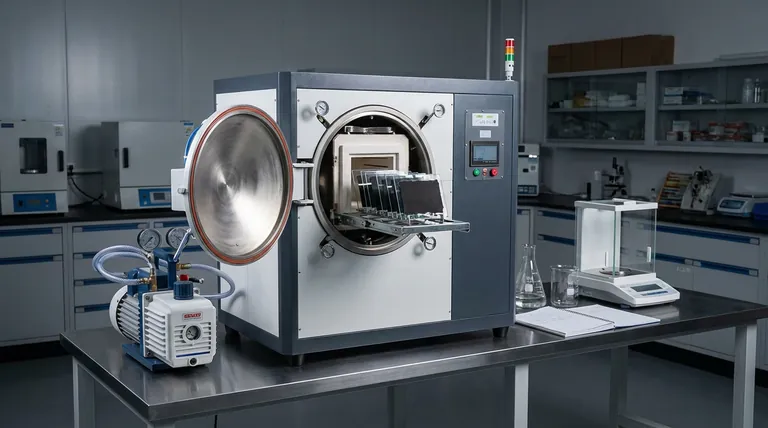
A vacuum oven is the preferred method for drying MXene-modified electrodes because it creates a low-pressure environment that lowers the boiling point of solvents, allowing for rapid evaporation at safe, low temperatures. Most critically, this oxygen-depleted environment prevents the highly reactive MXene nanosheets from oxidizing, thereby preserving their electrochemical performance.
Core Takeaway Vacuum drying solves the fundamental conflict between the need to remove solvents and the sensitivity of MXene to heat and oxygen. By reducing pressure, it enables effective drying at temperatures as low as 50°C, preventing thermal oxidative degradation and maintaining the material's conductive network and surface chemistry.
The Critical Challenge: MXene Sensitivity
Preventing Chemical Oxidation
MXene is a two-dimensional material characterized by high surface activity. When exposed to oxygen in the air, particularly at elevated temperatures, it is highly susceptible to oxidation. Using a vacuum oven effectively eliminates oxygen from the drying chamber, neutralizing this threat.
Preserving Electrochemical Activity
The oxidation of MXene leads to the degradation of its inherent electrochemical properties. By drying in a vacuum, you preserve the specific surface functional groups that are essential for the electrode's performance. This ensures the material retains the high conductivity and capacity required for advanced applications.
The Physics of Vacuum Drying
Lowering the Boiling Point
The primary mechanism at work is the reduction of environmental pressure. Lower pressure significantly drops the boiling point of solvents like water, ethanol, or methanol. This allows these liquids to transition into vapor much faster than they would under atmospheric pressure.
Gentle Thermal Treatment
Because the solvents boil at lower temperatures, the oven does not need to run at high heat. Drying can occur efficiently at relatively low temperatures, such as 50°C. This "gentle" approach protects the electrode from thermal stress that might occur if higher temperatures were required to drive off the solvent.
Structural and Morphological Benefits
Protecting Pore Structure
Rapid evaporation at low temperatures helps maintain the physical architecture of the electrode. This process preserves the internal pore structure of the material, preventing the structural collapse that can occur during slow, high-temperature atmospheric drying.
Ensuring Uniform Adhesion
The vacuum environment facilitates a controlled removal of solvents, which helps MXene layers adhere firmly and uniformly to substrates like carbon fiber. This uniform adhesion is vital for protecting the conductive network and ensuring long-term mechanical stability of the electrode.
Critical Operational Considerations
Managing Evaporation Rates
While vacuum drying accelerates evaporation, it requires precise control. The goal is to remove solvents rapidly enough to be efficient, but the pressure and temperature must be balanced to prevent violent evaporation, which could disrupt the delicate electrode coating.
Equipment Complexity
Compared to standard atmospheric ovens, vacuum drying requires more complex hardware, including vacuum pumps and seals. Maintaining a consistent vacuum level is non-negotiable; a leak during the heating phase can lead to rapid oxidation, instantly compromising the batch.
Making the Right Choice for Your Goal
To maximize the performance of your MXene-modified electrodes, tailor your drying parameters to your specific objectives:
- If your primary focus is Conductivity: Prioritize maintaining a strict vacuum seal to ensure absolute oxygen exclusion, preserving the metallic nature of the MXene.
- If your primary focus is Structural Integrity: Keep the temperature at the lower end of the effective range (e.g., 50°C) to minimize thermal stress while relying on reduced pressure for solvent removal.
By leveraging the physics of vacuum drying, you ensure that the delicate chemical and physical properties of MXene are locked in, rather than lost during the fabrication process.
Summary Table:
| Feature | Vacuum Drying Benefit for MXene |
|---|---|
| Oxygen Levels | Near-zero concentration; prevents chemical oxidation of nanosheets. |
| Operating Temperature | Effective at low temps (e.g., 50°C); prevents thermal degradation. |
| Evaporation Rate | Faster solvent removal due to reduced atmospheric pressure. |
| Structural Integrity | Preserves pore architecture and ensures uniform adhesion to substrates. |
| Electrochemical Impact | Maintains high conductivity and surface functional group activity. |
Elevate Your Material Research with KINTEK Precision
Don't let oxidation compromise your MXene-modified electrodes. KINTEK's high-performance vacuum ovens provide the precise pressure control and thermal stability needed to protect your most sensitive 2D materials.
Backed by expert R&D and manufacturing, KINTEK offers a comprehensive range of lab solutions including Muffle, Tube, Rotary, Vacuum, and CVD systems. Whether you are working with reactive nanosheets or advanced ceramics, our systems are fully customizable to meet your unique research requirements.
Secure the integrity of your electrochemical performance today. Contact our specialists now to find the perfect drying solution!
References
- Maedeh Pahlevaninezhad, Edward P.L. Roberts. Ammonium Bifluoride‐Etched MXene Modified Electrode for the All−Vanadium Redox Flow Battery. DOI: 10.1002/batt.202300473
This article is also based on technical information from Kintek Furnace Knowledge Base .
Related Products
- Vacuum Heat Treat Sintering and Brazing Furnace
- Vacuum Heat Treat Sintering Furnace Molybdenum Wire Vacuum Sintering Furnace
- Dental Porcelain Zirconia Sintering Ceramic Vacuum Press Furnace
- Vacuum Hot Press Furnace Machine for Lamination and Heating
- Vacuum Hot Press Furnace Machine Heated Vacuum Press
People Also Ask
- What is one of the most important uses of vacuum heat treating furnaces in aerospace? Achieve Superior Strength in Aircraft Alloys
- What are the benefits of using vacuum heat treating furnaces for metal alloys? Achieve Superior Metal Properties and Performance
- How does vacuum heat treating affect the grain structure of metal alloys? Achieve Precise Microstructure Control
- What is the temperature of a vacuum furnace brazing? Optimize Your Joint Strength and Cleanliness
- What are the steps involved in a typical vacuum brazing treatment? Master the Process for Strong, Clean Joints



















