
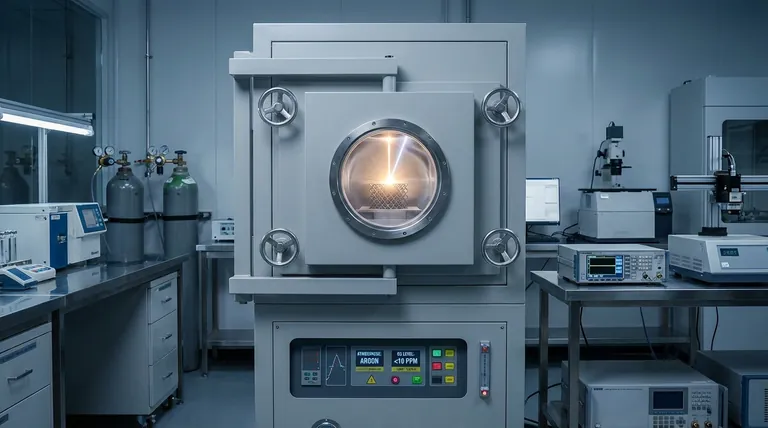
High-purity argon protection is mandatory during the processing of Commercially Pure Titanium (CP-Ti) because the metal becomes extremely chemically reactive at elevated temperatures. Without this protection, titanium rapidly absorbs interstitial elements, specifically oxygen and nitrogen, from the surrounding atmosphere. The argon system acts as a critical barrier, effectively isolating the heated metal to prevent this atmospheric contamination.
By establishing an inert atmosphere around the melt pool or processing chamber, argon systems prevent atmospheric contamination that compromises titanium's mechanical structure. This control is vital for limiting oxygen pickup and ensuring the final component retains the necessary ductility.
The Chemistry of Contamination
Titanium's Thermal Reactivity
Titanium and its alloys are highly sensitive to their environment when heated. At the elevated temperatures required for heat treatment or additive manufacturing, the metal loses its chemical stability in air. It actively seeks to bond with elements present in the atmosphere.
The Problem with Interstitials
The primary threats in the atmosphere are oxygen and nitrogen. These are referred to as "interstitial elements" because they fit into the spaces (interstices) within the titanium crystal lattice. When titanium is hot, it absorbs these elements easily, altering its internal structure.
The Function of the Argon Shield
Creating an Inert Environment
The goal of the protection system is to displace reactive air with an inert gas. High-purity argon is pumped into the processing chamber or directed locally over the work area. This establishes a clean atmosphere where chemical reactions cannot occur.
Protecting the Melt Pool
In additive manufacturing processes like Laser Hot Wire (LHW), the "melt pool" is where the metal is liquid and most vulnerable. The argon system must specifically target this area. By shielding the melt pool, the system ensures that the material solidifying is pure titanium, not a contaminated oxide.
Understanding the Trade-offs: Ductility vs. Contamination
The Consequence of Oxygen Pickup
The most critical trade-off in processing CP-Ti is between atmospheric exposure and ductility. Even small amounts of absorbed oxygen can act as a hardening agent. While this increases strength, it severely reduces ductility, making the part brittle and prone to failure.
No Post-Process Fix
Once interstitial elements like oxygen are absorbed during the melt or heat cycle, they cannot be easily removed. The damage to the material's mechanical properties is permanent. Therefore, the integrity of the argon shield during the process is the single most important factor for quality control.
Ensuring Material Integrity
To achieve successful results with CP-Ti, you must prioritize atmosphere control above almost all other process variables.
- If your primary focus is Component Ductility: You must minimize oxygen pickup strictly, as any contamination will directly degrade the material's ability to deform without breaking.
- If your primary focus is Process Consistency: You must ensure the argon system maintains a stable, inert environment across the entire melt pool or heated zone throughout the duration of the process.
A robust argon protection system is not just a safety measure; it is a fundamental requirement for producing usable titanium components.
Summary Table:
| Factor | Effect of Atmosphere (Air) | Effect of Argon Protection |
|---|---|---|
| Chemical Reactivity | High: Bonds with Oxygen/Nitrogen | Low: Maintains Inert Environment |
| Material Structure | Interstitial contamination occurs | Crystal lattice remains pure |
| Mechanical Property | Increased brittleness / Reduced ductility | High ductility and toughness preserved |
| Melt Pool Integrity | Forms brittle oxides/nitrides | Ensures clean solidification |
| Outcome | Permanent material degradation | Consistent high-quality components |
Secure Your Material Integrity with KINTEK's Inert Atmosphere Solutions
Don't let atmospheric contamination compromise your high-performance titanium components. At KINTEK, we understand that precision heat treatment and additive manufacturing require absolute control over your environment. Backed by expert R&D and manufacturing, we offer specialized Muffle, Tube, and Vacuum furnaces specifically designed to maintain the high-purity inert atmospheres your CP-Ti processes demand.
Whether you need a custom CVD system or a high-temperature lab furnace, our team provides the technology to prevent oxygen pickup and ensure maximum ductility in every part. Contact us today to find the perfect thermal solution for your unique needs!
Visual Guide

References
- Hannah Sims, John J. Lewandowski. The Use of DSC and Independent Oxygen Analyses to Correlate the β Transus Temperature in CP-Ti Grade 2 Materials Processed via Different Techniques. DOI: 10.1007/s11661-025-07922-1
This article is also based on technical information from Kintek Furnace Knowledge Base .
Related Products
People Also Ask
- Why are vacuum heat treating furnaces essential for aerospace? Ensure Superior Material Integrity for High-Stakes Applications
- What is the primary application of vacuum heat treating furnaces in aerospace? Enhance Component Performance with Precision
- How does vacuum heat treating work in terms of temperature and time control? Master Precise Material Transformations
- What is the process of vacuum heat treating? Achieve Superior Metallurgical Properties
- How does a vacuum heat treating furnace improve the condition of metal alloys? Achieve Superior Metal Performance

