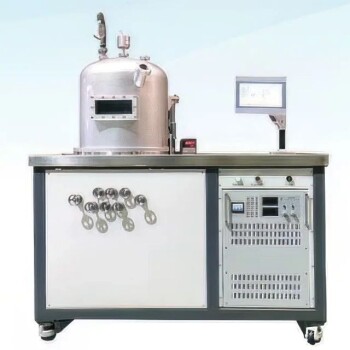
A high-precision substrate heating system is critical during Ba0.6Sr0.4TiO3 (BST) deposition to maintain a constant, specific temperature, such as 760 °C. This precise thermal control provides the necessary energy for atoms to diffuse and arrange themselves effectively, which is the foundational step for creating a high-quality thin film.
Precision heating is the primary driver for organizing deposited atoms into a highly crystalline cubic structure. Without this stable thermal environment, the material cannot achieve the piezoelectric performance or the mechanical adhesion required for functional devices.
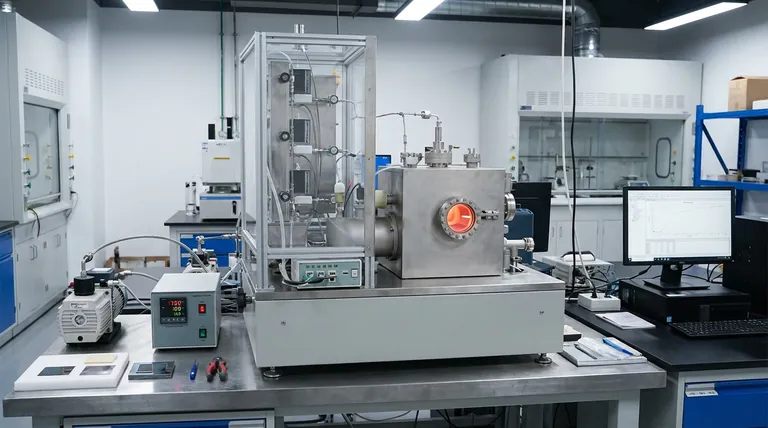
The Role of Thermal Energy in Film Formation
Facilitating Atomic Diffusion
The deposition process relies heavily on the mobility of atoms once they reach the substrate. The heating system supplies the thermal energy needed for these atoms to diffuse across the surface.
Enabling Ordered Arrangement
Instead of sticking randomly where they land, energized atoms can migrate to energetically favorable positions. This movement allows the material to self-organize, transitioning from a chaotic state to an ordered arrangement.
Achieving Structural Integrity and Performance
Forming a Crystalline Cubic Structure
The ultimate goal of high-precision heating is to ensure the BST film adopts a highly crystalline cubic structure. This specific lattice configuration is essential for the material's electronic properties.
Enhancing Piezoelectric Performance
The functionality of BST thin films depends entirely on their internal structure. A well-ordered cubic crystal lattice directly correlates to improved piezoelectric performance, making the film effective for sensor or actuator applications.
Interface Mechanics and Substrate Adhesion
Bonding with the Sapphire Substrate
The quality of the interface between the film and the base material is crucial. High-precision heating promotes strong interaction between the BST atoms and the sapphire substrate.
Ensuring Mechanical Stability
Thermal energy drives the formation of robust bonds at this interface. This results in strong adhesion, preventing the film from delaminating or peeling off the substrate during subsequent processing or use.
Understanding the Trade-offs: The Cost of Instability
The Risk of Thermal Fluctuation
If the heating system lacks precision, the substrate temperature will drift. Temperature fluctuations inhibit uniform atomic arrangement, leading to defects in the crystal lattice that degrade electrical performance.
Compromised Adhesion
Insufficient or inconsistent heating fails to provide the activation energy needed for interface bonding. This often results in weak adhesion, where the film may mechanically fail or detach from the sapphire substrate entirely.
Making the Right Choice for Your Goal
To maximize the quality of your BST thin films, consider your primary requirements:
- If your primary focus is Electrical Performance: Prioritize temperature stability to ensure the formation of a flawless crystalline cubic structure.
- If your primary focus is Mechanical Durability: Ensure the target temperature (e.g., 760 °C) is consistently reached to guarantee strong adhesion to the sapphire substrate.
Precision in temperature control is not merely a variable; it is the defining factor in the transition from raw atoms to a functional high-performance material.
Summary Table:
| Feature | Impact of High-Precision Heating | Consequence of Thermal Instability |
|---|---|---|
| Crystalline Structure | Highly ordered cubic lattice formation | Lattice defects and chaotic atomic arrangement |
| Atomic Mobility | Optimal diffusion for self-organization | Poor atom migration and uneven film growth |
| Adhesion Quality | Strong bonding to sapphire substrate | Weak interface leading to delamination/peeling |
| Performance | Enhanced piezoelectric and electronic properties | Degraded electrical functionality and device failure |
Elevate Your Thin Film Research with KINTEK
Precision is the defining factor in transitioning raw atoms into high-performance materials. At KINTEK, we understand that even a minor temperature drift can compromise your BST film's integrity. Backed by expert R&D and world-class manufacturing, we offer high-precision CVD systems, vacuum furnaces, and customizable lab heating solutions specifically designed to maintain the stable thermal environments your research demands.
Ready to optimize your deposition process? Contact us today to discuss your unique project requirements and discover how our advanced heating technology can ensure superior crystallinity and mechanical stability for your next-generation devices.
Visual Guide

References
- Birhanu Alemayehu, Guru Subramanyam. Indium-Doped SnO2 Based Surface Acoustic Wave Gas Sensor with Ba0.6Sr0.4TiO3 Film. DOI: 10.3390/cryst14040366
This article is also based on technical information from Kintek Furnace Knowledge Base .
Related Products
People Also Ask
- What is Hot-filament Chemical Vapor Deposition (HFCVD)? Achieve High-Quality Thin Films with Precision Control
- What are the equipment for chemical vapor deposition? A Guide to the 5 Essential Components
- What is the significance of the vacuum pressure control system in the CVD coating process for powders?
- What is the function of high-purity Argon (Ar) gas during CVD? Optimize Your Thin Film Uniformity and Purity
- What are the advantages of using Chemical Vapor Deposition (CVD) for coating turbine blades? Enhance Life & Performance