
Modern rotary kilns integrate several advanced technologies to move beyond simple thermal processing into the realm of high-precision, efficient operation. Key advancements include hydraulic block wheel devices (thrust rollers), high-precision metering piston pumps, speed control valves, and advanced sealing mechanisms, all working together to enhance stability, control, and safety.
The core principle behind these advancements is the shift from purely mechanical systems to integrated hydraulic and control systems. This allows for precise, real-time adjustments that maximize output, minimize energy waste, and ensure a safer operating environment.
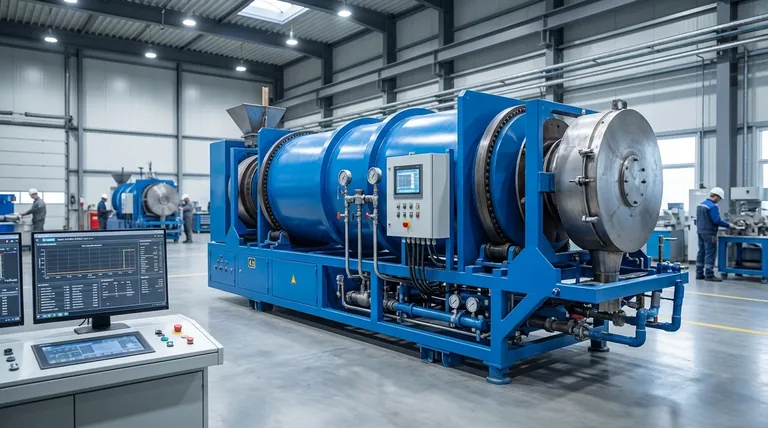
Enhancing Stability and Mechanical Integrity
The immense size and weight of a rotary kiln make mechanical stability paramount. Modern systems use hydraulics to manage the immense forces involved, preventing wear and catastrophic failure.
The Role of the Hydraulic Thrust Roller
A hydraulic thrust roller, also known as a block wheel device, is critical for controlling the kiln's axial movement. It prevents the kiln shell from drifting too far uphill or downhill along its slope.
This control is essential for protecting the tyres and support rollers from excessive wear and damage, ensuring the kiln rotates smoothly and reliably.
The Function of Hydraulic Pushing Mechanisms
Working in concert with the thrust roller, hydraulic pushing mechanisms provide the controlled force needed to maintain the kiln’s correct axial position.
These systems are fundamental to the operational safety and reliability of the kiln, absorbing and managing the immense thrust loads generated during operation to prevent mechanical stress.
Achieving Precision Control and Efficiency
Stable operation is the foundation, but true performance comes from precise control over the process variables. This is where advanced control components and sealing technologies become indispensable.
High-Precision Metering Piston Pumps
These pumps are the heart of the hydraulic system. They deliver a precise, consistent volume of hydraulic fluid to the support and thrust mechanisms.
This precision allows for minute adjustments to the kiln's alignment and support pressure, contributing directly to stable operation and reducing the energy required to turn the kiln.
Advanced Speed Control Valves
These valves regulate the flow of hydraulic fluid, giving operators direct control over the kiln's rotational speed.
The ability to finely tune the kiln’s rotation is crucial for optimizing the residence time of the material inside, which directly impacts product quality and overall process yield.
The Critical Impact of Sealing Devices
Advanced sealing devices are installed at both the feed and discharge ends of the kiln. Their purpose is to prevent cold ambient air from entering the system and hot process gas from escaping.
This is a massive driver of efficiency. By preventing "false air" ingress, the kiln maintains a stable internal temperature and atmosphere with less fuel, directly lowering energy consumption. It also enhances safety by containing hot, dusty gases.
Understanding the Trade-offs
While these technologies offer significant advantages, they also introduce new considerations that must be managed.
Increased Complexity and Maintenance
Hydraulic systems are inherently more complex than their older, purely mechanical counterparts. They require specialized knowledge for proper maintenance, troubleshooting, and repair.
This means operators and maintenance staff must be trained to manage hydraulic fluid quality, pressures, and electronic controls.
Higher Initial Capital Cost
Integrating high-precision pumps, valves, and hydraulic rollers increases the upfront investment in the kiln.
However, this initial cost is typically justified by long-term returns through lower energy bills, reduced downtime, and higher product yield over the kiln's operational lifespan.
Aligning Technology with Your Operational Goals
Choosing and prioritizing these technologies depends entirely on your specific production and business objectives.
- If your primary focus is maximizing operational uptime and safety: The hydraulic thrust roller and advanced sealing systems are non-negotiable, as they prevent the most common causes of mechanical failure and environmental hazards.
- If your primary focus is improving product quality and yield: Precision metering pumps and speed control valves are essential for giving you the granular control needed to fine-tune the process for optimal results.
- If your primary focus is reducing energy consumption: Advanced sealing devices offer the most direct and significant impact, as they immediately reduce heat loss and improve thermal efficiency.
By understanding how these integrated systems work together, you can ensure your rotary kiln operates not just as a machine, but as a high-performance, precision instrument.
Summary Table:
| Technology | Primary Function | Key Benefit |
|---|---|---|
| Hydraulic Thrust Roller | Controls axial kiln movement | Prevents wear, ensures mechanical stability |
| High-Precision Metering Pumps | Delivers exact hydraulic fluid volume | Enables minute adjustments for stable operation |
| Speed Control Valves | Regulates kiln rotational speed | Optimizes material residence time for product quality |
| Advanced Sealing Devices | Prevents air ingress and gas escape | Improves thermal efficiency and safety |
Ready to transform your rotary kiln into a high-performance asset?
Our advanced furnace solutions are backed by expert R&D and manufacturing. KINTEK offers Muffle, Tube, Rotary, Vacuum, CVD systems, and other lab high-temp furnaces, all customizable for your unique needs.
Let our precision engineering enhance your operational uptime, product yield, and energy efficiency. Contact our experts today for a tailored solution!
Visual Guide

Related Products
- Electric Rotary Kiln Continuous Working Small Rotary Furnace Kiln for Pyrolysis Plant Heating
- Electric Rotary Kiln Small Rotary Furnace for Activated Carbon Regeneration
- Electric Rotary Kiln Pyrolysis Furnace Plant Machine Small Rotary Kiln Calciner
- Electric Rotary Kiln Small Rotary Furnace Biomass Pyrolysis Plant Rotating Furnace
- Vacuum Sealed Continuous Working Rotary Tube Furnace Rotating Tube Furnace
People Also Ask
- What are the advantages of electric rotary kilns compared to fuel-fired ones? Boost Precision and Efficiency in Your Process
- What materials can be processed in an electric rotary kiln? Versatile Solutions for Advanced Materials
- What advantages do electric rotary kilns offer over fuel-based kilns? Boost Efficiency and Purity in Your Process
- What are the primary applications of electric rotary kilns? Precision Thermal Processing for High-Value Materials
- How do electric rotary kilns achieve high thermal efficiency? Unlock Over 95% Thermal Efficiency









