Knowledge What safety and environmental roles do lab exhaust and flare systems play in pyrolysis? Ensure a Secure Lab Workspace
Author avatar

Tech Team · Kintek Furnace

Updated 4 hours ago

What safety and environmental roles do lab exhaust and flare systems play in pyrolysis? Ensure a Secure Lab Workspace


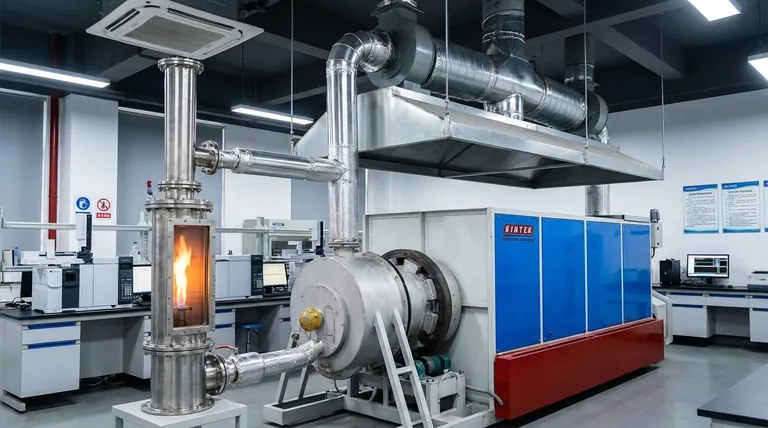
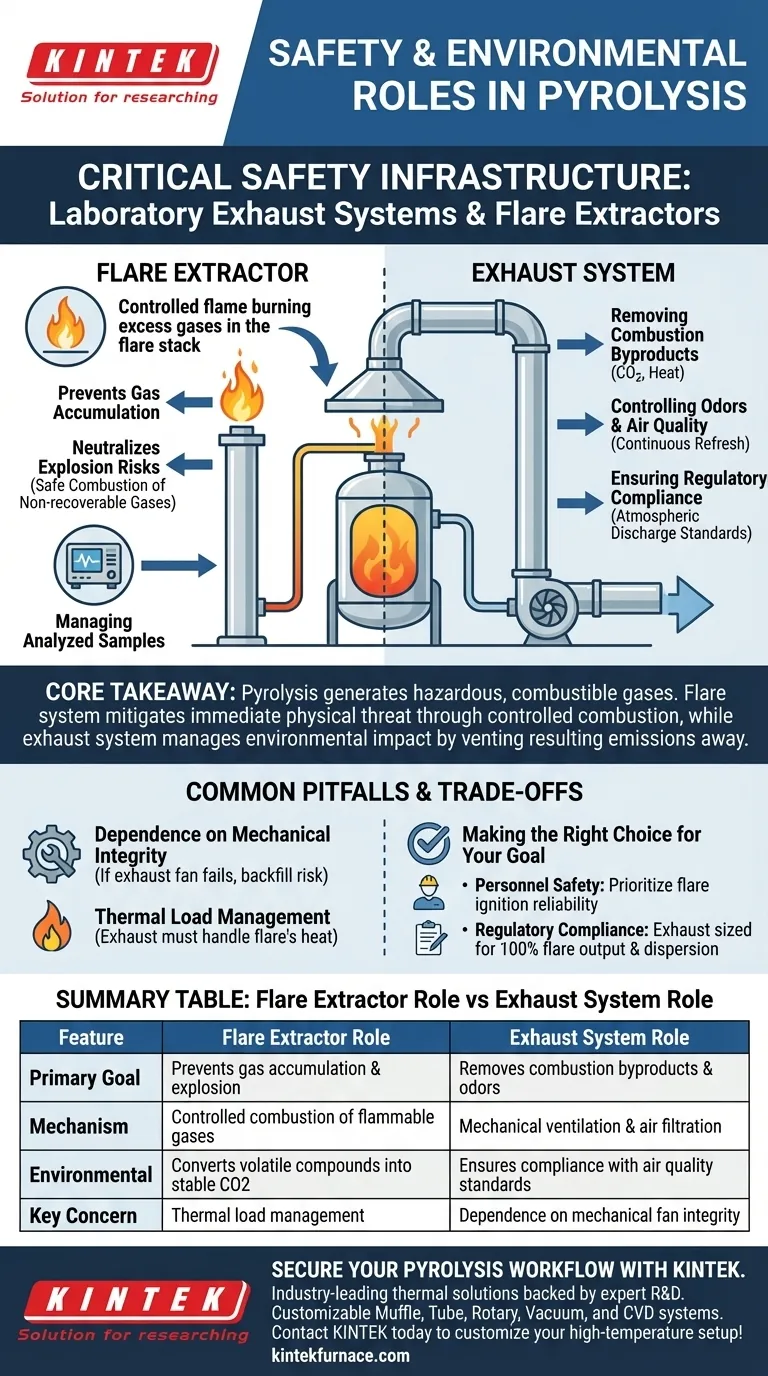
Laboratory exhaust systems and flare extractors act as the critical safety infrastructure for managing the volatile byproducts of pyrolysis. While the flare extractor neutralizes explosion risks by combusting excess flammable gases, the laboratory exhaust system actively removes the resulting fumes and odors to maintain breathable air quality and regulatory compliance.

Core Takeaway Pyrolysis inherently generates hazardous, combustible gases that must never accumulate in a confined space. The flare system mitigates this immediate physical threat through controlled combustion, while the exhaust system manages the environmental impact by venting the resulting emissions away from the workspace.
What safety and environmental roles do lab exhaust and flare systems play in pyrolysis? Ensure a Secure Lab Workspace

The Critical Role of Flare Extractors

Preventing Gas Accumulation

In pyrolysis, not all gases produced can be condensed or analyzed. Flare extractors provide a controlled outlet for these residual gases. Without this mechanism, flammable gases would accumulate within the laboratory, creating a dangerous environment ripe for ignition.

Neutralizing Explosion Risks

The primary function of the flare is the safe combustion of non-recoverable gases. By burning these components immediately rather than venting them raw, the system chemically converts highly volatile compounds into stable combustion products, effectively neutralizing the risk of explosion.

Managing Analyzed Samples

Once a gas sample has passed through analytical equipment, it cannot simply be released into the room. The flare system serves as the final destination for these analyzed streams, ensuring that even small quantities of test gas are disposed of safely.

Environmental Control via Exhaust Systems

Removing Combustion Byproducts

While the flare neutralizes flammability, the burning process creates its own byproducts, such as carbon dioxide and heat. The exhaust system captures these post-combustion emissions, ensuring they do not linger in the laboratory or compromise the air supply.

Controlling Odors and Air Quality

Pyrolysis byproducts often carry strong, distinctive, and potentially noxious odors. A properly functioning exhaust system continually refreshes the air volume, removing these residual odors to maintain a comfortable and safe working environment for personnel.

Ensuring Regulatory Compliance

Laboratories are subject to strict environmental discharge regulations regarding what can be released into the atmosphere. The exhaust system ensures that emissions are funneled to appropriate discharge points, keeping the facility compliant with environmental safety standards.

Common Pitfalls and Trade-offs

Dependence on Mechanical Integrity

These systems rely heavily on active mechanical ventilation. If the exhaust fan fails while the flare is active, combustion products can rapidly backfill the laboratory. Redundant safety sensors are often required to shut down the pyrolysis process if airflow is lost.

Thermal Load Management

Flare extractors generate significant heat during combustion. The exhaust system must be rated to handle not just the chemical byproducts, but also the thermal load produced by the flare to prevent damage to ducting or surrounding equipment.

Making the Right Choice for Your Goal

  • If your primary focus is Personnel Safety: Prioritize a flare system with robust ignition reliability to ensure no flammable gas ever escapes unburnt.
  • If your primary focus is Regulatory Compliance: Ensure your exhaust system is sized to capture 100% of the flare's output and effectively disperse emissions according to local environmental codes.

Effective pyrolysis safety requires a seamless integration where the flare destroys the immediate danger, and the exhaust removes the aftermath.

Summary Table:

Feature Flare Extractor Role Exhaust System Role
Primary Goal Prevents gas accumulation & explosion Removes combustion byproducts & odors
Mechanism Controlled combustion of flammable gases Mechanical ventilation and air filtration
Environmental Converts volatile compounds into stable CO2 Ensures compliance with air quality standards
Key Concern Thermal load management Dependence on mechanical fan integrity

Secure Your Pyrolysis Workflow with KINTEK

Don't compromise on safety or compliance. KINTEK provides industry-leading thermal solutions backed by expert R&D and manufacturing. Our extensive range includes Muffle, Tube, Rotary, Vacuum, and CVD systems, all of which are customizable to integrate seamlessly with your specific safety protocols. Whether you need to manage volatile byproducts or optimize thermal loads, our high-temp furnaces are built for the rigors of modern research.

Contact KINTEK today to customize your high-temperature setup!

Visual Guide
What safety and environmental roles do lab exhaust and flare systems play in pyrolysis? Ensure a Secure Lab Workspace Visual Guide

References

  1. Zsolt Dobó, Gábor Nagy. Production of Biochar by Pyrolysis of Food Waste Blends for Negative Carbon Dioxide Emission. DOI: 10.3390/en18010144

This article is also based on technical information from Kintek Furnace Knowledge Base .

Related Products

People Also Ask

Related Products

Electric Rotary Kiln Pyrolysis Furnace Plant Machine Small Rotary Kiln Calciner

Electric Rotary Kiln Pyrolysis Furnace Plant Machine Small Rotary Kiln Calciner

KINTEK Electric Rotary Kiln: Precise 1100℃ calcination, pyrolysis & drying. Eco-friendly, multi-zone heating, customizable for lab & industrial needs.

Electric Rotary Kiln Small Rotary Furnace Biomass Pyrolysis Plant Rotating Furnace

Electric Rotary Kiln Small Rotary Furnace Biomass Pyrolysis Plant Rotating Furnace

KINTEK's Rotary Biomass Pyrolysis Furnace converts biomass to biochar, bio-oil, and syngas efficiently. Customizable for research or production. Get your solution now!

Vacuum Hot Press Furnace Machine Heated Vacuum Press Tube Furnace

Vacuum Hot Press Furnace Machine Heated Vacuum Press Tube Furnace

Discover KINTEK's advanced Vacuum Tube Hot Press Furnace for precise high-temperature sintering, hot pressing, and material bonding. Customizable solutions for labs.

Multi Zone Laboratory Quartz Tube Furnace Tubular Furnace

Multi Zone Laboratory Quartz Tube Furnace Tubular Furnace

KINTEK Multi-Zone Tube Furnace: Precise 1700℃ heating with 1-10 zones for advanced material research. Customizable, vacuum-ready, and safety-certified.

Laboratory Vacuum Tilt Rotary Tube Furnace Rotating Tube Furnace

Laboratory Vacuum Tilt Rotary Tube Furnace Rotating Tube Furnace

KINTEK Laboratory Rotary Furnace: Precision heating for calcination, drying, sintering. Customizable solutions with vacuum & controlled atmosphere. Enhance research now!

304 316 Stainless Steel High Vacuum Ball Stop Valve for Vacuum Systems

304 316 Stainless Steel High Vacuum Ball Stop Valve for Vacuum Systems

KINTEK's 304/316 stainless steel vacuum ball valves and stop valves ensure high-performance sealing for industrial and scientific applications. Explore durable, corrosion-resistant solutions.

Laboratory Quartz Tube Furnace RTP Heating Tubular Furnace

Laboratory Quartz Tube Furnace RTP Heating Tubular Furnace

KINTEK's RTP Rapid Heating Tube Furnace delivers precise temperature control, rapid heating up to 100°C/sec, and versatile atmosphere options for advanced lab applications.

High Pressure Laboratory Vacuum Tube Furnace Quartz Tubular Furnace

High Pressure Laboratory Vacuum Tube Furnace Quartz Tubular Furnace

KINTEK High Pressure Tube Furnace: Precision heating up to 1100°C with 15Mpa pressure control. Ideal for sintering, crystal growth, and lab research. Customizable solutions available.

Stainless Steel Quick Release Vacuum Chain Three Section Clamp

Stainless Steel Quick Release Vacuum Chain Three Section Clamp

Stainless steel quick release vacuum clamps ensure leak-free connections for high vacuum systems. Durable, corrosion-resistant, and easy to install.

Small Vacuum Heat Treat and Tungsten Wire Sintering Furnace

Small Vacuum Heat Treat and Tungsten Wire Sintering Furnace

Compact vacuum tungsten wire sintering furnace for labs. Precise, mobile design with superior vacuum integrity. Ideal for advanced material research. Contact us!

High Temperature Muffle Oven Furnace for Laboratory Debinding and Pre Sintering

High Temperature Muffle Oven Furnace for Laboratory Debinding and Pre Sintering

KT-MD Debinding & Pre-Sintering Furnace for ceramics - precise temperature control, energy-efficient design, customizable sizes. Boost your lab efficiency today!

Laboratory Muffle Oven Furnace with Bottom Lifting

Laboratory Muffle Oven Furnace with Bottom Lifting

Boost lab efficiency with KT-BL Bottom Lifting Furnace: precise 1600℃ control, superior uniformity, and enhanced productivity for material science and R&D.

CF KF Flange Vacuum Electrode Feedthrough Lead Sealing Assembly for Vacuum Systems

CF KF Flange Vacuum Electrode Feedthrough Lead Sealing Assembly for Vacuum Systems

Reliable CF/KF flange vacuum electrode feedthrough for high-performance vacuum systems. Ensures superior sealing, conductivity & durability. Customizable options available.

Vacuum Sealed Continuous Working Rotary Tube Furnace Rotating Tube Furnace

Vacuum Sealed Continuous Working Rotary Tube Furnace Rotating Tube Furnace

Precision rotary tube furnace for continuous vacuum processing. Ideal for calcination, sintering, and heat treatment. Customizable up to 1600℃.

Electric Rotary Kiln Continuous Working Small Rotary Furnace Kiln for Pyrolysis Plant Heating

Electric Rotary Kiln Continuous Working Small Rotary Furnace Kiln for Pyrolysis Plant Heating

KINTEK's electric rotary furnaces offer precision heating up to 1100°C for calcination, drying, and pyrolysis. Durable, efficient, and customizable for labs and production. Explore models now!

915MHz MPCVD Diamond Machine Microwave Plasma Chemical Vapor Deposition System Reactor

915MHz MPCVD Diamond Machine Microwave Plasma Chemical Vapor Deposition System Reactor

KINTEK MPCVD Diamond Machine: High-quality diamond synthesis with advanced MPCVD technology. Faster growth, superior purity, customizable options. Boost production now!

Multi Heating Zones CVD Tube Furnace Machine for Chemical Vapor Deposition Equipment

Multi Heating Zones CVD Tube Furnace Machine for Chemical Vapor Deposition Equipment

KINTEK's Multi-Zone CVD Tube Furnaces offer precision temperature control for advanced thin film deposition. Ideal for research and production, customizable for your lab needs.

Vacuum Heat Treat Sintering Furnace with Pressure for Vacuum Sintering

Vacuum Heat Treat Sintering Furnace with Pressure for Vacuum Sintering

KINTEK's Vacuum Pressure Sintering Furnace offers 2100℃ precision for ceramics, metals, and composites. Customizable, high-performance, and contamination-free. Get a quote now!

Vacuum Heat Treat Furnace with Ceramic Fiber Liner

Vacuum Heat Treat Furnace with Ceramic Fiber Liner

KINTEK's Vacuum Furnace with Ceramic Fiber Lining offers precise high-temperature processing up to 1700°C, ensuring uniform heat distribution and energy efficiency. Ideal for labs and production.

Vacuum Heat Treat Sintering and Brazing Furnace

Vacuum Heat Treat Sintering and Brazing Furnace

KINTEK Vacuum Brazing Furnaces deliver precision, clean joints with superior temperature control. Customizable for diverse metals, ideal for aerospace, medical, and thermal applications. Get a quote!


Leave Your Message