The vacuum system serves as the definitive regulator of branch length in ZnO–ZnSe heterostructures. By strictly managing the internal reaction chamber pressure, typically within a window of 5 to 40 torr, the system enables the precise tuning of Zinc Oxide (ZnO) branch lengths between 250 nm and 1200 nm.
The vacuum system acts as a kinetic throttle for crystal growth. By manipulating internal pressure, it alters the fundamental behavior of gas particles—specifically their mean free path and collision frequency—to directly dictate the physical length of the resulting nanostructures.
The Physics of Growth Control
Regulating Internal Pressure
The primary function of the vacuum system is to maintain a specific environmental baseline. It creates a controlled atmosphere where the pressure is held constant within a critical range of 5 to 40 torr.
This pressure range is not arbitrary; it is the specific operating window required to influence the behavior of the gas-phase components involved in the reaction.
Altering Gas Dynamics
The vacuum system does not merely remove air; it modifies the mean free path of the particles inside the chamber.
By adjusting the pressure, you directly change the collision frequency of gas-phase components. This determines how often particles interact with each other before landing on the substrate.
From Gas Kinetics to Physical Structure
Impact on Nucleation and Growth
The changes in gas dynamics (mean free path and collision frequency) have a downstream effect on the material synthesis.
These variations directly impact the nucleation and growth rates of the ZnO material as it forms on the ZnSe backbone. The rate at which the material accumulates is governed by the pressure setting.
Achieving Specific Dimensions
This mechanism provides a direct lever for structural tuning. Because the growth rate is tied to pressure, the physical length of the branches can be predicted and controlled.
Operators can achieve exact branch lengths ranging from 250 nm to 1200 nm simply by stabilizing the vacuum system at the corresponding pressure setpoint.
Understanding the Operational Limits
The Constraints of the Pressure Window
While the vacuum system offers precise control, it is effective only within the established range of 5 to 40 torr.
Attempting to tune branch lengths outside of these pressure parameters may result in a loss of control over the mean free path physics described.
Sensitivity of Variables
The process relies on a direct correlation between pressure and growth kinetics.
Consequently, any instability in the vacuum system that causes pressure fluctuations will lead to inconsistencies in the collision frequency, resulting in irregular branch lengths across the heterostructure.
Making the Right Choice for Your Goal
To effectively utilize the vacuum system for structural engineering, you must correlate your physical design goals with vacuum stability.
- If your primary focus is Precise Length Targeting: Ensure your vacuum system can hold a static pressure without fluctuation to maintain a consistent mean free path.
- If your primary focus is Structural Variation: Utilize the full 5 to 40 torr range to modulate the collision frequency, allowing you to sweep through lengths from 250 nm to 1200 nm.
Ultimately, the vacuum system transforms pressure from a simple environmental variable into a precise tool for shaping nanoscale geometry.
Summary Table:
| Parameter | Operating Range | Impact on Nanostructure |
|---|---|---|
| Chamber Pressure | 5 to 40 torr | Regulates mean free path and collision frequency |
| Branch Length | 250 nm to 1200 nm | Directly proportional to pressure-induced growth rates |
| Gas Dynamics | Kinetic Control | Modulates nucleation speed and particle interaction |
| Material System | ZnO–ZnSe | Determines heterostructure morphology and geometry |
Optimize Your Nanomaterial Synthesis with KINTEK
Precise control over vacuum kinetics is the difference between experimental success and structural inconsistency. At KINTEK, we understand that your research requires absolute stability. Backed by expert R&D and world-class manufacturing, we provide high-performance Vacuum systems, CVD systems, and customizable lab high-temperature furnaces designed to maintain the exact pressure setpoints necessary for your ZnO–ZnSe heterostructure engineering.
Don't let pressure fluctuations compromise your branch length precision. Contact KINTEK today to discover how our tailored thermal and vacuum solutions can empower your lab's unique material science needs.
References
- Mingjin Liu, Yu‐Lun Chueh. Rational design of comb-like 1D–1D ZnO–ZnSe heterostructures toward their excellent performance in flexible photodetectors. DOI: 10.1039/d3nr06617g
This article is also based on technical information from Kintek Furnace Knowledge Base .
Related Products
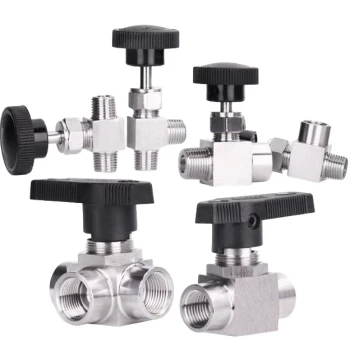
- 304 316 Stainless Steel High Vacuum Ball Stop Valve for Vacuum Systems
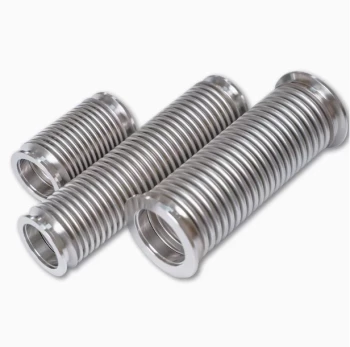
- High Performance Vacuum Bellows for Efficient Connection and Stable Vacuum in Systems
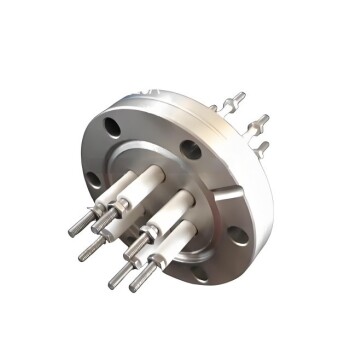
- CF KF Flange Vacuum Electrode Feedthrough Lead Sealing Assembly for Vacuum Systems
- Vacuum Induction Melting Furnace
- Vacuum Hot Press Furnace Machine Heated Vacuum Press
People Also Ask
- What role do vacuum-sealed high-purity silica ampoules play in phase equilibrium experiments? Enhance Sample Integrity
- What is the function of quartz vacuum encapsulation in RhSeCl CVT? Mastering Pure Crystal Growth
- What role does a closed pressure vessel play during the carbonation of gamma-C2S? Unlock Rapid Mineralization
- What type of pump is used in water circulating vacuum pumps and how is it installed? Discover Robust Fluid-Based Vacuum Solutions
- What is the specific function of the water circulation cooler in zirconium sponge processing? Key for Purity & Safety