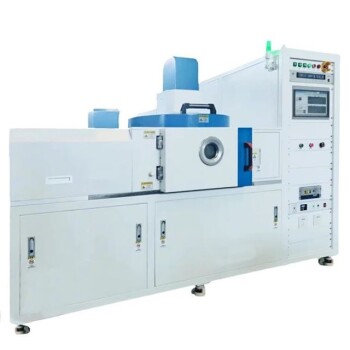
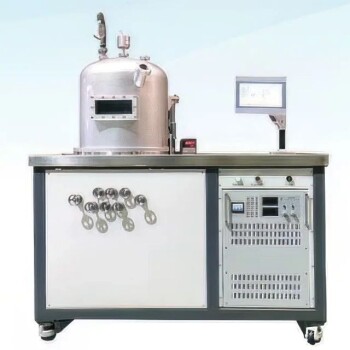
The Chemical Vapor Deposition (CVD) system functions as the central "growth engine" for graphene synthesis, providing the precise thermodynamic environment required to assemble carbon atoms into a single layer. By rigorously controlling vacuum levels, temperature, and gas mixtures, the system facilitates the decomposition of carbon sources onto a catalytic substrate.
Core Takeaway The CVD system does not merely heat materials; it orchestrates a delicate balance of catalytic decomposition and surface reconstruction. It creates a stable, high-energy vacuum environment that forces carbon atoms to self-assemble into a continuous, high-crystallinity monolayer structure on copper foil.
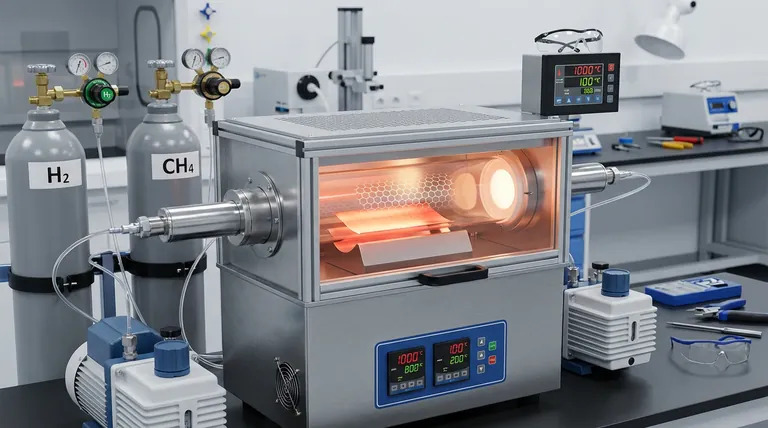
Precise Environmental Control
The primary role of the CVD system is to eliminate variables that lead to defects. To achieve high-quality monolayer graphene, the equipment must enforce strict environmental parameters.
Vacuum Regulation
The system maintains a high-vacuum environment within the quartz tube reactor, typically better than 10⁻³ torr.
This low pressure is critical for removing atmospheric contaminants. Even trace amounts of oxygen or moisture can disrupt the carbon lattice formation or oxidize the substrate.
Thermal Stability
The system maintains a specific working temperature, generally around 990 °C (or up to 1000 °C depending on the protocol).
This high thermal energy is required to "activate" the chemical reaction. It provides the necessary energy for the precursor gases to decompose and for carbon atoms to migrate effectively across the substrate surface.
The Mechanism of Growth
Beyond maintaining the environment, the CVD system actively manages the chemical inputs that dictate the structure of the material.
Gas Flow Management
The system regulates the flow ratios of high-purity hydrogen (H₂) and methane (CH₄).
Methane serves as the carbon source, while hydrogen acts as a carrier and creates a reducing atmosphere. The precise ratio between these two gases determines whether the carbon forms a single layer or builds up into unwanted multi-layer graphite.
Catalytic Decomposition
The process relies on a copper (Cu) foil substrate placed inside the reactor.
Under the system's controlled heat, methane molecules decompose on the copper surface. The copper acts as a catalyst, lowering the energy barrier required for carbon atoms to dissociate from hydrogen.
Directional Atomic Assembly
Once dissociated, the carbon atoms undergo directional growth on the copper surface.
The CVD system's stable conditions allow these atoms to arrange themselves into a hexagonal lattice. This results in a continuous film with high crystallinity, meaning the atomic structure is uniform over large areas.
Understanding the Trade-offs
While CVD is the standard for producing high-quality monolayer graphene, understanding its limitations is vital for successful synthesis.
Parameter Sensitivity
The "growth window" for perfect monolayer graphene is extremely narrow.
Slight fluctuations in the methane-to-hydrogen ratio can lead to islands of multi-layer graphene (too much carbon) or incomplete coverage (too little carbon). The system's flow controllers must be highly accurate to prevent this.
Substrate Dependency
The CVD system cannot compensate for a poor-quality substrate.
Because the graphene grows directly on the copper foil, physical defects or impurities on the foil's surface will translate into defects in the graphene lattice. The system requires pre-treated, high-purity metal substrates to function correctly.
Making the Right Choice for Your Goal
To maximize the effectiveness of a CVD system for graphene synthesis, you must align your operational parameters with your specific quality metrics.
- If your primary focus is minimizing structural defects: Prioritize the vacuum system's integrity to ensure pressures remain consistently below 10⁻³ torr, eliminating lattice-disrupting impurities.
- If your primary focus is strict monolayer purity: Meticulously calibrate the hydrogen-to-methane flow ratio to prevent carbon oversaturation, which is the leading cause of multi-layer patches.
Success in CVD synthesis depends not just on high temperatures, but on the precision with which the system balances thermodynamics and gas kinetics.
Summary Table:
| Feature | Role in Graphene Synthesis | Impact on Quality |
|---|---|---|
| Vacuum Control | Removes atmospheric contaminants (oxygen/moisture) | Prevents lattice defects and oxidation |
| Thermal Stability | Maintains ~1000 °C for precursor decomposition | Activates carbon migration and assembly |
| Gas Flow Ratio | Balances CH4 (carbon) and H2 (carrier/reducing) | Ensures monolayer purity vs. multi-layer build-up |
| Copper Substrate | Acts as a catalyst for methane dissociation | Dictates the crystallization and uniformity of the film |
Elevate Your Nanomaterial Synthesis with KINTEK
Precision is the difference between a defective film and a perfect monolayer. Backed by expert R&D and manufacturing, KINTEK offers high-performance CVD systems, Muffle, Tube, Rotary, and Vacuum furnaces, all customizable for your unique lab requirements.
Whether you are scaling graphene production or researching advanced thin films, our systems provide the rigorous environmental control needed for repeatable, high-crystallinity results. Contact our specialists today to discuss how our lab high-temp furnaces can empower your next breakthrough.
References
- Giuseppe Valerio Bianco, Giovanni Bruno. Defect healing and doping of CVD graphene by thermal sulfurization. DOI: 10.1039/d4na00124a
This article is also based on technical information from Kintek Furnace Knowledge Base .
Related Products
- 915MHz MPCVD Diamond Machine Microwave Plasma Chemical Vapor Deposition System Reactor
- Custom Made Versatile CVD Tube Furnace Chemical Vapor Deposition CVD Equipment Machine
- MPCVD Machine System Reactor Bell-jar Resonator for Lab and Diamond Growth
- RF PECVD System Radio Frequency Plasma Enhanced Chemical Vapor Deposition
- Cylindrical Resonator MPCVD Machine System for Lab Diamond Growth
People Also Ask
- What is the MPCVD method and why is it considered effective for diamond deposition? Superior Purity & High Growth Rates
- What factors influence the quality of diamond deposition in the MPCVD method? Master the Critical Parameters for High-Quality Diamond Growth
- What are some key features and benefits of the microwave plasma chemical vapor deposition system? Achieve Unmatched Material Synthesis
- What is the purpose of a microwave plasma chemical vapor deposition system? Grow High-Purity Diamonds and Advanced Materials
- What is the basic principle of operation for the microwave plasma chemical vapor deposition system? Unlock High-Purity Material Growth