
To properly prepare a Stainless Steel Reactor for metal hydride experiments, you must perform a rigorous sequence of physical roughening, thorough cleaning, and thermal degassing under vacuum. These specific pre-treatment steps are mandatory to transform the reactor walls into a catalytically active surface capable of supporting anomalous heat generation.
Success in anomalous heat generation is determined by the atomic condition of the reactor interface. Pre-treatment is not merely about cleanliness; it is an engineering process designed to create specific surface defects and eliminate contaminants that would otherwise inhibit the hydrogen-metal reaction.
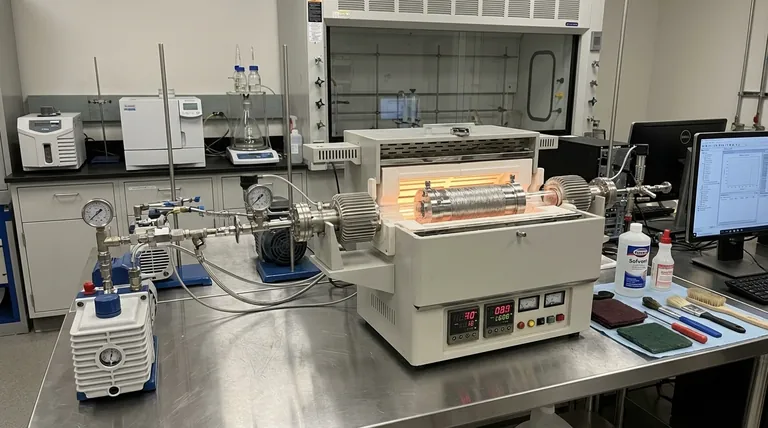
Engineering the Reactor Surface
To enable the necessary interactions between hydrogen and the metal, you must modify the physical characteristics of the steel.
Mechanical Roughening
A standard, polished finish is insufficient for these experiments. You must subject the reactor to mechanical roughening.
This process is designed to intentionally introduce surface defects. These defects serve as active sites where the probability of the required catalytic reactions is significantly increased.
Thorough Cleaning
Once the surface structure is modified, the reactor requires thorough cleaning.
This step is critical to remove any manufacturing oils, particulate matter, or residues introduced during the roughening process. Any remaining contaminants can "poison" the surface, blocking hydrogen from interacting with the metal lattice.
Thermal and Vacuum Conditioning
Physical preparation must be followed by chemical and thermal conditioning to ensure the metal is chemically active.
Vacuum Degassing
The reactor must undergo vacuum pumping to create a negative pressure environment.
Simultaneously, the reactor must be subjected to heating. This combination of heat and vacuum is the only reliable method to drive out residual gases trapped within the metal or adsorbed onto the surface.
Creating an Active Surface
The ultimate goal of this heating and pumping cycle is to strip away passivation layers and impurities.
This leaves you with a clean, highly active metal surface. This state is essential for facilitating the catalytic reactions required for heat generation between the hydrogen gas and the metal surface.
Common Pitfalls to Avoid
While the steps are straightforward, the margin for error in these experiments is narrow.
Incomplete Degassing
A common failure point is terminating the heating and vacuum phase too early.
If residual internal gases remain, they can outgas during the experiment. This introduces variables that can suppress the anomalous heat effect or lead to false data.
Re-contamination Risks
The "active surface" created by this process is highly reactive and unstable.
Exposure to standard atmosphere or improper handling after treatment can instantly re-passivate or contaminate the surface. This renders the previous cleaning steps useless.
Optimizing for Experimental Success
When planning your pre-treatment protocol, align your procedures with your specific experimental goals.
- If your primary focus is Reproducibility: Strictly standardize the method and duration of your mechanical roughening to ensure the density of surface defects is identical across different reactor builds.
- If your primary focus is Maximum Reactivity: Extend the duration of the heating and vacuum pumping phase to ensure the deepest possible removal of residual internal gases.
Treat the reactor surface not as a passive container, but as an active participant in the reaction.
Summary Table:
| Pre-treatment Step | Primary Objective | Key Action Required |
|---|---|---|
| Mechanical Roughening | Create Surface Defects | Introduce active sites for catalytic reactions through abrasion |
| Thorough Cleaning | Remove Contaminants | Eliminate oils and particles that 'poison' the metal surface |
| Vacuum Pumping | Environment Control | Create negative pressure to facilitate gas removal |
| Thermal Heating | Degassing | Drive out residual trapped gases from the metal lattice |
| Surface Activation | Catalytic Readiness | Strip passivation layers to expose a highly reactive metal surface |
Elevate Your Experimental Precision with KINTEK
Don’t let surface contamination or inadequate degassing compromise your results. KINTEK provides high-performance stainless steel reactors and high-temperature furnace systems engineered for the most demanding research environments.
Backed by expert R&D and manufacturing, we offer Muffle, Tube, Rotary, Vacuum, and CVD systems, all fully customizable to meet your specific pre-treatment and thermal processing needs. Whether you are aiming for maximum reactivity or perfect reproducibility, our equipment delivers the uniform heating and vacuum stability your metal hydride experiments require.
Ready to optimize your reactor performance? Contact our technical experts today to discuss your custom laboratory solution.
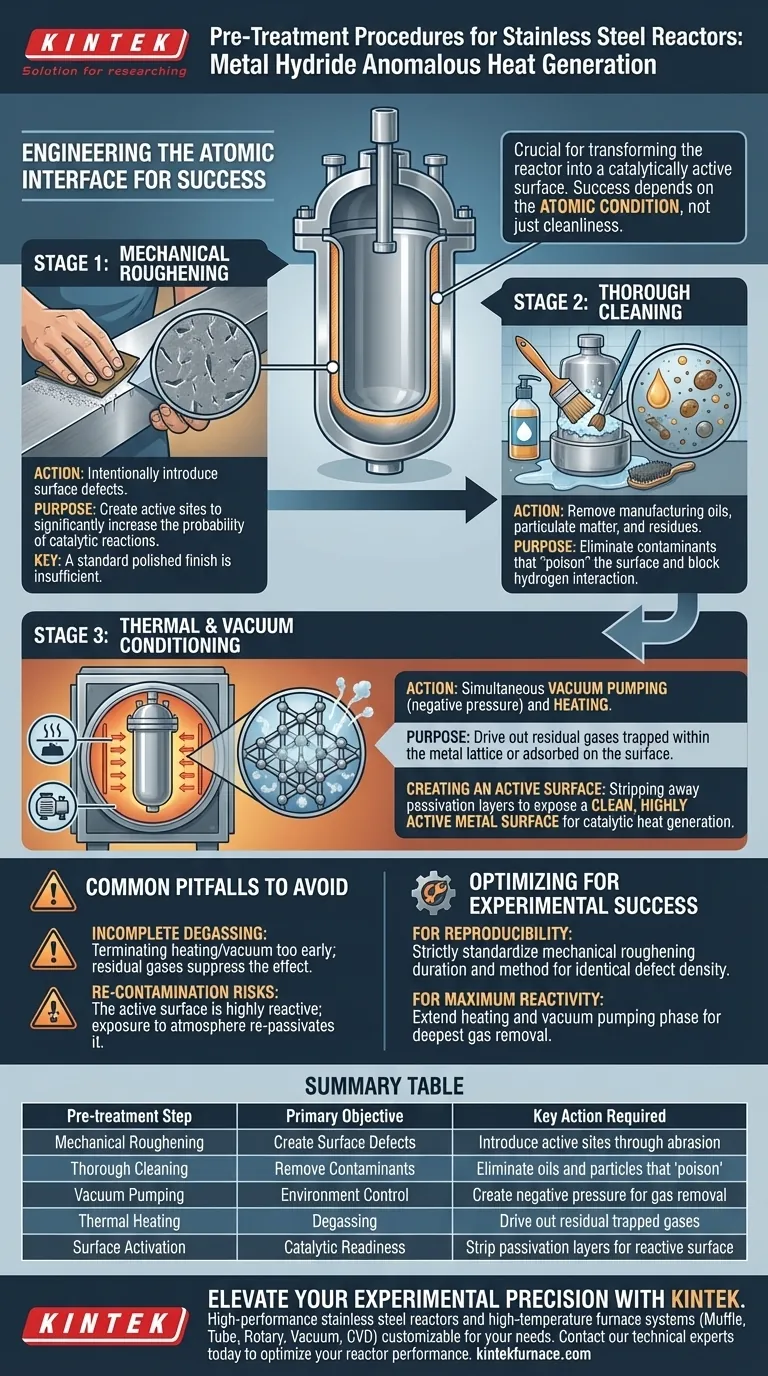
Visual Guide
References
- Tadahiko Mizuno, Jed Rothwell. Anomalous Heat Reaction from Hydrogen and Metals. DOI: 10.70923/001c.134027
This article is also based on technical information from Kintek Furnace Knowledge Base .
Related Products
- Custom Made Versatile CVD Tube Furnace Chemical Vapor Deposition CVD Equipment Machine
- MPCVD Machine System Reactor Bell-jar Resonator for Lab and Diamond Growth
- Laboratory Quartz Tube Furnace RTP Heating Tubular Furnace
- Inclined Rotary Plasma Enhanced Chemical Deposition PECVD Tube Furnace Machine
- Slide PECVD Tube Furnace with Liquid Gasifier PECVD Machine
People Also Ask
- Why are CVD tube furnace sintering systems indispensable for 2D material research and production? Unlock Atomic-Scale Precision
- What is a CVD tube furnace and what is its primary function? Discover Precision Thin-Film Deposition
- Which industries and research fields benefit from CVD tube furnace sintering systems for 2D materials? Unlock Next-Gen Tech Innovations
- How does CVD tube furnace sintering enhance graphene growth? Achieve Superior Crystallinity and High Electron Mobility
- What temperature range do standard CVD tube furnaces operate at? Unlock Precision for Your Material Deposition







