
At their core, rotary kilns are cost-effective because they combine low long-term operating expenses with exceptional durability and process efficiency. Their design allows for the use of cheaper fuels, minimizes energy waste, and is built to withstand harsh industrial environments, which reduces maintenance and replacement costs over the equipment's long service life.
A rotary kiln's financial advantage isn't just about a single feature, but its holistic impact on the total cost of ownership. It lowers day-to-day expenses while maximizing the value of your capital investment through longevity and process optimization.
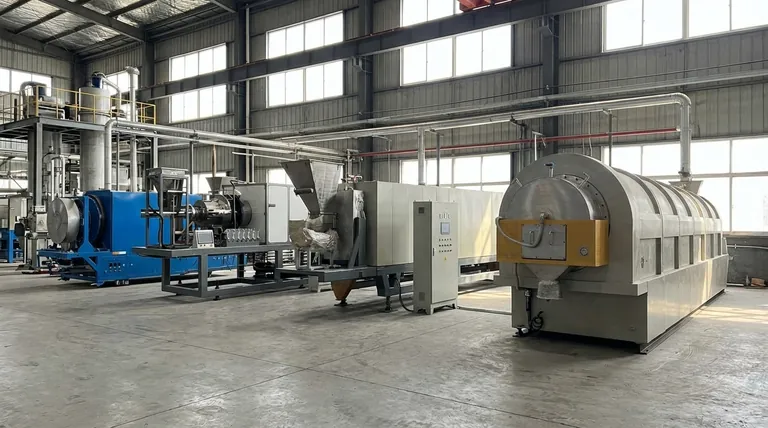
Deconstructing the Cost-Effectiveness
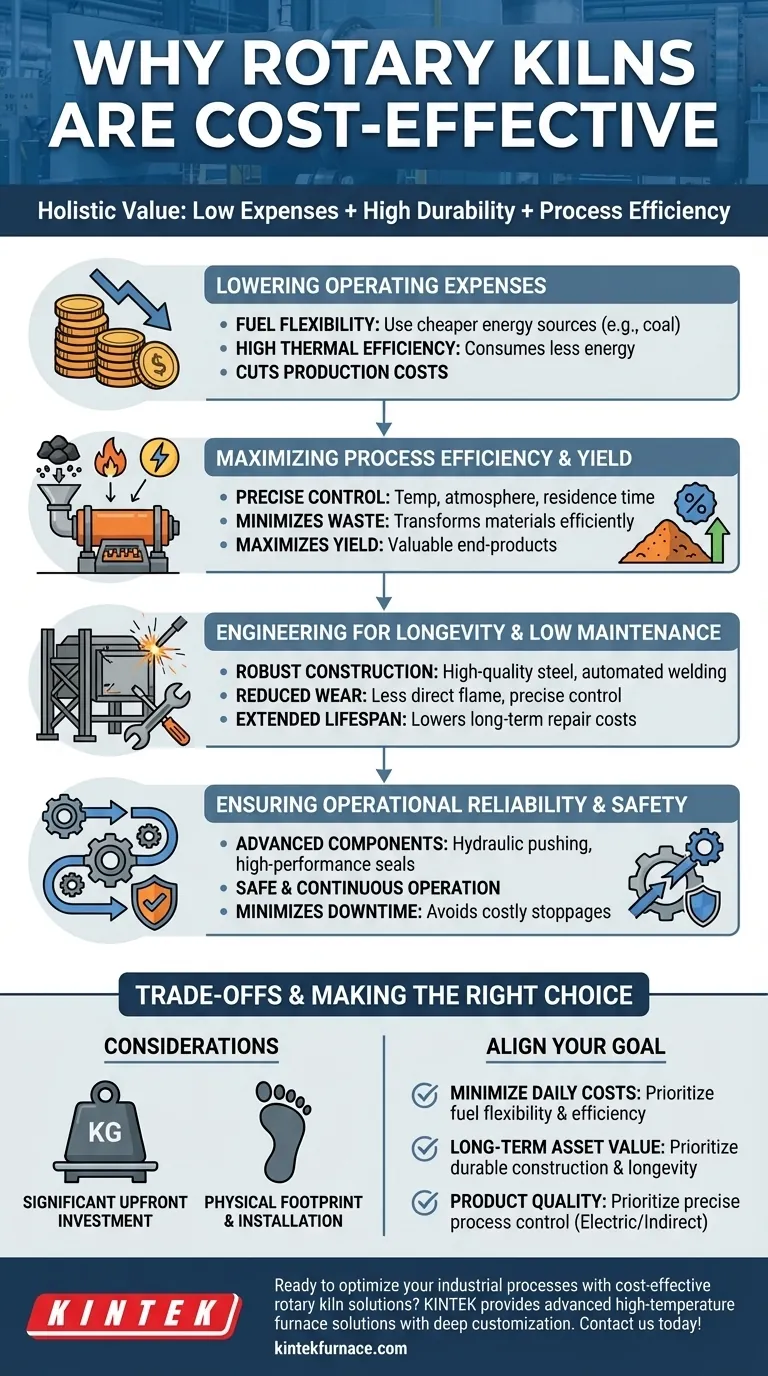
To understand the financial benefits of a rotary kiln, it's best to break down its value into four key areas: operating costs, process efficiency, durability, and operational reliability.
Lowering Direct Operating Expenses
A significant portion of any thermal process cost is fuel. Rotary kilns excel at minimizing this expense.
They are designed for high thermal efficiency, consuming less energy compared to many other furnace types. Furthermore, certain models offer crucial fuel flexibility, allowing them to run on cheaper energy sources like coal instead of more expensive coke or electricity, directly cutting production costs.
Maximizing Process Efficiency and Yield
True cost-effectiveness also comes from getting the most out of your raw materials. Wasted material is wasted money.
Indirect-fired and electric rotary kilns provide precise control over temperature, atmosphere, and residence time. This level of control ensures raw materials are transformed efficiently, maximizing the yield of valuable end-products and minimizing waste.
Engineering for Longevity and Low Maintenance
A kiln that requires constant repair is a constant drain on resources. Rotary kilns are engineered for a long and productive service life.
They are typically constructed from high-quality steel sheets with automated welding, creating a robust structure that resists wear. In electric models, the absence of direct flame impingement and the use of precise temperature control further reduces wear and tear on the kiln tube, extending its lifespan and lowering maintenance needs.
Ensuring Operational Reliability and Safety
Unplanned downtime is one of the most significant hidden costs in any industrial operation.
Modern rotary kilns integrate advanced components like hydraulic pushing mechanisms and high-performance sealing devices. These features ensure safe, continuous, and reliable operation, dramatically reducing the risk of equipment failure and costly production stoppages.
Understanding the Trade-offs
While highly cost-effective in the long run, rotary kilns are a major industrial investment. An objective evaluation requires acknowledging the potential considerations.
Initial Capital Investment
The robust construction and advanced technology that make rotary kilns so durable also mean they can represent a significant upfront capital expenditure. This initial cost must be weighed against the long-term savings in operation and maintenance.
Physical Footprint and Installation
Rotary kilns are large, heavy machines that require a substantial physical footprint and a properly engineered foundation. The site preparation and installation process can add to the overall project complexity and cost.
System Type: Fuel vs. Electric
The choice between a direct-fired (fuel) and an indirect or electric kiln involves a key trade-off. A fuel-based system may leverage cheaper energy sources, but an electric kiln often provides greater temperature precision, a cleaner operating environment, and reduced mechanical stress, potentially leading to a longer service life.
Making the Right Choice for Your Goal
The decision to invest in a rotary kiln should align with your primary operational objective.
- If your primary focus is minimizing daily operating costs: The fuel flexibility and high thermal efficiency of a rotary kiln make it a superior choice for controlling energy expenses.
- If your primary focus is long-term asset value: The durable construction and engineering for longevity ensure a rotary kiln is a sound capital investment that minimizes replacement and major repair costs.
- If your primary focus is product quality and consistency: The precise process control offered by indirect or electric kilns will maximize your yield and ensure a consistent, high-value final product.
Ultimately, a rotary kiln proves its worth by optimizing the entire financial picture of your production process.
Summary Table:
| Key Factor | Benefit |
|---|---|
| Lower Operating Costs | Reduces fuel expenses and energy waste through fuel flexibility and high thermal efficiency. |
| Process Efficiency | Maximizes yield and minimizes waste with precise temperature and atmosphere control. |
| Durability | Built with high-quality materials for long service life, lowering maintenance and replacement costs. |
| Operational Reliability | Features advanced components to reduce downtime and ensure safe, continuous operation. |
Ready to optimize your industrial processes with cost-effective rotary kiln solutions? KINTEK leverages exceptional R&D and in-house manufacturing to provide advanced high-temperature furnace solutions, including Rotary Furnaces, tailored for diverse laboratories and industrial applications. With strong deep customization capabilities, we precisely meet your unique requirements to enhance efficiency, reduce costs, and ensure long-term reliability. Contact us today to discuss how our expertise can benefit your operations!
Visual Guide
Related Products
- Electric Rotary Kiln Continuous Working Small Rotary Furnace Kiln for Pyrolysis Plant Heating
- Electric Rotary Kiln Small Rotary Furnace for Activated Carbon Regeneration
- Electric Rotary Kiln Pyrolysis Furnace Plant Machine Small Rotary Kiln Calciner
- Electric Rotary Kiln Small Rotary Furnace Biomass Pyrolysis Plant Rotating Furnace
- Vacuum Sealed Continuous Working Rotary Tube Furnace Rotating Tube Furnace
People Also Ask
- What are the advantages of electric rotary kilns compared to fuel-fired ones? Boost Precision and Efficiency in Your Process
- What materials can be processed in an electric rotary kiln? Versatile Solutions for Advanced Materials
- What advantages do electric rotary kilns offer over fuel-based kilns? Boost Efficiency and Purity in Your Process
- What are the primary applications of electric rotary kilns? Precision Thermal Processing for High-Value Materials
- How do electric rotary kilns achieve high thermal efficiency? Unlock Over 95% Thermal Efficiency









