
The fundamental objective of treating Electric Arc Furnace (EAF) dust in a constant temperature dryer is to achieve the complete removal of physically adsorbed water. By maintaining a stable thermal environment, typically at 105°C, this process ensures the sample is chemically stable and free of moisture before undergoing rigorous testing.
Moisture acts as a hidden variable that distorts analytical data. Drying the sample creates a consistent baseline, ensuring that all subsequent measurements reflect the actual dust properties rather than the water content.
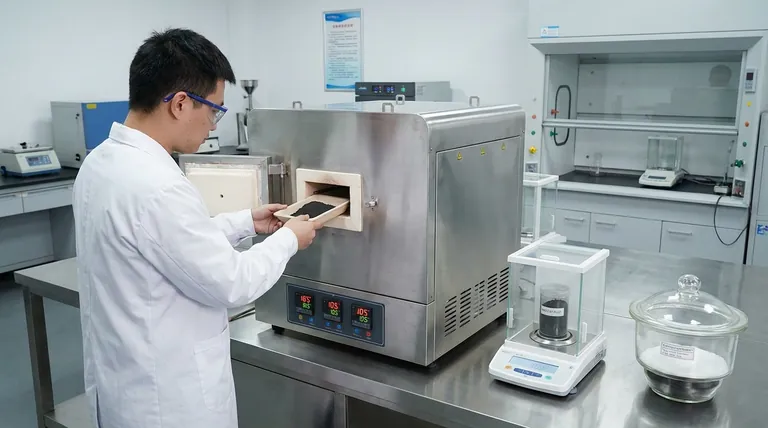
The Critical Role of Moisture Removal
Establishing Accurate Mass Measurement
The presence of moisture in EAF dust artificially inflates its weight. If a sample is weighed while wet, the resulting data combines the mass of the dust with the mass of the water.
Drying the residue removes this variable entirely. This ensures that any mass recorded during analysis corresponds strictly to the solid material, which is a prerequisite for accurate chemical profiling.
Optimizing Chemical Processing
Precise dosing is required for downstream experiments, such as acid leaching. Researchers calculate the ratio of acid to dust based on specific mass targets.
If the dust contains unmeasured moisture, the actual amount of solid material introduced to the acid will be lower than calculated. This alters the reaction kinetics and can lead to misleading experimental results.
Protecting Analytical Instruments
Phase characterization and chemical composition analysis often rely on sensitive instrumentation. These devices require samples to be in a specific, stable state to function correctly.
Residual moisture can physically interfere with the operation of these instruments or skew the signals they detect. Thorough drying prevents this moisture from negatively impacting the equipment or the validity of the reading.
Understanding the Risks of Inadequate Drying
The "False Mass" Pitfall
A common error in material characterization is assuming a sample is dry when it still retains hygroscopic moisture. This leads to a cascade of calculation errors.
If the initial mass is wrong, every subsequent calculation—from percentage composition to reaction yields—will be incorrect. Extended drying times at 105°C minimize this risk by ensuring equilibrium is reached.
Interference with Phase Characterization
Water molecules can mask or distort the detection of specific mineral phases within the dust.
Attempting to characterize a damp sample may result in "noise" in the data, making it difficult to identify the true chemical structure of the EAF residues.
Ensuring Data Integrity in EAF Analysis
To ensure your analysis is reproducible and accurate, you must view the drying stage as a critical standardization step, not just a preliminary chore.
- If your primary focus is Chemical Analysis: Ensure the sample is dried to constant weight to prevent moisture from skewing composition percentages and damaging sensitive instruments.
- If your primary focus is Process Dosing (e.g., Leaching): Prioritize complete water removal to guarantee that your solid-to-liquid ratios are calculated based on the actual mass of the reactant.
By eliminating physically adsorbed water, you transform a variable sample into a reliable standard for scientific investigation.
Summary Table:
| Key Objective | Process Action | Analytical Benefit |
|---|---|---|
| Moisture Removal | Constant drying at 105°C | Eliminates physically adsorbed water for a stable baseline. |
| Mass Accuracy | Weighing dried residue | Prevents "false mass" errors caused by water weight. |
| Process Dosing | Standardizing solid mass | Ensures precise solid-to-liquid ratios for leaching and reactions. |
| Instrument Care | Phase characterization | Prevents moisture from interfering with sensitive analytical signals. |
Elevate Your Lab Analysis with Precision Thermal Solutions
Don't let moisture compromise your data integrity. At KINTEK, we understand that accurate results begin with precise thermal preparation. Backed by expert R&D and manufacturing, we provide high-performance Muffle, Tube, Rotary, Vacuum, and CVD systems designed to maintain the stable environments your research demands.
Whether you are processing EAF dust or developing new materials, our lab high-temp furnaces are fully customizable to meet your unique analytical needs. Ensure consistent, reproducible results every time.
Ready to optimize your heat treatment workflow? Contact KINTEK today for expert consultation!
Visual Guide

References
- Vanja Trifunović, Milan B. Radovanović. Application of a Simple Pretreatment in the Process of Acid Leaching of Electric Arc Furnace Dust. DOI: 10.3390/met14040426
This article is also based on technical information from Kintek Furnace Knowledge Base .
Related Products
- Electric Rotary Kiln Pyrolysis Furnace Plant Machine Small Rotary Kiln Calciner
- Electric Rotary Kiln Continuous Working Small Rotary Furnace Kiln for Pyrolysis Plant Heating
- Custom Made Versatile CVD Tube Furnace Chemical Vapor Deposition CVD Equipment Machine
People Also Ask
- What are the advantages of electric rotary kilns compared to fuel-fired ones? Boost Precision and Efficiency in Your Process
- What advantages do electric rotary kilns offer over fuel-based kilns? Boost Efficiency and Purity in Your Process
- What materials can be processed in an electric rotary kiln? Versatile Solutions for Advanced Materials
- What are the main applications of a rotary kiln electric furnace? Achieve Uniform Heat Treatment for Powders
- What is the significance of the refractory lining in a rotary kiln electric furnace? Unlock Efficiency and Longevity


