
The primary purpose of introducing nitrogen during the continuous annealing of silicon steel is to create a strictly inert, protective environment. This atmosphere prevents the steel from reacting with oxygen or other atmospheric gases while it undergoes high-temperature recrystallization.
Core Insight: The nitrogen atmosphere is not merely about keeping the metal clean; it is a critical process control that preserves the steel's chemical composition. Without this protection, the high temperatures required to optimize the steel's grain structure would simultaneously destroy its surface integrity and magnetic potential.
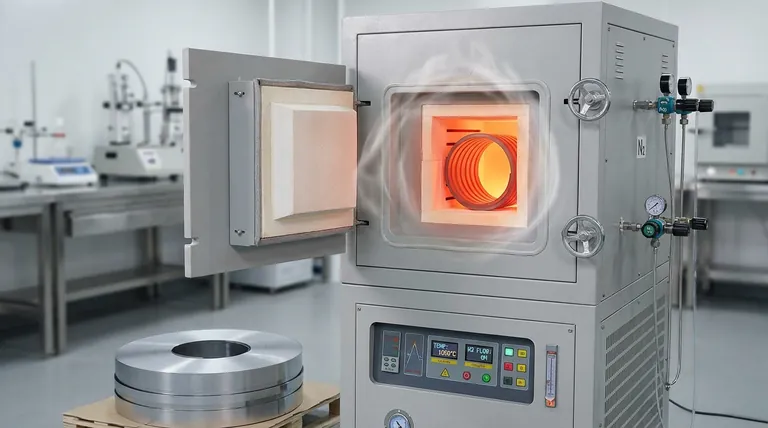
The Mechanics of Atmospheric Protection
Creating an Inert Barrier
When silicon steel is heated to temperatures ranging from 800°C to 1100°C, it becomes highly reactive. Nitrogen is introduced to displace oxygen within the furnace.
This displacement eliminates the possibility of surface oxidation. It ensures the thin plates emerge from the furnace with the required surface finish.
Preventing Decarburization
Beyond visible surface rust, the nitrogen atmosphere prevents invisible chemical changes. Specifically, it stops decarburization, the unwanted loss of carbon from the steel's surface.
It also prevents desiliconization, maintaining the precise silicon content required for the alloy. Maintaining this chemical balance is essential for the material's internal structure.
Impact on Final Performance
Facilitating Recrystallization
The annealing process is designed to induce recrystallization, which optimizes the grain structure of the metal. Nitrogen allows this thermal process to occur without damaging the material's exterior.
By protecting the surface, the furnace can maintain the precise temperatures needed to control grain size and rare earth element segregation.
Safeguarding Magnetic Properties
The ultimate goal of using a nitrogen atmosphere is to protect the steel's electromagnetic capabilities. Any alteration in surface chemistry or smoothness can negatively impact core metrics.
Specifically, this protection ensures optimal iron loss figures and maintains high magnetic induction strength.
Understanding the Trade-offs
The Requirement for Strict Purity
A nitrogen atmosphere is only effective if the gas purity is rigorously maintained. Even trace amounts of oxygen or moisture introduced into the protective stream can compromise the entire annealing run.
Process Complexity
Implementing a nitrogen-protected system adds variables to the manufacturing process. Operators must balance gas flow rates against the furnace's internal pressure to ensure the atmosphere remains strictly oxygen-free throughout the continuous feed.
Making the Right Choice for Your Goal
To maximize the efficacy of your annealing process, align your atmospheric controls with your specific material requirements:
- If your primary focus is Surface Finish: Ensure the nitrogen flow effectively displaces all oxygen to prevent scaling and oxidation artifacts.
- If your primary focus is Magnetic Performance: Prioritize the stability of the atmosphere to prevent decarburization, ensuring the chemical composition remains uniform from the core to the surface.
Summary: The nitrogen atmosphere acts as a chemical shield, allowing the thermal restructuring of silicon steel to proceed without compromising the surface quality or magnetic efficiency of the final product.
Summary Table:
| Key Function | Impact on Silicon Steel | Benefit |
|---|---|---|
| Oxygen Displacement | Prevents surface oxidation and scaling | Superior surface finish |
| Chemical Stability | Stops decarburization and desiliconization | Maintains precise alloy composition |
| Thermal Protection | Facilitates controlled recrystallization | Optimized grain structure |
| Performance Guard | Preserves electromagnetic capabilities | Low iron loss & high magnetic induction |
Elevate Your Silicon Steel Production with KINTEK
Precision annealing requires more than just heat; it demands a perfectly controlled environment. KINTEK provides industry-leading thermal solutions, including Muffle, Tube, and Vacuum systems, engineered to maintain the strict nitrogen purity your silicon steel requires.
Backed by expert R&D and manufacturing, our high-temp furnaces are fully customizable to meet your unique metallurgical needs, ensuring optimal grain growth and magnetic performance every time.
Ready to optimize your heat treatment process? Contact our experts today to discover how KINTEK’s advanced furnace technology can enhance your lab or production efficiency.
References
- Lei Zhao, Xiaoyang Fu. Effect of rare-earth Ce on the texture of non-oriented silicon steels. DOI: 10.1515/htmp-2022-0321
This article is also based on technical information from Kintek Furnace Knowledge Base .
Related Products
- Controlled Inert Nitrogen Hydrogen Atmosphere Furnace
- 1400℃ Controlled Inert Nitrogen Atmosphere Furnace
- 1700℃ Controlled Inert Nitrogen Atmosphere Furnace
- Mesh Belt Controlled Atmosphere Furnace Inert Nitrogen Atmosphere Furnace
- 1200℃ Controlled Inert Nitrogen Atmosphere Furnace
People Also Ask
- What are the characteristics and uses of hydrogen atmospheres in furnaces? Unlock Clean Metal Processing
- What are the characteristics and uses of hydrogen atmosphere in furnaces? Achieve Superior Surface Purity and Bonding
- Mechanism of Fe81Ga19 Secondary Recrystallization? High-Precision Furnace Control for Goss Grain Growth
- How does a controlled atmosphere furnace contribute to energy efficiency? Lower Costs with Advanced Thermal Management
- Why is controlled atmosphere capability important in an atmosphere furnace? Unlock Precise Material Processing
















