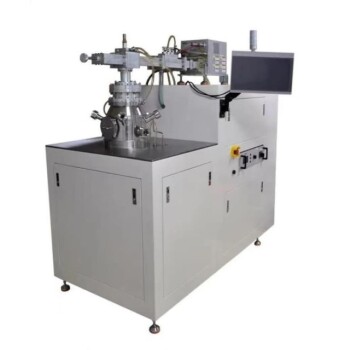
The primary function of a controlled atmosphere device is to create a regulated, oxygen-free environment essential for the sintering of metal particles. By either employing a vacuum or introducing high-purity inert gases such as Argon or Helium, the device eliminates oxygen to prevent rapid oxidation at high temperatures, ensuring the material properties of the final component are preserved.
Successful powder metallurgy relies on preventing chemical contamination during the heating phase. A controlled atmosphere device serves as the critical safeguard that eliminates oxygen, ensuring high-quality metallurgical bonding and maximizing the mechanical strength of the final product.
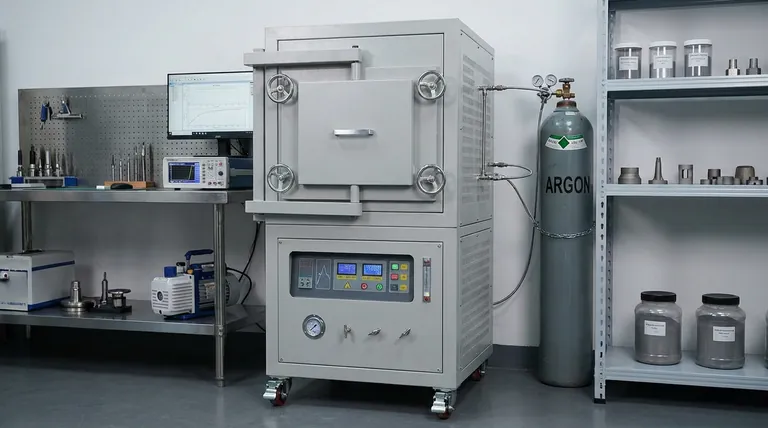
The Mechanics of Environmental Regulation
Creating an Independent Environment
The core purpose of this device is to establish an independent processing zone isolated from ambient air.
This isolation is necessary to maintain precise control over the sintering conditions of metal compacts.
Methods of Oxygen Elimination
To achieve this isolated state, the device typically utilizes one of two methods: vacuuming or the introduction of inert gases.
High-purity gases, specifically Argon or Helium, are used to displace reactive air elements.
This displacement creates a stable atmosphere where metal particles can be heated without chemically reacting with their surroundings.
Impact on Material Quality
Preventing Rapid Oxidation
At the high temperatures required for sintering, metal particles are highly susceptible to rapid oxidation.
The controlled atmosphere device creates a barrier that prevents this oxidation from occurring.
Without this protection, the metal would degrade before the particles could fuse effectively.
Ensuring Metallurgical Bonding
The quality of the bond between metal particles is directly tied to the purity of the sintering environment.
By eliminating oxidative interference, the device allows for strong, uniform metallurgical bonding.
This is particularly critical for complex materials, such as porous aluminum foams, where bond integrity defines the structure.
Maximizing Mechanical Strength
The ultimate goal of using this device is to ensure the physical durability of the component.
Proper environmental control directly translates to superior mechanical strength in the finished part.
This ensures the component meets the rigorous performance standards required for industrial applications.
The Risks of Inadequate Control
The Cost of Oxidation
If the atmosphere is not perfectly regulated, even trace amounts of oxygen can ruin the sintering process.
Rapid oxidation acts as a contaminant, preventing the particles from fusing into a solid mass.
Compromised Structural Integrity
Failure to maintain the vacuum or inert gas shield results in weak points within the material.
This leads to components that lack the necessary mechanical strength and are prone to failure under stress.
Making the Right Choice for Your Goal
To ensure the success of your powder metallurgy project, consider your specific material requirements when selecting your atmospheric controls.
- If your primary focus is mechanical durability: Ensure your device is capable of maintaining a high-purity inert gas environment to maximize metallurgical bonding.
- If your primary focus is preventing contamination: Prioritize devices that offer robust vacuum capabilities to completely eliminate oxygen during the high-temperature phase.
A controlled atmosphere is not just a feature; it is the fundamental requirement for transforming loose metal powder into a high-performance solid component.
Summary Table:
| Feature | Vacuum Environment | Inert Gas (Argon/Helium) |
|---|---|---|
| Primary Goal | Complete oxygen elimination | Oxygen displacement & stabilization |
| Key Benefit | Prevents contamination | Enables uniform heating |
| Effect on Quality | Maximizes bond integrity | Ensures consistent material properties |
| Best For | High-purity requirements | Complex structures like aluminum foams |
Elevate Your Powder Metallurgy Precision with KINTEK
Don’t let oxidation compromise your structural integrity. KINTEK provides industry-leading high-temperature solutions, including Muffle, Tube, Rotary, Vacuum, and CVD systems, all designed to offer the precise environmental regulation your materials demand. Backed by expert R&D and manufacturing, our systems are fully customizable to meet your unique sintering and bonding needs.
Ready to maximize your mechanical strength? Contact KINTEK today to find your custom furnace solution.
References
- María E. Hernández-Rojas, Sandro Báez–Pimiento. A Device with a Controllable Internal Atmosphere, Independent from the Heating Furnace, for Sintering Metal Particles. DOI: 10.1590/1980-5373-mr-2023-0401
This article is also based on technical information from Kintek Furnace Knowledge Base .
Related Products
- Mesh Belt Controlled Atmosphere Furnace Inert Nitrogen Atmosphere Furnace
- 1200℃ Controlled Inert Nitrogen Atmosphere Furnace
- 1700℃ Controlled Inert Nitrogen Atmosphere Furnace
- 1400℃ Controlled Inert Nitrogen Atmosphere Furnace
- Controlled Inert Nitrogen Hydrogen Atmosphere Furnace
People Also Ask
- How is a controlled atmosphere furnace used in material research? Achieve Precise Material Synthesis and Heat Treatment
- What are the two main purposes of controlled atmosphere conditions in furnaces? Protect or Transform Materials for Peak Performance
- How does a controlled atmosphere furnace improve product quality and consistency? Master Precise Heat Treatment for Superior Results
- What types of gases can a controlled atmosphere furnace handle? Master Inert and Reactive Gases for Your Lab
- What types of furnaces have controlled atmosphere furnaces largely replaced? Boost Metallurgical Precision & Safety