
Multilingual technical documentation is the cornerstone of global research accessibility. It ensures that complex operational details for high-temperature furnaces, specifically Muffle and Vacuum systems, are immediately available to the international scientific community. By removing language barriers, manufacturers allow researchers to access and utilize critical technical knowledge without the delay of translation.
Localization of technical documentation transforms isolated machinery into globally accessible tools. It allows international teams to rapidly adopt advanced heating strategies and share experimental protocols without the friction of language barriers.
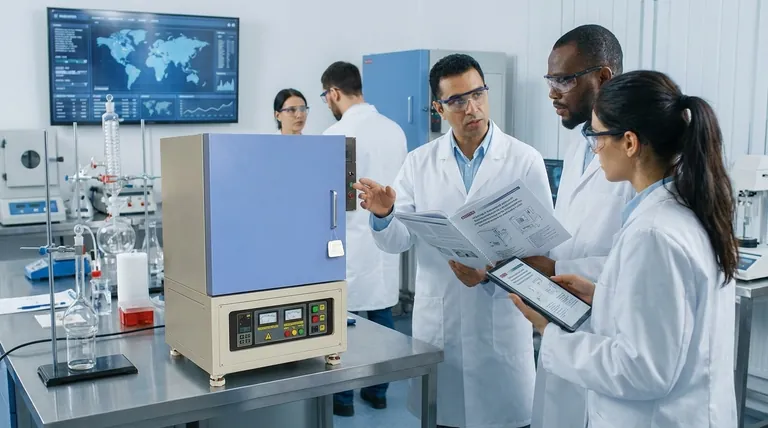
Facilitating Global Knowledge Exchange
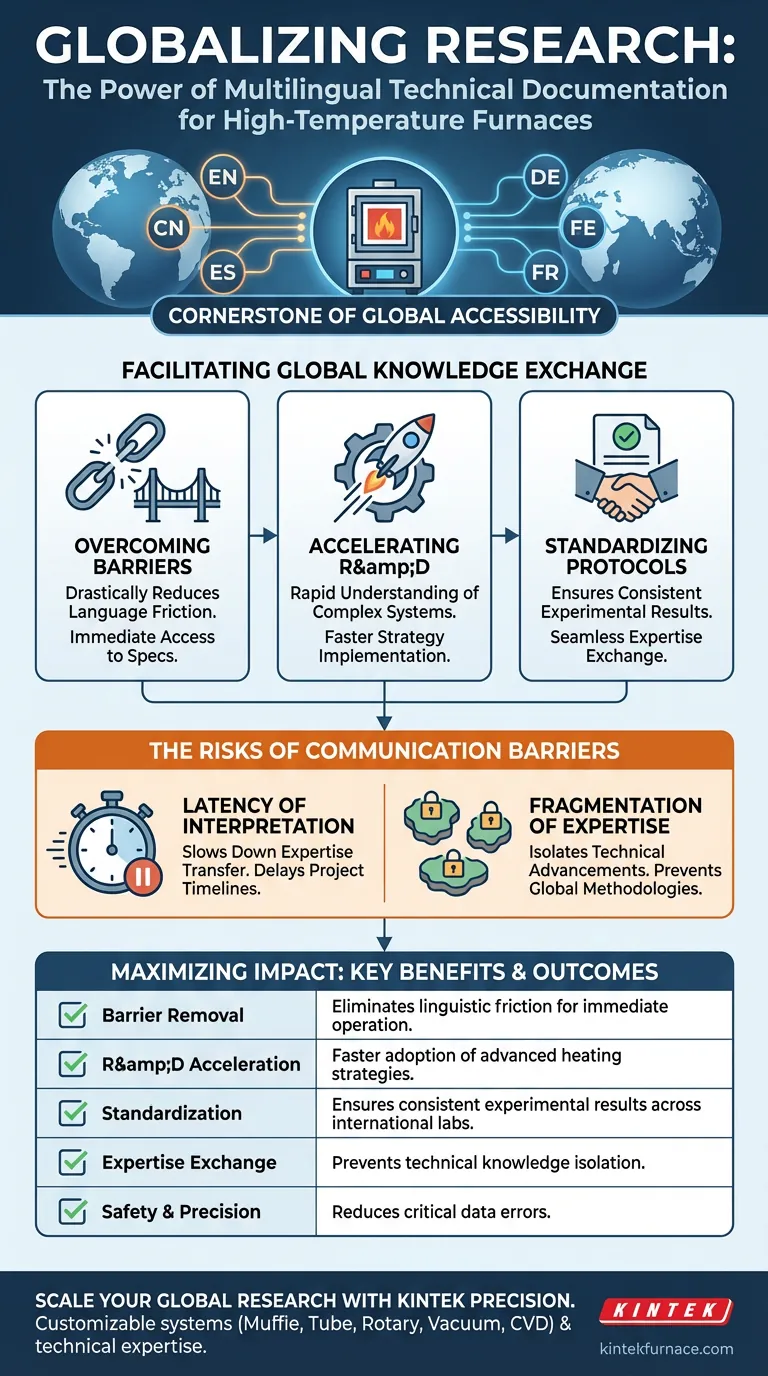
Overcoming Technical Barriers
For the global research community, the primary value of translated documentation is the removal of language barriers. When technical specifications are available in a user's native language, the friction between acquiring equipment and operating it is drastically reduced.
Accelerating R&D Implementation
Access to multilingual guides allows industrial R&D teams to rapidly understand complex systems. Instead of spending time deciphering foreign instructions, researchers can immediately focus on implementing advanced heating strategies.
Standardizing Experimental Protocols
High-temperature furnaces require precise operation to ensure valid results. Localized documentation facilitates the accurate dissemination of experimental protocols, ensuring that technical expertise is standardized and exchanged seamlessly across borders.
The Risks of Communication Barriers
The Latency of Interpretation
Without localized documentation, the transfer of technical expertise slows down significantly. Researchers must pause to translate or interpret critical safety and operational data, introducing a latency that delays project timelines.
Fragmentation of Expertise
Reliance on a single language can isolate technical advancements. If documentation is not translated, valuable technical expertise remains locked within a specific linguistic demographic, preventing the broader global community from leveraging new methodologies.
Maximizing the Impact of Technical Resources
To ensure your high-temperature furnace systems are utilized to their full potential, consider the specific needs of your end-users.
- If your primary focus is Speed of Implementation: Prioritize translating operational manuals to allow R&D teams to immediately deploy advanced heating strategies.
- If your primary focus is Global Collaboration: Ensure experimental protocols are localized to facilitate the accurate exchange of data and expertise across international labs.
By eliminating linguistic obstacles, you empower the global scientific community to operate with precision, speed, and unity.
Summary Table:
| Benefit | Impact on Research & Development |
|---|---|
| Barrier Removal | Eliminates linguistic friction for immediate equipment operation. |
| R&D Acceleration | Faster adoption of advanced heating strategies and protocols. |
| Standardization | Ensures consistent experimental results across international labs. |
| Expertise Exchange | Prevents technical knowledge from being isolated by language. |
| Safety & Precision | Reduces interpretation errors in critical high-temperature data. |
Scale Your Global Research with KINTEK Precision
Don't let language barriers hinder your laboratory's breakthrough potential. At KINTEK, we understand that global innovation requires clear, accessible communication. Backed by expert R&D and world-class manufacturing, we provide high-performance Muffle, Tube, Rotary, Vacuum, and CVD systems—all fully customizable to your unique technical and linguistic requirements.
Empower your international team with equipment designed for global excellence. Contact KINTEK today to discuss your custom furnace needs and see how our technical expertise can streamline your path to discovery.
Visual Guide
References
- Cu‐Content Engineering in FeCoNiCuAl High‐Entropy Alloy Precursors: A Pathway to Advanced HEA‐Derived Sulfide Electrocatalysts for Efficient Oxygen Evolution Reaction. DOI: 10.1002/cctc.202500147
This article is also based on technical information from Kintek Furnace Knowledge Base .
Related Products
- 1400℃ High Temperature Laboratory Tube Furnace with Alumina Tube
- 1800℃ High Temperature Muffle Oven Furnace for Laboratory
- 1700℃ High Temperature Laboratory Tube Furnace with Alumina Tube
- 1700℃ High Temperature Muffle Oven Furnace for Laboratory
- 1200℃ Muffle Oven Furnace for Laboratory
People Also Ask
- How does zone-melting in tube furnaces synthesize bismuth micro-wires? Master Single-Crystal Thermoelectric Growth
- How are high-temperature laboratory tube furnaces applied in long-term vacuum homogenization heat treatments for intermetallic samples?
- How do high-temperature laboratory tube furnaces ensure environmental stability? Precision Thermal Reduction Tips
- How are high-temp tube furnaces used to measure diffusion coefficients per Fick's law? Master Precision Annealing
- How are high-temperature tube furnaces applied in testing ceramic-supported alloy membranes? Insights



















