Preventing hydrogen-induced failure in palladium membranes is not just about the right temperature—it’s about the right sequence of events.
To avoid hydrogen embrittlement and cracking during thermal cycling, you must first heat the membrane to at least 300 °C (typically 350 °C) under a flowing inert gas such as argon or nitrogen. Only after this thermal threshold is reached should you introduce any hydrogen-containing mixture. This protocol prevents the formation of the brittle beta‑hydride phase and, when combined with controlled heating and cooling rates, keeps thermal stresses low enough to preserve membrane integrity across many cycles.
The core takeaway: palladium membranes fail during thermal cycling because hydrogen is allowed to interact with the metal while it is still in the embrittlement‑sensitive temperature zone. The primary defense is a two‑stage heating protocol—inert pre‑heat above 300 °C, followed by hydrogen exposure—augmented by slow, managed ramping to handle physical thermal stress, and optionally backed by silver alloying to fundamentally toughen the membrane.
The Underlying Problem: How Hydrogen Causes Cracking
The Embrittlement Mechanism
Pure palladium absorbs hydrogen to form a solid‑solution alpha phase at low concentrations.
As the hydrogen partial pressure rises or temperature drops, a brittle beta‑hydride phase appears.
The lattice expansion between these two phases creates enormous internal stress, leading to micro‑cracking and, eventually, catastrophic fracture.
Why Temperature is the Decisive Factor
Above approximately 300 °C, the miscibility gap closes: only one solid‑solution phase exists, regardless of hydrogen pressure.
In this region, hydrogen dissolves and diffuses without triggering the damaging phase transformation.
Thus, the first rule is simple: never let hydrogen touch the membrane below this critical temperature.
The Primary Heating Protocol: Two Stages That Define Survival
Stage 1: The Inert Pre‑Heat
Start the furnace under a continuous purge of dry argon, nitrogen, or another clean inert gas.
Ramp the temperature to 350 °C—a safe margin above the critical point—and allow the entire assembly to reach thermal equilibrium.
This step ensures the palladium is fully in its ductile, single‑phase state before any hydrogen arrives.
Stage 2: Introducing Hydrogen Safely
Once the membrane is isothermal at 350 °C, you can slowly blend hydrogen into the feed gas.
During cooling, reverse this sequence: purge all hydrogen from the system while the temperature is still above 300 °C.
Only then bring the furnace down to room temperature under inert gas. The membrane must never cross the 300 °C line with hydrogen present.
Beyond Phase Control: Managing Thermal Stress with Ramping
The Physical Threat of Rapid Temperature Change
Even if you avoid the hydride phase, rapid heating or cooling can destroy a palladium membrane.
Thermal expansion mismatch between the palladium layer and its support structure (ceramic, porous metal, etc.) generates tensile stresses that exceed the material’s strength if temperature changes too fast.
This is exactly what supplementary reference work on composites and quartz ceramics teaches us: uncontrolled rate changes store strain energy, leading to immediate or delayed cracking.
Applying Controlled Ramping to Palladium Membranes
To prevent thermal‑stress cracking, your tube furnace profile must include slow, programmed heating and cooling rates.
A practical protocol is 2–5 °C/min, with brief dwell periods at intermediate temperatures to allow stress relaxation.
In a multi‑cycle campaign, incorporate a dwell at around 350 °C during heating and again during cooling before the final purge. This extra time lets temperature gradients even out and mechanically anchors the film.
A Complete, Safe Profile Example
A robust profile for pure Pd membrane cycling might look like this:
- Ramp to 350 °C under nitrogen at 3 °C/min. Hold for 30 min.
- Introduce hydrogen mixture and perform the desired permeation or reaction step.
- Ramp down to 350 °C (or lower, but above 300 °C) and purge hydrogen thoroughly with inert gas. Hold at this temperature for 15 min.
- Cool to room temperature at 3 °C/min under inert gas.
Alloying: A Parallel Path to Robustness
The Role of Silver
The primary reference highlights that co‑depositing palladium with silver (e.g., a 75:25 Pd:Ag ratio) dramatically improves phase stability.
Silver expands the single‑phase region to lower temperatures and suppresses the discontinuous alpha‑to‑beta transition, effectively making the membrane “embrittlement‑resistant” even under less strict temperature protocols.
This alloy route also enhances thermal cycling endurance by reducing the lattice expansion per absorbed hydrogen atom.
When to Choose Alloying
If your process demands frequent, rapid thermal swings that make precise inert purging cumbersome, a Pd‑Ag alloy membrane is a strategic choice.
It gives you a wider safety margin and can tolerate brief, unintended hydrogen exposure at lower temperatures without immediate cracking.
Understanding the Trade‑offs
Every preventive measure comes with a cost. A transparent view of the limitations builds a realistic protocol.
Protocol Complexity vs. Purity
A pure palladium membrane, operated strictly under the inert‑pre‑heat protocol, can offer the highest hydrogen selectivity in applications where an inert gas stream is already available.
However, it demands disciplined cycle management and more operator attention, which can reduce throughput in high‑volume settings.
Throughput vs. Long‑Term Integrity
The Pd‑Ag alloy reduces the need for flawless protocol execution, but it typically shows a slightly lower hydrogen permeability than pure Pd.
In addition, silver can interact with certain process gases, so material compatibility must be verified.
Thermal Inertia and Equipment Limits
Slow ramping minimizes stress but elongates the total cycle time.
If your tube furnace has high thermal inertia or poor temperature control at low ramp rates, you may need to recalibrate the profile—possibly adding more dwells—to avoid overshoot that could locally breach the 300 °C safety boundary during cooling.
Making the Right Choice for Your Laboratory Furnace
Your specific goal will determine which elements of the protocol you prioritize. Use this guide to align your approach.
- If your primary focus is maximizing cycle life of a pure palladium membrane: Never compromise on the inert pre‑heat; always cross above 300 °C before hydrogen touches the surface, and ramp slowly (≤3 °C/min) with post‑purge dwells.
- If your primary focus is high experimental throughput and you cannot afford long purge times: Switch to a Pd:Ag 75:25 membrane to tolerate faster temperature transitions while still avoiding most hydrogen‑related damage.
- If your primary focus is preventing support‑side cracking due to thermal mismatch: Implement segmented ramping with forced temperature holds around 350 °C, regardless of the membrane material, to relax interfacial stress before and after the hydrogen step.
- If your primary focus is working with thin‑film membranes that are especially fragile: Use both the alloy membrane and the full, slow ramping protocol with extended dwells—this dual approach compensates for the extreme sensitivity of sub‑micron films.
By treating the heating protocol not as a single rule but as a layered strategy, you can design a laboratory tube furnace routine that protects your palladium membranes from the dual threats of chemical embrittlement and thermal‑stress cracking.
Summary Table:
| Protocol Phase | Key Operation | Primary Objective |
|---|---|---|
| 1. Inert Pre-Heat | Heat to 350 °C under continuous Ar/N₂ purge | Prevents brittle $\beta$-hydride phase formation |
| 2. Hydrogen Exposure | Introduce H₂ mixture only above 300 °C | Ensures operation inside the ductile single-phase region |
| 3. Controlled Ramping | Heat/cool at 2–5 °C/min with intermediate holds | Relieves thermal expansion mismatch stress |
| 4. Safe Shutdown | Thoroughly purge H₂ above 300 °C before cooling | Avoids post-experiment embrittlement and cracking |
| 5. Material Choice | Utilize Pd:Ag (75:25) alloy where applicable | Expands phase stability and increases cycle tolerance |
Enhance Your Thermal Cycling Precision with KINTEK
Protect your sensitive palladium membranes and optimize high-temperature material processing with high-precision heating systems. KINTEK specializes in advanced laboratory equipment and consumables, offering a comprehensive range of customizable high-temperature furnaces—including tube, atmosphere, vacuum, muffle, CVD, rotary, dental, and induction melting furnaces designed to meet your precise process requirements.
Whether you need rigorous multi-stage gas purging or strict programmable temperature ramping, KINTEK provides engineered solutions tailored to your unique laboratory challenges.
Contact us today to consult with our high-temperature furnace specialists!
Related Products
- 1400℃ High Temperature Laboratory Tube Furnace with Alumina Tube
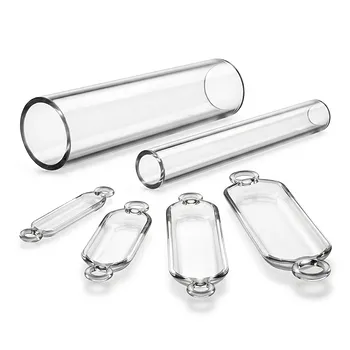
- High Purity Quartz Tube and Quartz Boat for Laboratory Furnaces
- Laboratory Quartz Tube Furnace RTP Heating Tubular Furnace
- Laboratory Vacuum Tilt Rotary Tube Furnace Rotating Tube Furnace
- 1700℃ High Temperature Laboratory Tube Furnace with Alumina Tube
People Also Ask
- How are high-temperature laboratory tube furnaces applied in long-term vacuum homogenization heat treatments for intermetallic samples?
- How do high-temperature laboratory tube furnaces ensure environmental stability? Precision Thermal Reduction Tips
- How are high-temperature tube furnaces applied in testing ceramic-supported alloy membranes? Insights
- What is the function of a furnace in CuAlMn alloy treatment? Achieve Perfect Microstructural Homogenization
- How does a laboratory high-temperature tube furnace contribute to the conversion of electrospun fibers? Expert Insights