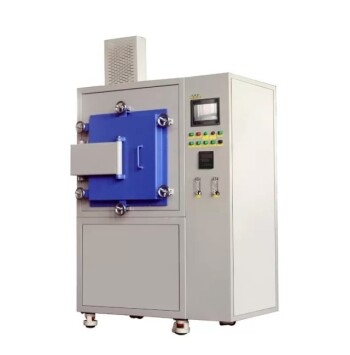
Nanosized β-SiC synthesis is driven by a specific, high-temperature carbothermal reduction window. To successfully produce nanosized beta-silicon carbide powders from a silica-carbon precursor, you must use a high-temperature furnace operating between 1450°C and 1550°C under a strictly controlled protective atmosphere (typically flowing argon) or vacuum. At these temperatures, complete conversion occurs rapidly, in approximately 30 to 45 minutes, yielding powders with crystallite sizes in the 40 to 100 nm range.
The synthesis of nanosized β-SiC is not just about hitting a temperature setpoint—it's a battle against unwanted grain growth and phase transformation. The critical 1450–1550°C window, combined with rapid, brief soaking under inert gas, balances the thermodynamics of complete reduction against the kinetics of coarsening, making a high-quality, controlled-atmosphere furnace the foundational tool for success.
The Essential Furnace Configuration
The carbothermal reduction of silica is a high-temperature, solid-state reaction. A standard furnace will not suffice; the process demands a specialized thermal system designed for extreme uniformity and chemical inertness.
The Case for a Graphite Hot Zone
A high-temperature furnace is defined by its hot zone. For silicon carbide synthesis, graphite is the only viable material for heating elements and insulation. Graphite is chemically inert to the process byproducts and can withstand the extreme operating temperatures. More importantly, any metal-based heating element would catalytically contaminate the reaction and fail prematurely at these temperatures.
Cold-Wall Construction for Safety
At the required 1550°C, the thermal load is immense. A cold-wall furnace design is therefore essential, not optional. In this construction, graphite insulation is contained within a water-cooled stainless steel vessel. This manages the extreme heat safely, prevents the exterior from becoming a hazard, and allows for precise internal atmosphere control without risking structural failure.
Defining the Core Thermal Parameters
The primary reference process hinges on a tight integration of temperature, time, and atmosphere. Deviation from this recipe directly leads to failure—either an incomplete reaction or an unusable, overgrown product.
Target Temperature and Reaction Time
The synthesis sweet spot is definitively 1450°C to 1550°C. This range provides the necessary thermodynamic driving force for the carbon to strip oxygen away from the silica. At these temperatures, the reaction is remarkably fast. A soak time of 30 to 45 minutes at the peak temperature is sufficient for complete carbothermal reduction. Extending the time unnecessarily offers no benefit and only risks crystallite growth well beyond the 100 nm target.
The Non-Negotiable Role of a Protective Atmosphere
The furnace atmosphere is a primary process control variable. The reaction must occur in the absence of oxygen. A flowing inert gas—typically argon—at a slight over-pressure (1–3 psi) or a controlled partial vacuum is required. This environment purges gaseous reaction byproducts like carbon monoxide (CO) and protects both the newly formed SiC nanoparticles and the graphite hot zone from catastrophic oxidation.
The Scientific Reasons Behind the Parameters
Your deep need is to understand why these parameters exist. The constraints are imposed by material thermodynamics and the high surface energy of nanopowders.
Stoichiometry and the Excess Carbon Trap
Sub-optimal precursor chemistry can negate perfect furnace conditions. If you are using a pyrolyzed organic precursor, it likely contains an excess of carbon (e.g., a 62.3% C to 37.7% SiO2 mix). This carbon-rich mix will not yield pure SiC. You must perform a corrective admixture of extra SiO2 to achieve the perfect stoichiometric balance for the reaction: SiO2 + 3C → SiC + 2CO. Even with the perfect 1500°C thermal profile, an imbalanced precursor will leave behind residual carbon or silica, compromising final purity.
The Upper Temperature Limit and Phase Transformation
The 1550°C upper boundary is a hard limit to avoid a destructive phase change. Beta-SiC (β-SiC) is a metastable phase at high temperatures. Heating it above 1800°C triggers an irreversible transformation into alpha-SiC (α-SiC), which grows into large, plate-like grains that are catastrophic for mechanical properties. The synthesis window of 1450–1550°C is specifically chosen to be well below this danger zone, ensuring the formation and retention of the desired cubic, nanoscale β-SiC phase.
Understanding the Trade-offs and Pitfalls
Even when you follow the primary recipe, the narrow process window is fraught with risks rooted in physical chemistry. Objectively managing these is the core of successful synthesis.
The Risk of Phase Transformation
The 1550°C setpoint is not just an arbitrary number; it is a safety margin. While the β-to-α transformation accelerates dramatically after 1800°C, surface energy effects in nanoparticles can initiate localized transformation at lower temperatures. Pushing your furnace to 1600°C to "speed things up" or "ensure completion" runs a high risk of nucleating stable α-SiC seeds. Once formed, these seeds will grow uncontrollably, dominating the final powder with micron-sized platelets instead of the targeted nanospheres.
Atmosphere Contamination and Evaporation
The protective argon atmosphere solves one problem but can create another if not precisely managed. At synthesis temperatures, the vapor pressure of silicon-based species is significant. An incorrect vacuum level, especially near 10 Torr, can cause preferential silicon evaporation from the SiC surface. This not only alters the chemistry but also coats your furnace’s heating elements and porous insulation with condensed silicon, leading to premature and costly equipment failure.
Thermal Runaway and "Bloating"
Nanopowders have an extraordinary surface-to-volume ratio, making them highly reactive. During the 30–45 minute soak, densification and pore closure occur rapidly. If the furnace's temperature controller overshoots or the soak time is too long, gases trapped within these closed nanopores can expand. This leads to a phenomenon called bloating, where the material increases in volume and loses density, effectively ruining the batch. Precision control over peak temperature and an automated, tightly managed soak time are the only countermeasures.
Making the Right Choice for Your Synthesis Goal
Your specific goal will determine which edge of this process window you lean toward and what furnace capabilities you prioritize above all else.
- If your primary focus is minimizing crystallite size (40-60 nm): Choose the lower end of the temperature range (1450°C) and the shortest viable soak time (30 minutes), and ensure your furnace has a rapid cooling capability to arrest grain growth immediately after the reaction is complete.
- If your primary focus is maximizing phase purity and conversion yield: Target 1500°C and use a strictly calibrated 1:3 stoichiometric mix of SiO2 to C. Verify your furnace can maintain a stable, slightly positive pressure of high-purity argon throughout the entire cycle to guarantee full oxide reduction.
- If your primary focus is processing a carbon-rich pyrolyzed precursor: Prioritize upstream chemical correction by admixing the calculated amount of SiO2 before synthesis. Your furnace then becomes the reliable final-stage reactor for converting this precisely balanced precursor at 1550°C, ensuring no graphitic carbon residue remains.
Success in synthesizing nanosized β-SiC is found not in a single magic setting, but in the precise control and interplay of peak temperature, brief thermal exposure, and a meticulously maintained inert environment.
Summary Table:
| Process Parameter | Requirement / Setting | Key Purpose & Impact |
|---|---|---|
| Temperature Range | 1450°C – 1550°C | Drives complete carbothermal reduction while avoiding α-SiC transformation |
| Soak Duration | 30 – 45 minutes | Limits crystallite growth to target nanoscale (40–100 nm) |
| Furnace Atmosphere | Flowing Argon (1–3 psi) or Vacuum | Prevents oxidation and flushes CO reaction byproducts |
| Hot Zone Material | High-purity Graphite | Prevents catalytic metal contamination at extreme temperatures |
| Furnace Construction | Cold-Wall Stainless Steel | Ensures safe thermal management and precise atmosphere control |
Achieve Precise Nanomaterial Synthesis with KINTEK High-Temp Furnaces
Controlling crystallite growth and phase purity in β-SiC synthesis requires uncompromising temperature uniformity and atmosphere control. KINTEK specializes in advanced laboratory high-temperature furnaces—including custom atmosphere, vacuum, graphite hot-zone, tube, and muffle furnaces—tailored to meet the exact thermal profiles your research demands.
Whether you are scaling powder synthesis or developing next-gen ceramics, our custom-built furnace solutions deliver the reliability and precision your lab needs. Contact KINTEK today to discuss your high-temperature furnace requirements!
Related Products
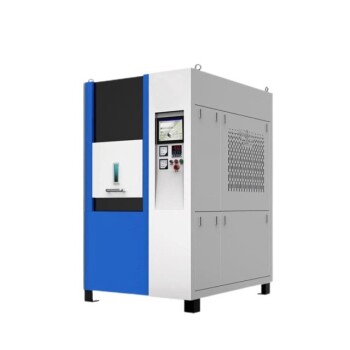
- Spark Plasma Sintering SPS Furnace
- Vacuum Heat Treat Sintering Furnace Molybdenum Wire Vacuum Sintering Furnace
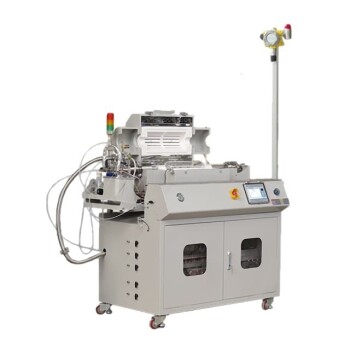
- Custom Made Versatile CVD Tube Furnace Chemical Vapor Deposition CVD Equipment Machine
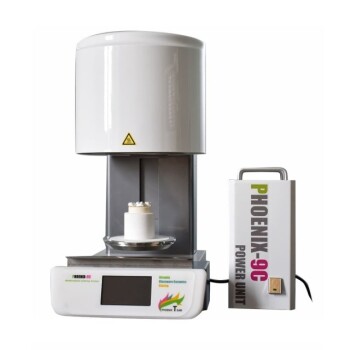
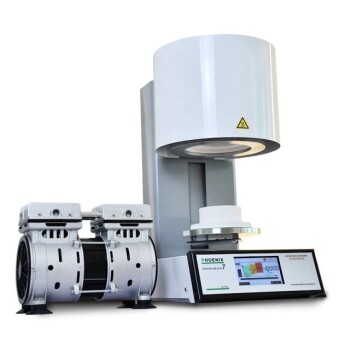
- Chairside Dental Porcelain Zirconia Sintering Furnace with Transformer for Ceramic Restorations
- 1400℃ Muffle Oven Furnace for Laboratory
People Also Ask
- Why is it necessary to maintain a high vacuum environment during the SPS of SiC? Key to High-Density Ceramics
- How does the heating mechanism of Spark Plasma Sintering (SPS) function? Enhance TiC/SiC Composite Fabrication
- What are the technical advantages of using an SPS sintering furnace? Elevate Al2O3-TiC Material Performance
- What are the advantages of Spark Plasma Sintering (SPS)? Achieve Superior Microstructures
- What are the steps in the discharge plasma sintering process? Master Fast, High-Density Material Consolidation