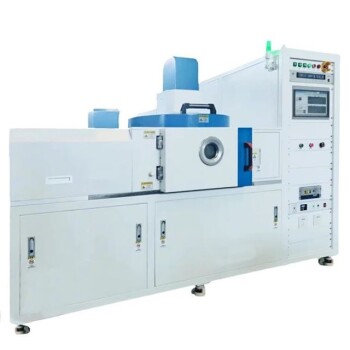
Spark Plasma Sintering (SPS) fundamentally outperforms traditional melting techniques for TiC-reinforced alloys by decoupling densification from extreme thermal exposure. Through the simultaneous application of pulsed current and axial pressure, SPS achieves high-density consolidation at a relatively low temperature of 1100°C within a rapid 8-minute window. This unique process environment preserves the integrity of the reinforcement phase, which is typically compromised during the high-heat, long-duration cycles of traditional melting.
Core Insight The definitive advantage of SPS is the preservation of your "designed microstructure." By bypassing the high thermal equilibrium of melting, SPS prevents both the physical coarsening of TiC particles and the chemical degradation of the interface between the reinforcement and the alloy matrix.
Preserving Microstructural Integrity
Inhibiting Particle Coarsening
Traditional melting exposes materials to high temperatures for extended periods. This thermal energy drives diffusion, causing TiC particles to grow larger (coarsen).
SPS operates at a comparatively low temperature of 1100°C. This lower thermal ceiling significantly restricts the energy available for particle growth. Consequently, the TiC reinforcement retains its original, fine size, which is critical for mechanical performance.
Preventing Abnormal Grain Growth
The heating mechanism in SPS allows for an extremely short processing duration (approximately 8 minutes).
Traditional techniques often require long "holding times" to ensure heat soak and density. SPS achieves near-theoretical density rapidly, denying the metal matrix the time required for abnormal grain growth. This results in a finer, more uniform matrix structure.
Chemical Stability and Interface Control
Blocking Undesirable Reactions
At melting temperatures, the chemical reactivity between a reinforcement phase (TiC) and a medium-entropy alloy matrix increases drastically. This can lead to the formation of brittle, unwanted intermetallic phases.
SPS minimizes this risk by limiting both the peak temperature and the reaction time. The process effectively freezes the chemical state of the material, preventing the matrix from reacting with the TiC particles.
Direct Joule Heating
Unlike external heating elements used in conventional furnaces, SPS utilizes pulsed current to apply Joule heating directly to the sample and the mold.
This internal heating mechanism enables extremely fast heating rates. It minimizes the total thermal load on the sample, ensuring that the material is only exposed to heat for the exact duration necessary for consolidation.
Understanding the Trade-offs
The Necessity of Conductivity
The efficiency of SPS relies heavily on the principles of Joule heating. Because the heat is generated internally via pulsed current, the process is most effective when the sample or the mold has specific electrical conductivity properties.
Non-Equilibrium Processing
SPS is a non-equilibrium process. Unlike melting, which allows elements to homogenize in a liquid state, SPS relies on solid-state sintering mechanisms assisted by pressure.
This means the initial mixing and distribution of the TiC particles before sintering must be precise. The SPS process will lock the particles in place; it will not redistribute them as a melt pool would.
Making the Right Choice for Your Goal
If your primary focus is Maximum Strength and Hardness: Prioritize SPS to maintain fine TiC particle sizes and a fine-grain matrix, as preventing coarsening directly correlates to superior mechanical properties.
If your primary focus is Chemical Purity: Choose SPS to strictly inhibit interfacial reactions, ensuring the TiC reinforcement remains a distinct, stable phase within the alloy.
If your primary focus is Processing Efficiency: Leverage SPS for its rapid 8-minute cycle time, which drastically reduces energy consumption and turnaround time compared to traditional thermal cycles.
SPS converts the theoretical advantages of composite design into physical reality by eliminating the thermal penalties of traditional manufacturing.
Summary Table:
| Feature | Spark Plasma Sintering (SPS) | Traditional Melting Techniques |
|---|---|---|
| Process Temperature | Relatively Low (~1100°C) | High (Above Melting Point) |
| Processing Duration | Rapid (~8 Minutes) | Long (Hours) |
| Microstructure | Fine, Uniform Grain Size | Coarsened Particles & Grains |
| Chemical Stability | High (Inhibits Interfacial Reactions) | Low (Risk of Brittle Phases) |
| Heating Mechanism | Internal Direct Joule Heating | External Thermal Energy |
| Final Density | Near-Theoretical | Variable/Equilibrium Based |
Elevate Your Material Performance with KINTEK SPS Solutions
Don't let traditional thermal cycles compromise your research. Backed by expert R&D and manufacturing, KINTEK offers advanced Spark Plasma Sintering (SPS), CVD systems, and lab high-temp furnaces—all fully customizable to meet your unique materials science needs. Whether you are developing TiC-reinforced alloys or complex medium-entropy composites, our systems ensure maximum strength, chemical purity, and processing efficiency.
Ready to transform your consolidation process? Contact our experts today!
References
- Yubo Zhao, Oleksandr Тіsov. Enhancing Reciprocating Wear Resistance of Co37Cr28Ni31Al2Ti2 Spark Plasma Sintered Medium-Entropy Alloy via TiC Addition. DOI: 10.3390/ma18020442
This article is also based on technical information from Kintek Furnace Knowledge Base .
Related Products
- Spark Plasma Sintering SPS Furnace
- Chairside Dental Porcelain Zirconia Sintering Furnace with Transformer for Ceramic Restorations
- 600T Vacuum Induction Hot Press Vacuum Heat Treat and Sintering Furnace
- 9MPa Air Pressure Vacuum Heat Treat and Sintering Furnace
- Dental Porcelain Zirconia Sintering Ceramic Vacuum Press Furnace
People Also Ask
- Why is it necessary to maintain a high vacuum environment during the SPS of SiC? Key to High-Density Ceramics
- How does the heating mechanism of Spark Plasma Sintering (SPS) function? Enhance TiC/SiC Composite Fabrication
- What are the technical advantages of using an SPS sintering furnace? Elevate Al2O3-TiC Material Performance
- What are the steps in the discharge plasma sintering process? Master Fast, High-Density Material Consolidation
- What are the advantages of spark plasma sintering (SPS) over traditional forging? Precision Microstructural Control