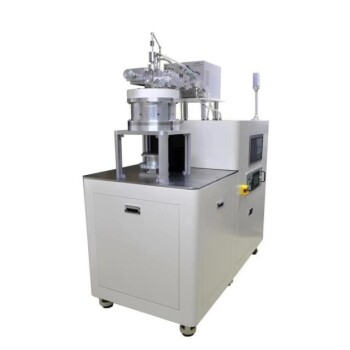
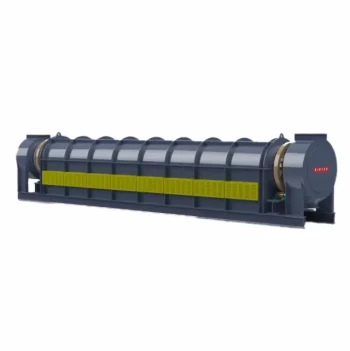
The fundamental process advantage of SPS lies in its heating mechanism. Unlike traditional hot pressing, which uses external heating elements to radiate heat, Spark Plasma Sintering (SPS) passes a high-amperage, low-voltage pulsed direct current directly through the die and the conductive powder compact. This internal Joule heating allows for extremely rapid thermal cycles, full densification in minutes, and processing temperatures typically 200°C lower than a conventional hot press furnace.
While both SPS and traditional hot pressing apply uniaxial pressure, SPS replaces slow, external radiation heating with instantaneous, internal Joule heating. This core difference unlocks dramatically faster cycles, lower processing temperatures, and an unrivalled ability to suppress grain growth, making it the definitive technique for consolidating advanced nanostructured and refractory materials.
The Physics Behind the Advantage: Internal vs. External Heating
The performance gap between these two methods originates from a fundamental difference in how heat is generated and transferred to the powder. Understanding this is key to knowing when the high cost of SPS is justified.
How Traditional Hot Pressing Transfers Heat
A conventional hot press furnace uses heating elements to radiate heat to the outside of a die. The heat must then conduct through the die wall and into the powder compact.
This process is inherently slow. Ramp rates are constrained by the thermal mass of the furnace and the thermal conductivity of the tooling.
A slow, externally-driven thermal profile results in prolonged exposure to high temperatures before full density is reached, providing a large window for undesirable grain growth.
The Internal Heat Source of SPS
SPS uses a fundamentally different approach. A pulsed direct current is passed directly through a conductive graphite die and, when possible, through the sample itself.
Joule heating occurs internally and uniformly. The heat is generated exactly where it is needed, eliminating the thermal lag of conduction from an external source.
This enables heating rates exceeding 600°C/min, a magnitude impossible in traditional hot presses. This sheer speed allows the system to rapidly skip through low-temperature regimes and reach the sintering sweet spot almost instantly.
Quantifying the Key Process Advantages
The shift from external to internal heating creates a cascade of measurable benefits that directly address the core challenge of powder densification.
Reduced Temperature and Drastically Shorter Cycle Times
Because heat is generated internally and does not rely on thermal conductivity, the entire sintering cycle is compressed from hours to minutes. A full SPS consolidation run often takes under 30 minutes.
The localized current density at particle contact points creates microscopic hot zones, facilitating plastic deformation and mass transport at a lower macroscopic bulk temperature. It is common to see a reduction in the required sintering temperature of approximately 200°C.
For example, some alloy powders fully densify in SPS at 1173–1273 K, whereas a hot press requires up to 1473 K. The holding time is also reduced from over an hour to less than 15 minutes.
Unmatched Microstructural Control
This is the most critical advantage for advanced materials. The primary goal of modern sintering is not just to eliminate porosity, but to do so while preserving a fine-grained, high-performance structure.
The ultra-fast thermal cycle of SPS allows densification to occur before significant grain coarsening can begin. It bypasses the time-temperature window where atomic diffusion leads to grain boundary migration.
The result is a dense body with a grain structure near-identical to the original powder. This is crucial for nanostructured ceramics (like Al₂O₃ or ZrO₂), refractory metals (like tungsten), and advanced alloys, directly translating to superior mechanical and functional properties.
Understanding the Trade-offs and Limitations
While SPS is superior in process kinetics, its adoption introduces constraints not present with traditional hot pressing. A balanced evaluation must acknowledge these limits.
Fundamental Geometry Constraints
This is the most significant technical limitation. SPS processing is almost exclusively limited to simple, uniaxial geometries.
Like standard hot pressing, a cylindrical die and punch set applies pressure from the top and bottom. Complex, near-net-shape parts cannot be directly produced, which restricts its direct application for many commercial components that a furnace-based HIP or traditional sintering approach could handle.
Temperature Measurement Complexity
Accurate temperature control is non-trivial in an SPS setup. Pyrometers are typically focused on the surface of the graphite die, not the sample itself.
The temperature difference between the die wall and the core of the sample can vary significantly depending on the material and heating rate, making precise thermal data harder to obtain than with a well-calibrated hot press thermocouple placed near the part.
Making the Right Choice for Your Research or Production Goal
Selecting between these technologies depends entirely on your core objective. Use this guidance to align the equipment's capability with your specific material challenge.
- If your primary focus is preserving nanostructure or preventing phase devitrification: SPS is the clear and necessary choice. Its ability to hit a target temperature in seconds and cool down just as fast makes it the only tool for sintering temperature-sensitive, nano-enabled, or amorphous materials without destroying their structure.
- If your primary focus is high-throughput screening of new alloy or ceramic compositions: An SPS is unparalleled. It delivers a fully dense characterization pellet from raw powder in under 30 minutes without needing a prior cold compaction step or sintering aids, dramatically accelerating R&D iteration.
- If your primary focus is manufacturing complex, near-net-shape components: A traditional hot press, or other furnace-based processes, remains the more viable route. The difficulty of producing complex carbide dies and the fundamental uniaxial nature of SPS make geometry a hard limitation that process speed cannot overcome.
The choice isn't about which machine is "better," but which physical limitation you can afford—the time-dependent degradation of a slow thermal cycle, or the shape-dependent constraints of a fast one.
Summary Table:
| Feature / Metric | Spark Plasma Sintering (SPS) | Traditional Hot Pressing (HP) |
|---|---|---|
| Heating Mechanism | Internal Joule heating (pulsed DC) | External thermal radiation |
| Heating Rate | Ultra-fast (> 600°C/min) | Slow (10–30°C/min) |
| Processing Time | Minutes (< 30 min total cycle) | Hours (4–8+ hours) |
| Sintering Temp. | ~200°C lower required temperature | Higher temperature required |
| Microstructure | Preserves fine/nano grain structure | Risk of significant grain coarsening |
| Primary Ideal Use | Nanomaterials, refractory alloys, fast R&D | Standard dense components, simpler tooling |
Upgrade your high-temperature material processing with KINTEK. As specialists in advanced laboratory equipment and customizable high-temperature furnaces—including vacuum hot pressing, muffle, tube, CVD, and atmosphere systems—we deliver the precision tools your research demands. Whether you are developing next-generation nanostructured ceramics or optimizing alloy densification, our expert engineering team is ready to deliver tailored solutions for your unique lab needs.
Contact KINTEK Today to Consult with Our High-Temp Furnace Experts
Related Products
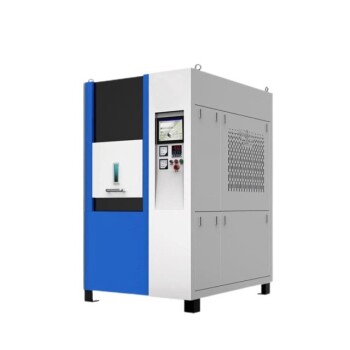
- Spark Plasma Sintering SPS Furnace
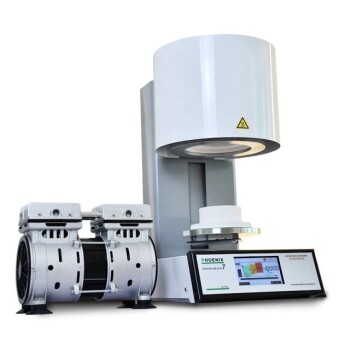
- Chairside Dental Porcelain Zirconia Sintering Furnace with Transformer for Ceramic Restorations
- Dental Porcelain Zirconia Sintering Ceramic Vacuum Press Furnace
- 600T Vacuum Induction Hot Press Vacuum Heat Treat and Sintering Furnace
- 9MPa Air Pressure Vacuum Heat Treat and Sintering Furnace
People Also Ask
- How does the heating mechanism of Spark Plasma Sintering (SPS) function? Enhance TiC/SiC Composite Fabrication
- Why is it necessary to maintain a high vacuum environment during the SPS of SiC? Key to High-Density Ceramics
- What are the technical advantages of using an SPS sintering furnace? Elevate Al2O3-TiC Material Performance
- What are the advantages of Spark Plasma Sintering (SPS)? Achieve Superior Microstructures
- What are the steps in the discharge plasma sintering process? Master Fast, High-Density Material Consolidation