
Vacuum heat treatment furnaces are distinguished by their ability to process materials in a controlled, inert environment, leading to superior material properties and efficient operation. Their primary advantages stem from preventing atmospheric contamination and enabling precise thermal management.
A vacuum heat treatment furnace offers a unique combination of high thermal efficiency, exceptional material protection from atmospheric reactions, and superior control over the treatment process. This results in parts with enhanced mechanical properties, pristine surface finishes, and minimal distortion, all within an environmentally sound operational framework.
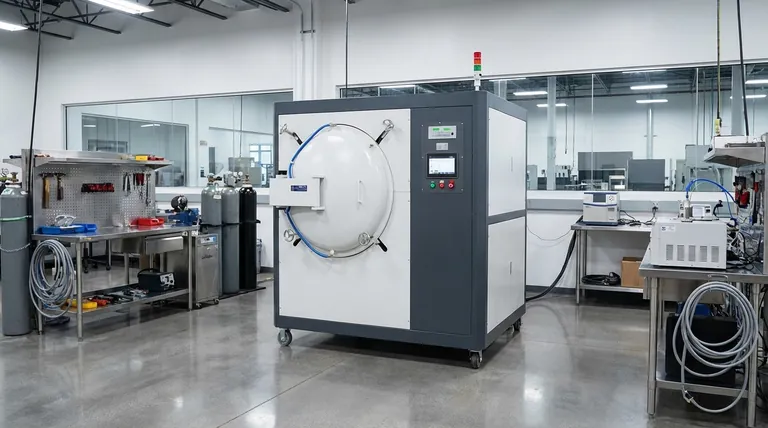
Core Features of Vacuum Heat Treatment Furnaces
Vacuum furnaces operate by removing air and other gases from the treatment chamber, creating a controlled environment. This fundamental feature underpins many of their benefits.
Enhanced Thermal Efficiency
These furnaces exhibit high thermal efficiency, enabling quick processing. They facilitate rapid heating and cooling cycles. This capability contributes to faster throughput and reduced energy consumption.
Precise Process Control
Vacuum furnaces allow for precise temperature control. This ensures uniform material treatment throughout the workpiece. The process offers good stability and repeatability for consistent results.
Clean Treatment Environment
The vacuum environment prevents oxidation, decarburization, and carburization. It creates an inert atmosphere that protects materials from contamination. This environment also inhibits the volatilization of metal elements from the workpiece surface.
Key Advantages for Material Quality
The controlled conditions within a vacuum furnace translate directly into significant improvements in the quality and performance of treated materials.
Superior Surface Finish
The process enables degreasing and degassing of the workpiece. It can remove phosphorus chips and scales from the surface. This results in a bright, purified, and unblemished surface finish.
Improved Mechanical Properties
Vacuum heat treatment significantly improves the mechanical and metallurgical properties. This includes enhancements in strength, durability, wear resistance, and fatigue strength. It also prevents issues like hydrogen embrittlement in specific materials.
Minimal Part Distortion
Workpieces experience a small internal thermal temperature difference. This leads to low thermal stress during the heating and cooling phases. The result is minimal distortion or warping, crucial for precision components.
Operational and Environmental Benefits
Beyond material quality, vacuum furnaces offer considerable advantages in their operation and environmental impact.
Enhanced Safety and Environmental Performance
They provide a safe working environment as no open flames or hazardous fumes are typically present. The process is pollution-free and does not generate harmful emissions. This makes them an environmentally friendly heat treatment option.
Cost and Energy Efficiency
The high thermal efficiency leads to energy savings. The precise and repeatable nature of the process reduces rework and material waste. This contributes to cost recovery over the operational lifetime of the furnace.
Understanding the Trade-offs
While offering significant benefits, vacuum heat treatment furnaces also come with considerations that need to be evaluated.
Initial Investment Cost
The upfront cost of purchasing and installing a vacuum furnace is generally higher than atmospheric furnaces. This is due to the specialized components required for maintaining the vacuum and precise controls.
Batch Processing Limitation
Many vacuum furnaces are designed for batch processing, which can limit continuous production flow. The time required to achieve and break the vacuum adds to the overall cycle time for each batch.
Maintenance and Complexity
Vacuum systems require more sophisticated maintenance compared to simpler atmospheric furnaces. Components like vacuum pumps, seals, and advanced control systems need regular checks and specialized servicing.
Specific Material Suitability
While excellent for many materials, certain processes or materials might still benefit from controlled atmosphere furnaces that use specific gas compositions. The choice depends heavily on the exact metallurgical outcome desired.
Making the Right Choice for Your Goal
Selecting a heat treatment method depends on your specific requirements and priorities.
- If your primary focus is achieving pristine surface quality and preventing oxidation/decarburization: Vacuum heat treatment is the optimal choice for a bright, clean finish and enhanced material integrity.
- If your primary focus is minimizing part distortion and ensuring high dimensional accuracy: The uniform heating and controlled cooling of a vacuum furnace are ideal for maintaining part geometry.
- If your primary focus is improving critical mechanical properties like fatigue strength and wear resistance: Vacuum processing provides the necessary clean environment to achieve these high-performance characteristics reliably.
- If your primary focus is environmental compliance and energy efficiency: Vacuum furnaces offer a clean, pollution-free operation with high thermal efficiency, contributing to a greener manufacturing process.
A vacuum heat treatment furnace is a strategic investment for those seeking high-quality, repeatable results with advanced materials and critical components.
Summary Table:
| Feature/Advantage | Key Benefit |
|---|---|
| Clean Vacuum Environment | Prevents oxidation, decarburization, and contamination for a bright, pristine finish. |
| Precise Temperature Control | Ensures uniform heating and minimal part distortion for high dimensional accuracy. |
| Enhanced Mechanical Properties | Improves strength, durability, wear resistance, and fatigue strength of materials. |
| Operational & Environmental Benefits | Energy-efficient, pollution-free operation with high safety standards. |
Ready to Elevate Your Heat Treatment Process?
Leveraging exceptional R&D and in-house manufacturing, KINTEK provides diverse laboratories and production facilities with advanced vacuum furnace solutions. Our product line, including Vacuum & Atmosphere Furnaces and CVD/PECVD Systems, is complemented by our strong deep customization capability to precisely meet your unique material processing requirements.
Contact us today to discover how our high-temperature furnace solutions can enhance your material quality, improve operational efficiency, and deliver a rapid return on investment.
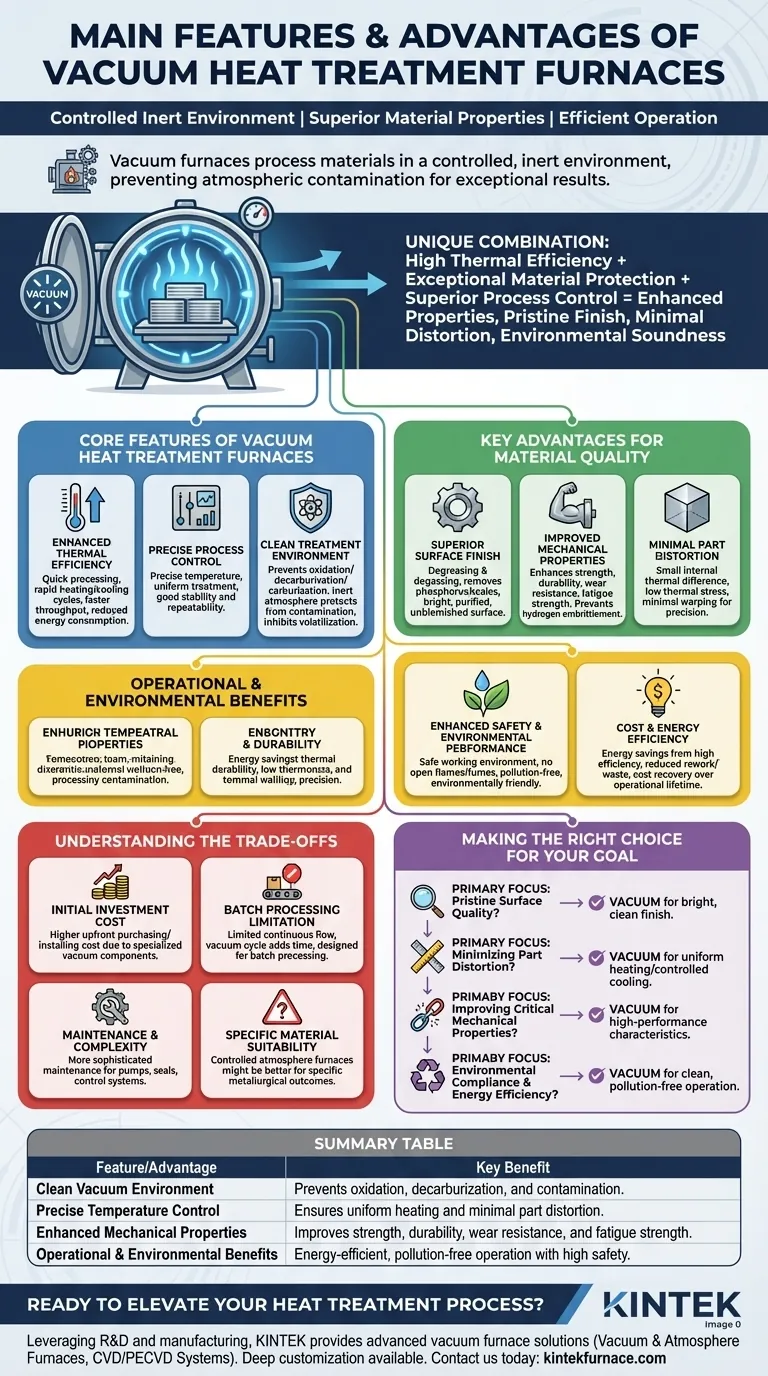
Visual Guide
Related Products
- Vacuum Heat Treat Furnace with Ceramic Fiber Liner
- 2200 ℃ Graphite Vacuum Heat Treat Furnace
- Molybdenum Vacuum Heat Treat Furnace
- 2200 ℃ Tungsten Vacuum Heat Treat and Sintering Furnace
- Vacuum Heat Treat Sintering and Brazing Furnace
People Also Ask
- How does vacuum heat treating affect the grain structure of metal alloys? Achieve Precise Microstructure Control
- What are the benefits of using vacuum heat treating furnaces for metal alloys? Achieve Superior Metal Properties and Performance
- What is one of the most important uses of vacuum heat treating furnaces in aerospace? Achieve Superior Strength in Aircraft Alloys
- How does a vacuum heat treat furnace work? Achieve Pristine, High-Performance Results
- What is the difference between heat treat and vacuum heat treat? Achieve Superior Metal Properties with Pristine Finishes



















