A high-vacuum high-temperature testing machine serves the critical function of isolating mechanical performance from chemical degradation during material evaluation. It is designed to subject Ultra-High Temperature Ceramic Matrix Composites (UHTCMCs) to thermal loads exceeding 900°C while maintaining a strict oxygen-free vacuum. This dual-capability ensures that the data collected reflects the material's true structural capabilities without the interference of environmental factors like oxidation.
By simulating the extreme heat of hypersonic flight while eliminating oxygen, this technology separates thermal stress from chemical reaction. This isolation is the only way to determine the actual mechanical baseline—specifically flexural strength and elastic modulus—of composites intended for aerospace applications.
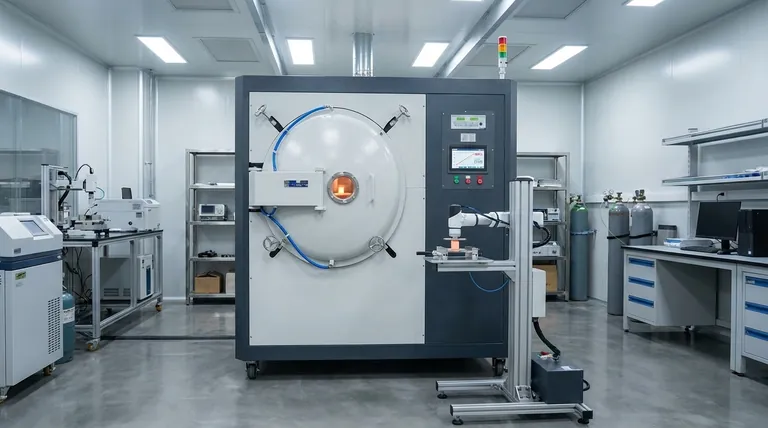
Replicating Extreme Service Environments
The primary challenge in testing UHTCMCs is reproducing the harsh conditions of operation without introducing uncontrolled variables.
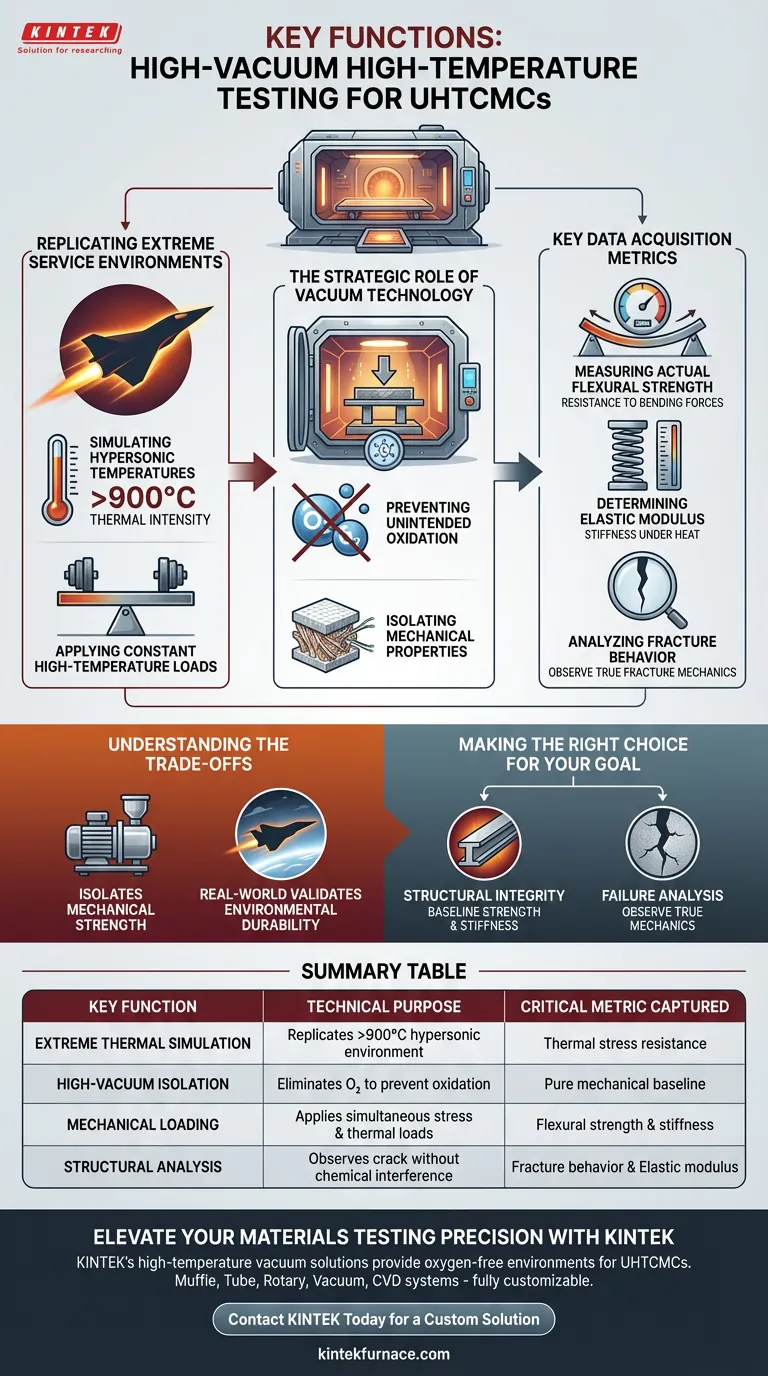
Simulating Hypersonic Temperatures
The machine is capable of generating and sustaining temperatures of 900°C or higher. This thermal intensity is necessary to mimic the service environment faced by hypersonic aircraft components during flight.
Applying Constant High-Temperature Loads
Beyond simple heating, the machine provides a consistent load environment. It applies mechanical stress simultaneously with thermal stress to test how the material bears weight under extreme heat.
The Strategic Role of Vacuum Technology
High temperatures typically accelerate chemical reactions, which can skew test results. The vacuum system is the countermeasure to this problem.
Preventing Unintended Oxidation
At high temperatures, the carbon fibers and ceramic matrices within UHTCMCs are highly susceptible to oxidation. The vacuum system creates an oxygen-free environment to completely halt this process.
Isolating Mechanical Properties
By preventing oxidation, the machine ensures that the test measures the material's mechanics rather than its chemistry. It protects the integrity of the fibers and matrix so that failure is caused by load and heat, not by the material burning away.
Key Data Acquisition Metrics
The ultimate goal of this testing setup is the acquisition of "clean" data that accurately represents the material's reliability.
Measuring Actual Flexural Strength
Because the material remains chemically intact, engineers can determine its actual flexural strength. This figure represents the material's resistance to bending forces in its pure state.
Determining Elastic Modulus
The machine allows for the precise calculation of the elastic modulus (stiffness) under heat. This metric is vital for understanding how much the component will deform during hypersonic flight.
Analyzing Fracture Behavior
Testing in a vacuum allows for the observation of fracture behavior driven purely by mechanical stress. This helps engineers understand how the material cracks or fails structurally, unclouded by surface degradation.
Understanding the Trade-offs
While this testing method is superior for mechanical characterization, it is important to understand what it excludes.
The Limitation of "Perfect" Environments
Testing in a vacuum removes the variable of oxidation to isolate mechanical strength. However, real-world atmospheric flight does involve oxygen. Therefore, this testing validates the structure but does not test the material's lifespan in oxygen-rich air. It is a test of strength, not environmental durability.
Making the Right Choice for Your Goal
When designing a testing protocol for UHTCMCs, clarity on your specific data requirements is essential.
- If your primary focus is Structural Integrity: Use this machine to establish the baseline flexural strength and stiffness of the material without the noise of chemical degradation.
- If your primary focus is Failure Analysis: Rely on the vacuum environment to observe true fracture mechanics, ensuring that cracks are driven by stress and temperature rather than oxidation embrittlement.
This machine is the definitive tool for proving that a composite is mechanically capable of surviving the thermal rigors of hypersonic travel.
Summary Table:
| Key Function | Technical Purpose | Critical Metric Captured |
|---|---|---|
| Extreme Thermal Simulation | Replicates environments >900°C for hypersonic flight simulation | Thermal stress resistance |
| High-Vacuum Isolation | Eliminates oxygen to prevent material oxidation/degradation | Pure mechanical baseline |
| Mechanical Loading | Applies stress simultaneously with thermal loads | Flexural strength & stiffness |
| Structural Analysis | Observes crack propagation without chemical interference | Fracture behavior & Elastic modulus |
Elevate Your Materials Testing Precision with KINTEK
Don't let oxidation skew your critical data. KINTEK’s high-temperature vacuum solutions provide the oxygen-free environments necessary to isolate pure mechanical reliability in UHTCMCs and aerospace composites. Backed by expert R&D and precision manufacturing, we offer a comprehensive range of Muffle, Tube, Rotary, Vacuum, and CVD systems, all fully customizable to meet your unique testing requirements.
Ready to achieve the structural baseline your project demands?
Contact KINTEK Today for a Custom Solution
Visual Guide
References
- Luis Baier, Vito Leisner. Development of ultra-high temperature ceramic matrix composites for hypersonic applications via reactive melt infiltration and mechanical testing under high temperature. DOI: 10.1007/s12567-024-00562-y
This article is also based on technical information from Kintek Furnace Knowledge Base .
Related Products
- 2200 ℃ Tungsten Vacuum Heat Treat and Sintering Furnace
- Ultra High Vacuum Observation Window Stainless Steel Flange Sapphire Glass Sight Glass for KF
- Vacuum Hot Press Furnace Machine for Lamination and Heating
- 2200 ℃ Graphite Vacuum Heat Treat Furnace
- Vacuum Heat Treat Sintering Furnace Molybdenum Wire Vacuum Sintering Furnace
People Also Ask
- How does a tungsten-heated vacuum sintering furnace prepare (TbxY1-x)2O3 ceramics? Achieve 99%+ Density & Purity
- How do compaction pressure and vacuum sintering optimize porous ceramics? Maximize Density & Toughness
- What wear-resistance enhancements are achieved by powder coating? The Role of Vacuum Sintering Furnaces
- What role does a high-temperature vacuum sintering furnace play in the densification of WC-10(Ni, Ni/Co) alloys?
- What core role does a high-temperature vacuum sintering furnace play in Sm:YAG ceramics? Mastering Optical Clarity