Sensitive surface analysis after high-temperature ceramic processing demands a technique that can distinguish the thinnest layers of contamination from the bulk material. The critical difference between static SIMS and dynamic SIMS lies in how aggressively they interact with the sample: static SIMS uses a low current density ion beam to probe only the top one or two atomic layers without destroying them, while dynamic SIMS employs a high current density beam that rapidly erodes the surface, turning it into a depth-profiling tool that is inherently unsuitable for strictly surface-bound contamination analysis.
For post‑thermal‑processing ceramics, where the goal is to identify only the contaminants that adsorbed during furnace exposure, static SIMS is the definitive choice. It captures ultra‑trace surface impurities without digging into the substrate, directly supporting process improvements like optimizing furnace atmosphere or vacuum seal integrity. Dynamic SIMS, by contrast, obliterates that delicate surface information.
The Two Faces of SIMS: Surface vs. Depth
Both techniques use a focused ion beam to sputter material and analyze secondary ions, but the beam parameters create two fundamentally different measurement philosophies.
Static SIMS: A Gentle Probe for Surface Secrets
The defining characteristic is the low current density of the primary ion beam. This limits the total bombardment energy, confining the collision cascade to the top one or two atomic layers. The surface is not significantly eroded during analysis, making the measurement effectively non‑destructive.
This gentle touch delivers extreme sensitivity. It can detect surface‑bound trace impurities such as alkali metals, halides, and hydroxyl groups that may be present at only minute quantities. Because the process barely disturbs the sample, you preserve the exact chemical state of the surface as it existed after processing.
Dynamic SIMS: An Energetic Excavation Tool
Dynamic SIMS operates with a high current density beam that removes material at a much faster rate. The continuous sputtering drills down through successive atomic layers, turning analysis into a bulk depth‑profiling experiment.
This aggressive erosion is ideal for tracking how composition changes with depth deep into the material. But it comes at a cost: the very surface you might want to study is destroyed within the first seconds of analysis. For strictly surface contamination, this makes the technique a poor fit—it erases the exact information you need.
Why Surface Contamination on Ceramics Demands a Delicate Touch
Post‑thermal‑processing ceramics present a unique challenge: the contamination is typically highly localized at the outermost atomic layers, acquired from residual gases in the furnace or from outgassing during high‑temperature sintering or calcination.
The Post‑Thermal Processing Challenge
During high‑temperature treatment, even trace levels of contaminants in the furnace atmosphere can react with or adsorb onto the ceramic surface. These unwanted species may alter wettability, affect subsequent coating adhesion, or change electrical properties—all determined by just one or two atomic layers.
Any analytical technique that erodes that top layer before it can be measured will mix the contamination signal with the bulk ceramic and lose the spatial context of where the impurity actually sat.
Static SIMS in Action
Static SIMS addresses this by leaving the surface intact. Researchers can detect minute surface contaminants acquired during thermal treatment without eroding the substrate, directly correlating impurity signals with furnace conditions.
This capability makes it a powerful tool for process diagnostics. For example, it can reveal whether alkali metals leaked from heating elements or if vacuum seals degraded and allowed oxygen or moisture ingress. The data then feeds back into optimizing furnace atmosphere cleanliness and vacuum seal integrity, preventing contamination at the source rather than merely detecting it after the fact.
Understanding the Trade-offs
No technique is without limitations. Being objective means recognizing where static SIMS falls short, and when dynamic SIMS might still play a role.
When Surface‑Only Analysis Isn’t Enough
If there is a suspicion that contamination has diffused a few nanometers into the ceramic during thermal processing, static SIMS will only show the outermost signature. You might need depth information to distinguish between a true surface monolayer and a shallow diffusion profile.
The Risk of Missing Subsurface Contamination
Because static SIMS specifically avoids bulk sputtering, it cannot tell you how deep a contaminant goes. A tiny amount of contamination just below the top two atomic layers—potentially capable of migrating to the surface later—could go entirely undetected. In such cases, a dynamic SIMS depth profile, despite destroying the surface, would be the only way to map the full contamination gradient. The choice hinges entirely on whether your analytical question is truly surface‑bound or spans a shallow depth.
Making the Right Choice for Your Characterization Goal
Your specific objective will dictate which method serves you best. Use the following guidelines to decide.
- If your primary focus is detecting and quantifying only the contaminants that settled on the ceramic during thermal treatment: Choose static SIMS without hesitation. It preserves the surface, avoids substrate mixing, and gives you a true fingerprint of furnace‑acquired impurities.
- If your primary focus is understanding whether contamination is buried just below the surface or forms a diffusion profile: Lean towards dynamic SIMS for a depth‑resolved measurement, but be aware that the surface layer itself will be lost during the analysis.
- If your primary focus is process monitoring and optimizing furnace cleanliness: Static SIMS offers the direct, non‑destructive feedback loop you need—correlate surface impurities with furnace parameters and seal integrity, and adjust accordingly.
The power to correctly interpret ceramic surface contamination lies not in having one perfect instrument, but in matching the tool to the exact location of the problem.
Summary Table:
| Feature / Parameter | Static SIMS | Dynamic SIMS |
|---|---|---|
| Primary Beam Energy | Low current density (gentle) | High current density (aggressive) |
| Analysis Depth | Top 1–2 atomic layers | Deep bulk profiling (nanometers to microns) |
| Surface Integrity | Non-destructive (preserves surface) | Destructive (rapidly erodes surface) |
| Key Application | Trace surface contaminants & monolayers | Subsurface diffusion & depth gradients |
| Furnace Diagnostic Value | High (detects atmosphere & seal leaks) | Low for surface-bound impurities |
Eliminate Thermal Processing Contamination at the Source with KINTEK
Advanced analytical tools like static SIMS prove just how critical a clean furnace environment is for high-performance ceramics. Don't let atmosphere impurities or seal degradation compromise your material quality.
KINTEK specializes in premium laboratory equipment and customizable high-temperature furnaces—including muffle, tube, vacuum, atmosphere, rotary, CVD, and induction melting furnaces. Designed with superior atmosphere integrity and thermal control, our systems ensure your materials remain free from unwanted contamination during critical thermal processing.
Ready to upgrade your thermal processing reliability? Contact our high-temperature furnace experts today to discuss your custom laboratory needs!
Related Products
- Multi Heating Zones CVD Tube Furnace Machine for Chemical Vapor Deposition Equipment
- Stainless Steel Quick Release Vacuum Chain Three Section Clamp
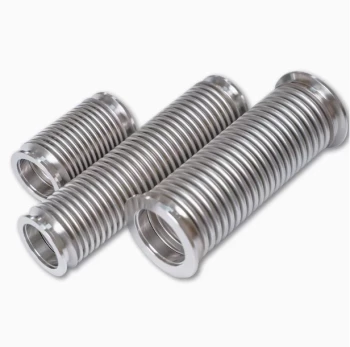
- High Performance Vacuum Bellows for Efficient Connection and Stable Vacuum in Systems
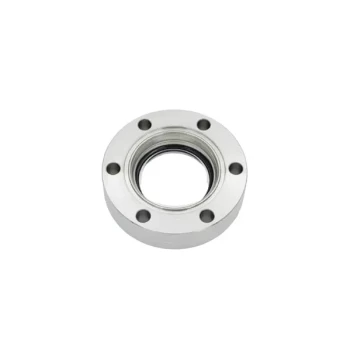
- Ultra High Vacuum CF Observation Window Flange with High Borosilicate Glass Sight Glass
- Multi Zone Laboratory Quartz Tube Furnace Tubular Furnace
People Also Ask
- What is the function of a multi-zone tube furnace in CVD synthesis? Master 2D In2Se3 Nanosheet Precision
- What role do multi zone tube furnaces play in new energy research? Unlock Precise Thermal Control for Innovation
- What temperature-related capabilities make multi zone tube furnaces valuable for research? Unlock Precision Thermal Control
- Why are multi zone tube furnaces particularly useful for nanomaterial research? Unlock Precise Thermal Control for Advanced Synthesis
- What environmental protection applications utilize multi zone tube furnaces? Unlock Precision in Waste Treatment and Green Tech