
The carbonization furnace transforms dried sludge into clean biomass fuel by subjecting it to high temperatures (450°C to 700°C) in an oxygen-limited environment. This process, known as pyrolysis, simultaneously increases the material's energy density while locking away pollutants to ensure the resulting fuel is both potent and biologically safe.
By operating in a hypoxic environment at precise temperatures, carbonization furnaces solve two critical problems at once: they eliminate biological hazards and stabilize heavy metals, turning waste sludge into a high-density, low-emission fuel source.
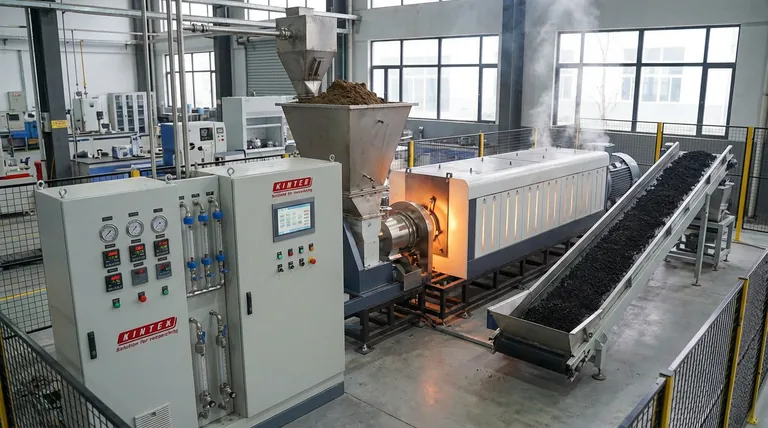
The Mechanics of Carbonization
Controlled Hypoxic Environment
The furnace operates by strictly limiting oxygen availability during the heating process.
This hypoxic environment prevents the sludge from combusting completely into ash. Instead, it triggers pyrolysis, chemically altering the organic matter to create stable carbonized biomass.
Temperature Precision
The system maintains localized high temperatures specifically between 450°C and 700°C.
This thermal range is critical. It is hot enough to modify the chemical structure of the sludge but controlled enough to preserve the carbon content required for fuel.
Ensuring Biological and Chemical Safety
Eliminating Pathogens
A primary function of the furnace is the complete sterilization of the biological waste.
The sustained high temperatures effectively destroy persistent pathogens. Specific threats such as Ascaris and hookworm eggs are eliminated, rendering the final biomass fuel biologically safe to handle and transport.
Immobilizing Heavy Metals
To ensure low emissions during future use, the furnace alters the state of inorganic pollutants.
The carbonization process fixes heavy metals directly within the ash matrix of the fuel. This stabilization prevents these pollutants from easily leaching out or being released, significantly reducing the environmental footprint of the fuel.
Optimizing Fuel Properties
Increasing Energy Density
Raw sludge is generally a low-quality fuel source, but carbonization radically improves its potential.
By processing the dried sludge through this thermal treatment, the furnace significantly increases the energy density of the output. The result is a more efficient, concentrated fuel compared to the raw material.
Understanding the Operational Constraints
Reliance on Feedstock Preparation
The reference specifically notes the processing of dried sludge.
The efficiency of the carbonization furnace is heavily dependent on this pre-condition. Using sludge with high moisture content would likely disrupt the temperature profile and reduce the effectiveness of the pyrolysis process.
Adherence to Temperature Windows
The safety and quality of the fuel rely entirely on maintaining the 450°C to 700°C window.
Operating below this range risks failing to destroy pathogens like hookworm eggs. Operating erratically could fail to fix heavy metals properly, compromising the "low-emission" status of the final fuel.
Making the Right Choice for Your Goal
To maximize the benefits of a carbonization furnace, focus on these operational priorities:
- If your primary focus is biological safety: rigorous adherence to the minimum temperature threshold is required to guarantee the destruction of Ascaris and hookworm eggs.
- If your primary focus is environmental compliance: ensure the process completes fully to permanently fix heavy metals within the ash matrix, preventing secondary pollution.
The carbonization furnace offers a scientifically sound method for converting hazardous organic waste into a stable, energy-dense resource.
Summary Table:
| Parameter | Process Role | Impact on Quality |
|---|---|---|
| Environment | Hypoxic (Oxygen-limited) | Prevents combustion; promotes stable carbonization |
| Temp Range | 450°C - 700°C | Destroys pathogens (Ascaris/hookworm) & fixes heavy metals |
| Feedstock | Dried Sludge | Ensures thermal efficiency and high energy density |
| Chemical Output | Metal Immobilization | Prevents leaching and reduces environmental emissions |
Maximize Your Waste-to-Energy Potential with KINTEK
Ready to convert hazardous sludge into high-value, low-emission fuel? Backed by expert R&D and precision manufacturing, KINTEK offers specialized Rotary and Vacuum systems designed to maintain the exact thermal profiles required for effective carbonization. Our lab high-temp furnaces are fully customizable to your specific feedstock requirements, ensuring biological safety and heavy metal stabilization.
Unlock superior energy density and environmental compliance today.
→ Contact Our Experts for a Custom Solution
References
- Paulo Martin Sanka, Hezron Magambo. Production of low emission briquettes from carbonized faecal sludge as an alternative source of cooking energy. DOI: 10.1186/s13705-024-00449-0
This article is also based on technical information from Kintek Furnace Knowledge Base .
Related Products
- Electric Rotary Kiln Small Rotary Furnace for Activated Carbon Regeneration
- 1200℃ Controlled Inert Nitrogen Atmosphere Furnace
- 1700℃ Controlled Inert Nitrogen Atmosphere Furnace
- Small Vacuum Heat Treat and Tungsten Wire Sintering Furnace
- Vacuum Heat Treat Sintering Furnace with Pressure for Vacuum Sintering
People Also Ask
- What are the main applications of a rotary kiln electric furnace? Achieve Uniform Heat Treatment for Powders
- What are the key components of a rotary kiln electric furnace? Unlock Efficient Thermal Processing
- What is the significance of the refractory lining in a rotary kiln electric furnace? Unlock Efficiency and Longevity
- What advantages do electric rotary kilns offer over fuel-based kilns? Boost Efficiency and Purity in Your Process
- What materials can be processed in an electric rotary kiln? Versatile Solutions for Advanced Materials



















