Localized, lightning-fast heating. Spark Plasma Sintering (SPS) equipment achieves high-strength metal-ceramic joining by applying uniaxial pressure and pulsed direct current through a thin, high-resistance interlayer placed at the joint interface. This interlayer—typically a powder or foil—acts as a resistive heating element, generating intense, localized Joule heat within seconds. The rapid, interface-confined thermal cycle forms a robust metallurgical or chemical bond while preserving the microstructure and properties of the bulk parent materials.
The core advantage of SPS joining is selective interface heating. By concentrating energy exactly where the bond must form, the process minimizes the heat-affected zone, avoids harmful grain growth, and enables the use of reactive filler compositions that dramatically elevate joint strength—all in processing times measured in seconds, not hours.
How SPS Equipment Drives In-Situ Joining
SPS joining repurposes the same field-assisted sintering technology used for powder consolidation, but with a critical twist: the current is routed to heat a bonding interlayer rather than the component itself. Understanding this mechanism reveals exactly how the equipment creates strong, reliable metal-ceramic bonds.
The Interlayer as a Localized Heating Element
In a typical SPS joining setup, a thin powder or foil interlayer is sandwiched between two solid components within the graphite die. Because the loose powder particles have poor electrical contact, this layer exhibits significantly higher electrical resistance than the surrounding bulk materials.
When the pulsed direct current passes through the assembly, the majority of the voltage drop—and therefore Joule heating—occurs precisely within that high-resistance interlayer. The result is a temperature spike confined almost entirely to the bond line, bringing the interface to bonding temperature while the parent parts remain far cooler.
The Dual Role of Pressure and Pulsed Current
The SPS system simultaneously applies a controlled uniaxial mechanical pressure (often in the 30–60 MPa range) along the same axis as the current flow. This pressure serves two purposes:
- It collapses porosity in the powder interlayer, enhancing atomic contact and diffusion.
- It works with the pulsed DC field to induce localized spark discharges between particles, creating transient high-temperature spots that further accelerate sintering and interfacial reaction kinetics.
The pulsed waveform also helps clean surface oxides through micro-plasma effects, promoting a clean, diffusion-ready interface.
The Design Parameters That Dictate Joint Strength
The equipment provides the platform, but the final joint quality depends on a handful of controllable parameters that researchers can tune to the materials system. These factors directly leverage the SPS advantage of rapid, localized energy delivery.
Fine Particle Size Boosts Resistance and Reactivity
Using a finer powder interlayer directly increases electrical resistance. Smaller particles create more inter-particle contact points and greater total contact resistance, leading to more intense heating for the same applied current. The rapid thermal cycle—often completed in seconds—ensures that this intense heating does not overwhelm the parent material. The practical outcome is a higher mechanical strength coupled with an even smaller heat-affected zone.
Reactive Filler Compositions Exploit In-Situ Chemistry
The confined high temperature can be engineered to trigger beneficial chemical reactions. For example, a Ti–Si–C–Al reactive mixture, when used to join silicon carbide ceramics, forms new interfacial phases that strongly bond with the ceramic surface. This approach has been shown to produce flexural strengths as high as 133 MPa—more than double the 66 MPa achieved with a simpler, non-reactive Ti₃SiC₂ filler. The SPS system’s rapid heating profile ensures the reaction occurs completely and uniformly while avoiding side reactions that could embrittle the joint.
Minimal Microstructural Damage Preserves Parent Properties
The combination of confined heating and ultra-fast cooling rates (a natural consequence of the die’s thermal mass pulling heat away from the thin interface) effectively quenches the joint region. This prevents the formation of brittle intermetallic layers, suppresses unwanted grain growth in both metals and ceramics, and retains the parent materials’ original hardness, toughness, and dimensional accuracy. For dissimilar material pairs, this rapid quenching also limits interdiffusion zones that might otherwise create mechanically weak phases.
Understanding the Trade-offs and Practical Limits
SPS joining is not a universal replacement for all bonding techniques. Its effectiveness is inherently tied to the equipment’s physical constraints and the physics of resistance heating.
- Geometric simplicity is required. The uniaxial pressure die setup works best for planar or near-planar joints. Complex 3D shapes are difficult to accommodate unless the joint interface can be aligned with the press axis.
- Interlayer selection is a delicate balance. Too high a resistance can cause arcing or uneven heating, while a mismatch in thermal expansion between the interlayer and parent materials can introduce residual stresses that weaken the joint.
- Reactive systems demand precise process control. The temperature window for a beneficial reaction is often narrow. Exceed it, and you risk forming brittle phases; undershoot it, and the reaction remains incomplete. The SPS system’s rapid heating rate demands equally precise pulsing and power delivery to hit that window.
- Scale limitations apply. Joining large-area components can introduce thermal gradients that compromise joint uniformity unless the die and insulation design are carefully optimized.
Making the Right Choice for Your Joining Application
The decision to use SPS for metal-ceramic joining should be driven by what you most need to achieve in your final component.
- If your primary focus is preserving the original microstructure and properties of sensitive parent materials: SPS joining is unparalleled. The interface-confined heat and seconds-long cycle leave the bulk unchanged, making it ideal for nano-grained metals or thermally fragile ceramics.
- If your primary focus is maximizing joint strength in challenging ceramic-ceramic systems: Leverage fine, reactive filler powders. The combination of high resistance and in-situ phase formation can double the mechanical strength compared to conventional fillers.
- If your primary focus is joining dissimilar material pairs where thermal expansion mismatch is a concern: Use the rapid cooling capability to limit interdiffusion and select an interlayer with a graded composition or compliant phase to absorb mismatch strains.
- If your primary focus is scaling from lab to pilot production: Start with simple, planar joint geometries and invest in precise temperature and current control to ensure repeatability across multiple runs.
SPS equipment transforms bonding from a bulk thermal process into a precision, interface-level event—giving you the power to create joints that are as strong as the constituent materials while leaving their innate structures intact.
Summary Table:
| Mechanism / Parameter | Role in SPS Joining | Primary Benefit / Impact |
|---|---|---|
| High-Resistance Interlayer | Concentrates Joule heating directly at the interface bond line | Protects bulk parent materials from heat damage |
| Uniaxial Pressure (30–60 MPa) | Collapses powder porosity and enhances atomic contact | Increases joint density and diffusion kinetics |
| Pulsed Direct Current | Cleans surface oxides via micro-plasma discharge effects | Enables clean, rapid interfacial diffusion |
| Reactive Filler Compositions | Triggers in-situ phase formation (e.g., Ti–Si–C–Al) | Doubles flexural strength (up to 133 MPa) |
| Ultra-Fast Thermal Cycling | Rapid heating and self-quenching within seconds | Suppresses grain growth & brittle intermetallics |
Ready to advance your material joining and thermal processing capabilities? KINTEK specializes in advanced laboratory equipment and consumables, offering a comprehensive range of high-temperature furnaces—including muffle, tube, rotary, vacuum, CVD, atmosphere, dental, and induction melting systems, all fully customizable to meet your unique research and production needs. Whether you are pioneering novel metal-ceramic joining techniques or scaling advanced material synthesis, KINTEK provides the precise control and reliable performance your lab demands. Contact KINTEK today to consult with our equipment specialists and discover the perfect solution for your application!
Related Products
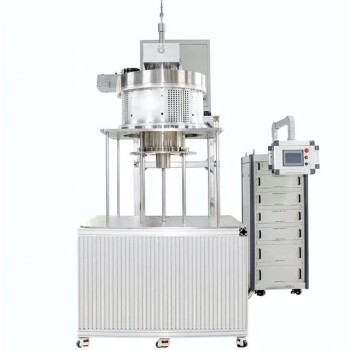
- Spark Plasma Sintering SPS Furnace
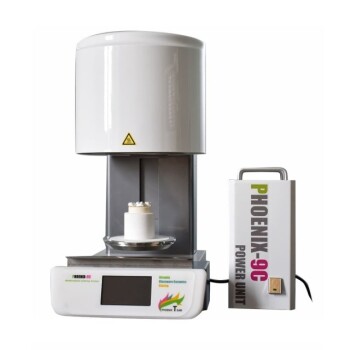
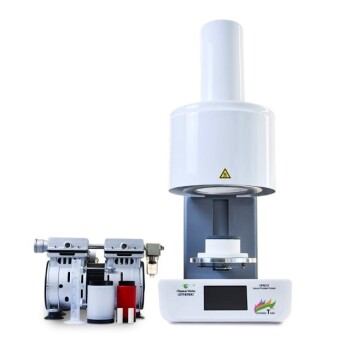
- Chairside Dental Porcelain Zirconia Sintering Furnace with Transformer for Ceramic Restorations
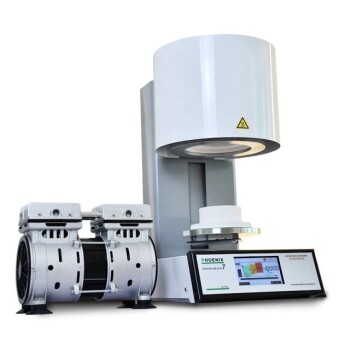
- Dental Porcelain Zirconia Sintering Ceramic Vacuum Press Furnace
- 600T Vacuum Induction Hot Press Vacuum Heat Treat and Sintering Furnace
- Vacuum Hot Press Furnace Machine Heated Vacuum Press Tube Furnace
People Also Ask
- Why is it necessary to maintain a high vacuum environment during the SPS of SiC? Key to High-Density Ceramics
- How does the heating mechanism of Spark Plasma Sintering (SPS) function? Enhance TiC/SiC Composite Fabrication
- What are the technical advantages of using an SPS sintering furnace? Elevate Al2O3-TiC Material Performance
- What are the advantages of Spark Plasma Sintering (SPS)? Achieve Superior Microstructures
- What are the steps in the discharge plasma sintering process? Master Fast, High-Density Material Consolidation