Sintering temperature in high-temperature Spark Plasma Sintering (SPS) acts as the master control for MCrAlY compact quality.
Raising the temperature from 1073 K to 1273 K drives a dramatic reduction in porosity and a sharp increase in Vickers hardness by accelerating powder densification and plastic flow. However, crossing an upper threshold—around 1323 K—triggers localized melting of low-melting constituents, which reintroduces porosity and causes hardness to fall. Thermal behavior, in turn, is defined by the phase architecture that forms at each temperature: the optimal window creates a stable two‑phase matrix with fine carbide precipitates, while overheating degrades that structure.
The relationship is non‑linear and governed by a narrow process window. For MCrAlY alloys, full densification and peak hardness occur between 1223 K and 1273 K. Temperatures below this leave residual porosity and weak particle‑to‑particle bonding; temperatures above cause incipient melting, secondary voids, and a collapse of mechanical properties. Precise control in SPS equipment is what allows engineers to land safely inside that window.
How Sintering Temperature Governs Porosity
The Low‑Temperature Regime (Below ~1173 K)
At low sintering temperatures, the thermal energy delivered by the SPS system is insufficient to fully activate the plastic deformation and atomic diffusion needed for complete consolidation.
Original powder boundaries remain visible, and the compact retains a network of interconnected pores. Relative density can stall well below the theoretical maximum, leaving porosity as high as 10–18 % in structurally similar metal‑matrix systems.
The Optimal Densification Window (~1223 K to 1273 K)
Once the temperature enters the optimal range, the picture changes completely.
The combination of uniaxial pressure and precisely delivered heat causes the powder particles to undergo extensive plastic flow. Liquid‑phase sintering kicks in locally at grain boundaries, forcing out trapped gas and collapsing the pore network.
As a result, the compact reaches near‑theoretical density with porosity dropping to negligible levels—often below 0.5 %—and the microstructure becomes a dense, continuous solid.
The Overheating Trap (Above 1323 K)
Pushing the temperature too far beyond the optimal window paradoxically reverses the gains.
Even in high‑end SPS equipment, when the process reaches roughly 1323 K, the lower‑melting eutectic phases in the MCrAlY system begin to liquefy. This localized melting creates new, larger‑size voids upon solidification—secondary porosity—that degrade the structural integrity.
The material transitions from a nearly pore‑free state back to a noticeably porous one, often with a visible drop in relative density.
Hardness Response to Temperature and Densification
The Plastic‑Flow Mechanism Behind Hardness Gain
Hardness improvement in SPS‑processed MCrAlY is fundamentally tied to how temperature enables densification.
At low temperatures, only the contact points between particles deform, leaving weak interparticle bonds. As the temperature rises into the optimal zone, widespread plastic flow eliminates those weak interfaces and forges strong metallurgical bonds.
The same thermal energy also promotes the precipitation of fine, hard carbide phases (such as TaC) that act as dislocation pinning points, directly raising the resistance to indentation.
The Trend: Monotonic Rise, Then a Sudden Drop
From 1073 K upward, Vickers hardness values climb steadily—a direct reflection of the falling porosity and the growing volume fraction of strengthening precipitates.
At the optimal ceiling of about 1273 K, the material exhibits its peak hardness, benefiting from maximum densification and a fine‑scale distribution of carbides.
However, once the temperature breaches the melting threshold around 1323 K, hardness falls off. The newly formed secondary porosity acts as a stress concentrator, the microstructural homogeneity is lost, and the melted‑and‑resolidified regions are typically softer, pulling the average hardness value downward.
Thermal Behavior: Microstructural Evolution with Temperature
Phase Formation as a Thermal Fingerprint
The term “thermal behavior” in MCrAlY compacts primarily describes how the alloy’s phase constituents evolve as a function of sintering temperature—a direct consequence of the thermal history imposed by the SPS furnace.
At the low end, the structure remains an ill‑defined mix of deformed powder remnants with little long‑range chemical diffusion. As the temperature rises into the optimal band (1223 K–1273 K), the system develops a stable two‑phase matrix: aluminum‑rich β‑NiAl₃ (dark gray) and a nickel/chromium‑rich γ‑Ni solid solution (light gray).
This dual‑phase arrangement is thermally stable and provides the oxidation and creep resistance that MCrAlY coatings rely on in service.
The Destabilizing Effect of Overheating
Exceeding 1323 K disrupts this meticulously balanced thermal architecture.
Localized melting selectively consumes the lower‑melting β‑phase pockets. On re‑solidification, the phase distribution becomes inhomogeneous, the desired β/γ network is compromised, and the precipitates that gave the alloy its peak hardness can coarsen or dissolve.
The result is a thermally degraded microstructure that no longer possesses the intended combination of mechanical and environmental resistance—an outcome that illustrates why thermal control in SPS is not just about densification but about preserving the alloy’s functional design.
Understanding the Trade‑offs
The Narrow Window Between Under‑Sintering and Meltdown
The key trade‑off in SPS processing of MCrAlY is the razor‑thin margin between under‑consolidation and thermal damage.
Aiming for a conservative, lower temperature (e.g., 1173 K) avoids any melting risk but leaves the compact with persistent porosity and sub‑par hardness. That may be acceptable for non‑structural applications but is a dealbreaker for high‑integrity aerospace components.
On the other hand, chasing absolute maximum density by inching the temperature upward can easily overshoot into the 1323 K danger zone, where melting wipes out the very properties you sought to achieve.
Competition Between Densification Rate and Phase Stability
In SPS, rapid heating rates can outrun the kinetics of phase transformations, temporarily suppressing grain growth and allowing the material to reach high density before the β‑phase risks melting.
However, this also means that thermal lag across the sample—caused by variations in electrical conductivity and die‑wall heat losses—can create hot spots that locally exceed the bulk temperature reading. The trade‑off is between the benefit of fast‑densification kinetics and the risk of heterogeneous overheating.
To exploit the rapid‑heating advantage, SPS systems must combine precise pyrometer feedback with a deep understanding of the sample’s thermal response.
Impact on Functional Thermal Properties
While not directly measured by a hardness test, the phase architecture described above directly influences the compact’s thermal conductivity and thermal expansion behaviour. A fully dense, phase‑stable MCrAlY will exhibit predictable, isotropic thermal properties.
A porous or locally melted compact, by contrast, will show degraded thermal conductivity and potentially uneven thermal expansion, which can lead to cracking under thermal cycling. Thus, the temperature choice dictates not only room‑temperature hardness but also long‑term thermal reliability.
Making the Right Choice for Your Goal
Choosing the sintering temperature is ultimately a decision of which property trade‑off you can accept. The following goal‑oriented guidelines can steer you toward the correct process window.
- If your primary focus is minimizing porosity and achieving full density: Target the 1223 K–1273 K range. This is the only temperature band where plastic flow and diffusion completely eliminate the original powder porosity.
- If your primary focus is maximizing Vickers hardness: Stick to the upper edge of the optimal range (near 1273 K), where fine carbide precipitates contribute maximum strengthening without crossing the melting threshold.
- If your primary focus is phase stability and thermal integrity: Avoid any temperature above 1300 K. Stay firmly within 1223 K–1273 K to preserve the γ‑Ni / β‑NiAl₃ network and prevent localized melting that would degrade long‑term thermal behaviour.
- If your primary focus is to avoid process‑related scrap: Invest in precise, real‑time temperature monitoring (pyrometer) and consider slightly lower temperatures (e.g., 1223 K) as a robust target. Slight under‑densification relative to the absolute peak may be a safer manufacturing window than risking a melt event at 1323 K.
Mastering the thermal cycle inside a Spark Plasma Sintering furnace is what separates a pore‑free, high‑hardness MCrAlY compact from a flawed one; stay inside the 1223 K–1273 K corridor and let your process repeatability deliver the performance.
Summary Table:
| Temperature Regime | Porosity | Vickers Hardness | Microstructure & Phase Evolution | Process Status |
|---|---|---|---|---|
| Low (< 1173 K) | High (10–18%) | Low (Weak interparticle bonding) | Visible powder boundaries, poor atomic diffusion | Under-sintered |
| Optimal (1223 K – 1273 K) | Near 0 (< 0.5%) | Peak (Strong bonding & fine carbide precipitates) | Stable two-phase matrix (γ-Ni + β-NiAl₃) | Ideal Window |
| Overheating (> 1323 K) | Re-emerges (Secondary porosity) | Sharp Drop (Void stress & soft melted regions) | Localized eutectic melting, phase degradation | Over-sintered / Melted |
Master Your Sintering Process with KINTEK Advanced High-Temp Equipment
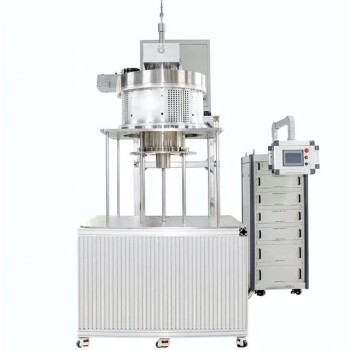
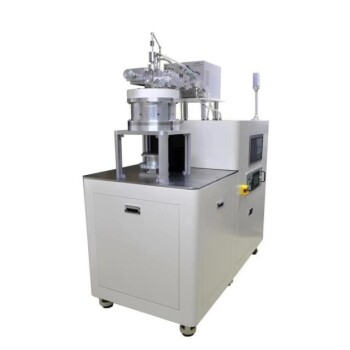
Achieving the narrow 1223 K–1273 K processing window for MCrAlY compacts requires thermal precision and real-time process control. KINTEK specializes in high-performance laboratory equipment and customizable high-temperature furnaces—including vacuum, atmosphere, Spark Plasma Sintering (SPS) solutions, muffle, tube, CVD, and induction melting systems—designed to meet the rigorous demands of advanced material research and powder metallurgy.
Don't let thermal lag or temperature overshoot compromise your alloy's hardness and phase stability. Contact KINTEK experts today to find the perfect customized furnace solution for your laboratory!
Related Products
- Spark Plasma Sintering SPS Furnace
- Dental Porcelain Zirconia Sintering Ceramic Vacuum Press Furnace
- Chairside Dental Porcelain Zirconia Sintering Furnace with Transformer for Ceramic Restorations
- 600T Vacuum Induction Hot Press Vacuum Heat Treat and Sintering Furnace
- Vacuum Hot Press Furnace Machine Heated Vacuum Press Tube Furnace
People Also Ask
- How does the heating mechanism of Spark Plasma Sintering (SPS) function? Enhance TiC/SiC Composite Fabrication
- Why is it necessary to maintain a high vacuum environment during the SPS of SiC? Key to High-Density Ceramics
- What are the technical advantages of using an SPS sintering furnace? Elevate Al2O3-TiC Material Performance
- What are the advantages of Spark Plasma Sintering (SPS)? Achieve Superior Microstructures
- What are the steps in the discharge plasma sintering process? Master Fast, High-Density Material Consolidation