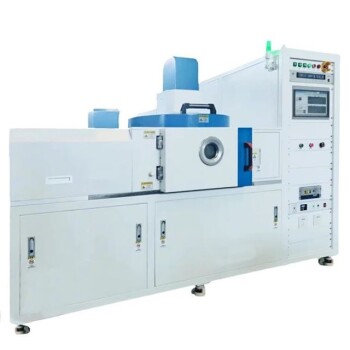
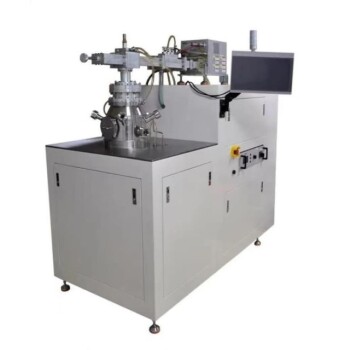
Pulsed Plasma Sintering (PPS) achieves high-density 80W–20Re alloys by combining high-frequency electrical discharges with simultaneous axial pressure. This process generates instantaneous plasma between powder particles, accelerating mass transport and allowing the material to reach near-theoretical density in minutes. By significantly shortening the thermal cycle, PPS suppresses grain growth, ensuring a refined microstructure that traditional sintering methods often fail to produce.
PPS leverages high-energy pulsed currents to create localized plasma effects that rapidly fuse 80W–20Re powders under mechanical load. This synchronized approach delivers maximum density and superior mechanical properties by minimizing the time available for detrimental grain coarsening.
The Mechanics of Rapid Densification
High-Frequency Pulsed Discharges
The core of the PPS system is its ability to deliver high-energy, high-frequency pulsed currents directly through the powder. These discharges create localized spark plasma between the tungsten and rhenium particles, which effectively "cleans" the particle surfaces of oxides and impurities. This ionization creates a high-energy state that triggers rapid atomic diffusion, causing the particles to bond almost instantly.
Simultaneous Axial Pressure
While the electrical pulses energize the particles, the system applies axial pressure to the powder mass. This mechanical force works in tandem with the plasma effects to close internal pores and consolidate the material. The result is an extremely rapid densification process that moves the alloy toward its theoretical density far faster than conventional radiant heating.
Synchronized Heating and Compaction
Unlike traditional furnaces that heat from the outside in, PPS enables internal heating of the powder bed. Because the heat is generated at the contact points of the particles, the temperature rises uniformly and rapidly. This synchronization ensures that the material is being compacted at the exact moment its plasticity is highest.
The Role of High-Strength Graphite Tooling
The Mold as a Conductor
In a PPS system, high-strength graphite molds serve as much more than just a container. They function as critical conductors and resistance heating elements that facilitate the flow of pulsed current to the 80W–20Re powder. Their electrical conductivity is essential for ensuring that the energy is distributed efficiently throughout the sample.
Structural Integrity at Temperature
Graphite is chosen for its unique ability to maintain mechanical strength at extreme temperatures. During the sintering of refractory alloys like tungsten-rhenium, the mold must withstand intense axial loads without deforming. This stability is vital for maintaining the dimensional accuracy of the final 80W–20Re component.
Optimized Thermal Gradient
The use of graphite allows for a controlled thermal environment that prevents large temperature gradients within the alloy. By functioning as a susceptor, the mold helps maintain a steady temperature across the powder bed. This uniformity is a primary driver behind the consistent density achieved in the finished part.
Understanding the Trade-offs
Equipment and Tooling Costs
The sophisticated power electronics required to generate high-frequency pulses make PPS systems significantly more expensive than standard vacuum furnaces. Furthermore, graphite molds are consumables; they eventually degrade under repeated high-pressure and high-temperature cycles, adding to the long-term operational costs.
Geometric Limitations
The reliance on axial pressure means that PPS is best suited for simple geometries, such as discs, rods, or rings. Producing parts with complex internal features or non-uniform cross-sections is challenging. Achieving uniform density in complex shapes often requires specialized (and expensive) tooling designs.
Applying PPS to Your Material Goals
The decision to utilize Pulsed Plasma Sintering depends on your specific performance requirements for the 80W–20Re alloy.
- If your primary focus is maximum mechanical strength: PPS is the ideal choice because it inhibits grain growth, preserving a fine-grained microstructure that resists fracture.
- If your primary focus is rapid prototyping or throughput: Use PPS to reduce sintering times from hours to minutes, allowing for faster iterative testing and production cycles.
- If your primary focus is extreme density for radiation shielding: PPS ensures near-theoretical density, eliminating the internal voids that could compromise shielding effectiveness.
By mastering the synergy of plasma energy and mechanical force, PPS provides a definitive path to high-performance refractory alloys that meet the most demanding industrial standards.
Summary Table:
| Feature | PPS Mechanism | Key Benefit for 80W–20Re |
|---|---|---|
| Energy Source | High-frequency pulsed current | Rapid atomic diffusion & surface cleaning |
| Pressure | Simultaneous axial load | Near-theoretical density & pore closure |
| Heating Type | Internal/resistance heating | Uniform temperature & minimal grain growth |
| Processing Time | High-speed thermal cycle | Minutes vs. hours in traditional sintering |
| Tooling | High-strength graphite molds | Dimensional accuracy at extreme temperatures |
Elevate Your Materials Research with KINTEK's Advanced Thermal Solutions
Precision is paramount when working with refractory alloys like 80W–20Re. At KINTEK, we specialize in providing high-performance laboratory equipment designed for the most demanding high-temperature applications. Whether you need a standard vacuum, muffle, or atmosphere furnace, or a complex CVD or induction melting system, our solutions are fully customizable to meet your unique research and production goals.
Why choose KINTEK?
- Comprehensive Range: From dental and tube furnaces to advanced rotary and vacuum systems.
- Refined Control: Achieve the thermal uniformity and rapid cycles necessary for superior microstructure.
- Expert Customization: We tailor our high-temperature technology to your specific lab requirements.
Ready to optimize your sintering process? Contact our technical experts today to find the perfect high-temperature solution for your laboratory!
References
- Tomasz Majewski, Ryszard Woźniak. Influence of Manufacturing Technology on the Structure of 80W–20Re Heavy Sinters. DOI: 10.3390/ma12233965
This article is also based on technical information from Kintek Furnace Knowledge Base .
Related Products
- Spark Plasma Sintering SPS Furnace
- 915MHz MPCVD Diamond Machine Microwave Plasma Chemical Vapor Deposition System Reactor
- RF PECVD System Radio Frequency Plasma Enhanced Chemical Vapor Deposition
- Slide PECVD Tube Furnace with Liquid Gasifier PECVD Machine
- Vacuum Heat Treat Sintering Furnace with Pressure for Vacuum Sintering
People Also Ask
- Why is it necessary to maintain a high vacuum environment during the SPS of SiC? Key to High-Density Ceramics
- How does the heating mechanism of Spark Plasma Sintering (SPS) function? Enhance TiC/SiC Composite Fabrication
- What are the technical advantages of using an SPS sintering furnace? Elevate Al2O3-TiC Material Performance
- What are the steps in the discharge plasma sintering process? Master Fast, High-Density Material Consolidation
- What are the advantages of spark plasma sintering (SPS) over traditional forging? Precision Microstructural Control