A high-temperature vacuum or atmosphere contact angle measurement system acts as a critical analytical tool for studying alloys like Al 7075 by combining high-precision image analysis with rigorous environmental controls. By maintaining a specific atmosphere, such as argon, the system prevents the sample from oxidizing while simultaneously capturing real-time physical changes to calculate fundamental thermophysical properties.
The core value of this system lies in its ability to isolate the alloy from atmospheric interference. It enables the precise quantification of temperature-dependent surface tension and interfacial behaviors that would otherwise be obscured by oxidation.
The Role of Environmental Control
Preventing Oxidation
For reactive alloys like Al 7075, exposure to oxygen at high temperatures alters surface chemistry immediately.
This system provides a controlled argon atmosphere. This inert environment is essential to prevent excessive oxidation, ensuring that the measurements reflect the true properties of the alloy rather than an oxide layer.
Thermal Management
The system is designed to operate at the elevated temperatures required to melt the alloy.
It maintains these conditions consistently, allowing for the observation of the material in its liquid state without environmental contamination.
Capturing Real-Time Physical Data
High-Precision Image Analysis
The hardware integrates advanced optical modules designed to capture the geometry of the molten sample.
Instead of static snapshots, the system performs real-time capture of the droplet's behavior as it interacts with a substrate.
Profiling the Droplet
The system automatically tracks specific geometric parameters.
It continuously measures the droplet profiles, heights, and contact angles. These raw data points serve as the foundation for complex thermophysical calculations.
Calculating Thermophysical Properties
Surface and Interfacial Tension
Using the visual data collected, the system calculates the forces acting on the droplet.
It provides precise values for temperature-dependent surface tension and liquid-solid interfacial tension. This reveals how internal forces within the alloy change as heat is applied.
Work of Adhesion
Beyond just the liquid's properties, the system quantifies the interaction between the alloy and the solid surface.
By analyzing the contact angle and tension data, researchers can determine the work of adhesion, which indicates how strongly the alloy bonds to a specific substrate.
Understanding the Trade-offs
Sensitivity to Atmosphere Purity
The accuracy of the data is entirely dependent on the integrity of the environmental control unit.
If the argon purge is insufficient or the vacuum seal is compromised, even slight oxidation will distort the contact angle, leading to incorrect surface tension calculations.
Reliance on Profile Symmetry
The calculations for surface tension often assume a symmetric droplet shape.
Irregularities in the sample melting or substrate roughness can create asymmetric profiles, which may complicate the automated image analysis process.
Making the Right Choice for Your Goal
To maximize the utility of this system for Al 7075, align the output with your specific research objectives.
- If your primary focus is wetting behavior: Prioritize the work of adhesion data to understand how the alloy will spread on or bond to different substrates.
- If your primary focus is fundamental material science: Focus on the temperature-dependent surface tension values to characterize the alloy's intrinsic liquid properties under heat.
Accurate thermophysical data is not just about measuring heat; it is about measuring geometry in a protected environment.
Summary Table:
| Feature | Function in Al 7075 Research | Key Insight Produced |
|---|---|---|
| Inert Atmosphere | Prevents rapid oxidation via Argon/Vacuum | True alloy properties vs. oxide layers |
| High-Precision Optics | Real-time droplet profile & height capture | Geometric foundation for calculations |
| Contact Angle Analysis | Measures liquid-solid interaction | Work of adhesion & bonding strength |
| Thermal Control | Maintains stable liquid-state conditions | Temperature-dependent surface tension |
Optimize Your Alloy Research with KINTEK Precision
Unlock deep insights into material behavior with KINTEK’s advanced high-temperature solutions. Backed by expert R&D and manufacturing, KINTEK offers Muffle, Tube, Rotary, Vacuum, CVD systems, and other lab high-temp furnaces, all customizable to meet your unique research needs.
Whether you are analyzing surface tension in Al 7075 or developing next-generation ceramics, our systems provide the rigorous environmental control and thermal stability required for accurate thermophysical data. Contact us today to discuss your custom furnace requirements and see how our expertise can enhance your laboratory’s efficiency and results.
References
- Chukwudalu Uchenna Uba, Jonathan Raush. Quantification of Wettability and Surface Tension of Liquid Aluminum 7075 Alloy on Various Substrates. DOI: 10.3390/jmmp9050165
This article is also based on technical information from Kintek Furnace Knowledge Base .
Related Products
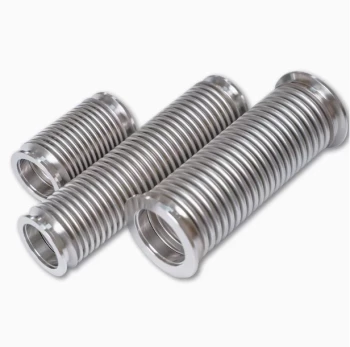
- High Performance Vacuum Bellows for Efficient Connection and Stable Vacuum in Systems
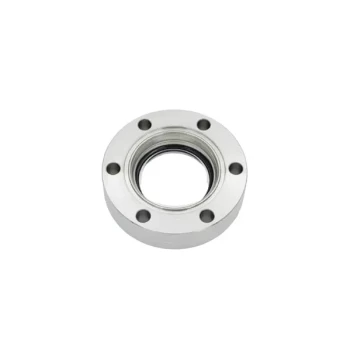
- Ultra High Vacuum CF Observation Window Flange with High Borosilicate Glass Sight Glass
- Ultra High Vacuum Observation Window Stainless Steel Flange Sapphire Glass Sight Glass for KF
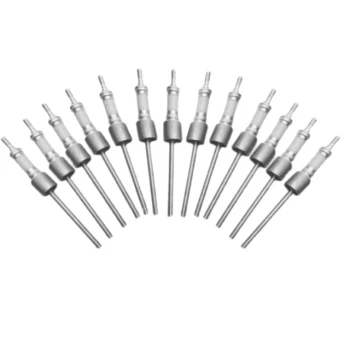
- Ultra Vacuum Electrode Feedthrough Connector Flange Power Lead for High Precision Applications
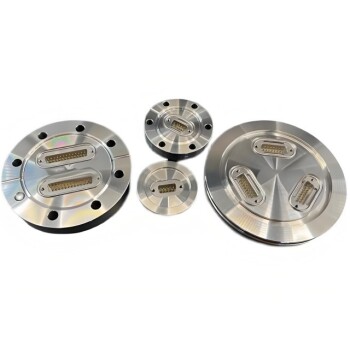
- Ultra-High Vacuum Flange Aviation Plug Glass Sintered Airtight Circular Connector for KF ISO CF
People Also Ask
- Why is an Ultra-High Vacuum (UHV) System Required for In2Se3? Achieving Atomic-Level Ferroelectric Clarity
- Why is an environmental laboratory chamber equipped with an optical window required for synthesizing Hafnium Carbide?
- What role does a closed pressure vessel play during the carbonation of gamma-C2S? Unlock Rapid Mineralization
- Why are desiccators containing saturated salt solutions used when evaluating the hygroscopicity of modified wood?
- How does the pressure environment affect the metallic thermal reduction for titanium? Master Precision Control