
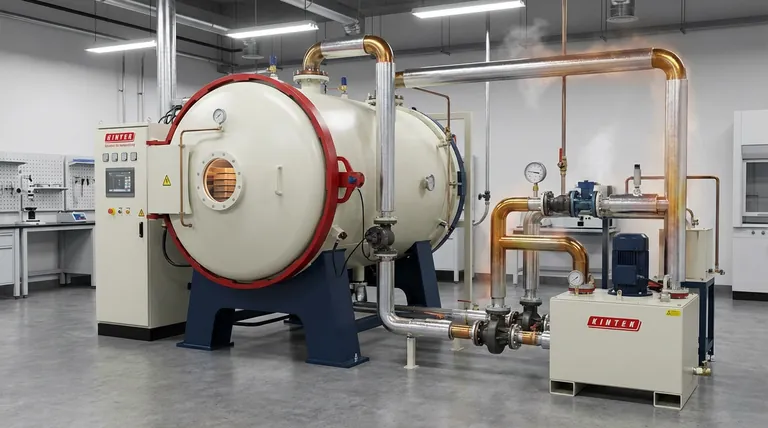
A circulating mineral oil jacket heating system functions by pumping heated mineral oil through a specialized jacket that surrounds the wood modification chamber. Acting as a highly stable heat transfer medium, the oil absorbs thermal energy and radiates it evenly into the chamber to modify the wood. This process replaces erratic direct heat with a controlled thermal envelope.
Core Takeaway Wood modification demands precision; even slight temperature variances can ruin a product. A circulating mineral oil system utilizes the thermal mass of oil to dampen temperature spikes, ensuring uniform heat distribution and preventing the destruction of wood through accidental carbonization.
The Mechanics of Thermal Stability
The Heat Transfer Medium
The system relies on the physical properties of mineral oil to regulate the environment. Rather than exposing wood directly to heating elements, the oil acts as a thermal buffer.
It circulates continuously, carrying heat from the source and distributing it across the chamber walls. This creates a stable ambient temperature essential for the chemical changes required in wood modification.
Achieving High Uniformity
The primary operational goal of this system is extremely high uniformity. In a static or direct-heat system, pockets of hot or cold air can form.
Circulating oil eliminates these variances. By constantly moving the heat source around the chamber, the system ensures that temperature distribution is balanced from top to bottom.
Understanding the Operational Risks
Preventing Localized Overheating
The most significant threat to wood during thermal modification is localized overheating. If a specific section of the chamber gets too hot, the wood in that area will carbonize.
Carbonization degrades the wood, rendering it unusable. The oil jacket functions as a fail-safe, smoothing out thermal distinctness so that no single point exceeds the target temperature.
Ensuring Batch Consistency
For professional production, every piece of wood must meet the same standard. Fluctuations in heat result in inconsistent modification levels within a single load.
This system guarantees consistent quality across large batches. By maintaining a stable thermal environment, it ensures that wood in the center of the stack is treated exactly the same as wood on the perimeter.
Making the Right Choice for Your Goal
Reliable wood modification is less about how hot you can get the chamber, and more about how precisely you can control that heat.
- If your primary focus is reducing material waste: Prioritize the use of a mineral oil jacket to eliminate the hot spots that cause localized carbonization.
- If your primary focus is commercial scalability: Leverage the stability of circulating oil to guarantee uniform results across large, high-volume batches.
Control the temperature stability, and you control the quality of the final product.
Summary Table:
| Feature | Mineral Oil Jacket System | Traditional Direct Heating |
|---|---|---|
| Heat Medium | Stable Mineral Oil Buffer | Direct Air/Radiant Heat |
| Temperature Stability | High (Dampens spikes) | Low (Prone to fluctuations) |
| Heat Distribution | Extremely Uniform | Localized Hot/Cold Spots |
| Risk of Carbonization | Minimized via thermal envelope | High due to overheating |
| Consistency | Batch-wide uniformity | Variable results in large loads |
Maximize Your Material Quality with KINTEK Precision
Precise thermal control is the difference between a high-value product and industrial waste. Backed by expert R&D and world-class manufacturing, KINTEK provides advanced heating solutions, including Muffle, Tube, Rotary, Vacuum, and CVD systems, all customizable to meet your unique thermal modification needs. Whether you are scaling commercial production or refining lab-scale research, our equipment ensures the thermal stability required to eliminate localized overheating and guarantee batch consistency.
Ready to upgrade your thermal processing capabilities? Contact KINTEK today to consult with our specialists.
References
- Guntis Sosins, Jānis Zicāns. Water-Related Properties of Wood after Thermal Modification in Closed Process under Pressure in Nitrogen. DOI: 10.3390/f15010140
This article is also based on technical information from Kintek Furnace Knowledge Base .
Related Products
- Multi Heating Zones CVD Tube Furnace Machine for Chemical Vapor Deposition Equipment
- Laboratory Quartz Tube Furnace RTP Heating Tubular Furnace
- Electric Rotary Kiln Continuous Working Small Rotary Furnace Kiln for Pyrolysis Plant Heating
- Split Multi Heating Zone Rotary Tube Furnace Rotating Tube Furnace
People Also Ask
- What is the function of a multi-zone tube furnace in CVD synthesis? Master 2D In2Se3 Nanosheet Precision
- What environmental protection applications utilize multi zone tube furnaces? Unlock Precision in Waste Treatment and Green Tech
- What role do multi zone tube furnaces play in new energy research? Unlock Precise Thermal Control for Innovation
- Why are multi zone tube furnaces particularly useful for nanomaterial research? Unlock Precise Thermal Control for Advanced Synthesis
- What temperature-related capabilities make multi zone tube furnaces valuable for research? Unlock Precision Thermal Control



