Vacuum systems and turbo-molecular pumps are the gatekeepers of chemical purity in Pulsed Laser Deposition (PLD). They function by lowering the background pressure of the growth chamber to below 10^-4 Pa, effectively evacuating residual atmospheric gases such as nitrogen. This creates a contaminant-free environment that allows you to precisely control the film's stoichiometry through the deliberate re-introduction of process gases like oxygen.
Core Insight High-quality thin film growth requires a "blank slate" before deposition begins. By utilizing turbo-molecular pumps to eliminate background impurities, you ensure that the final chemical composition of your film is determined solely by your target material and controlled gas inputs, rather than by random atmospheric contamination.
Creating the Foundation for Purity
To understand the role of the vacuum system, one must view the growth chamber not just as an empty space, but as a controlled chemical reactor.
Achieving High-Vacuum Levels
The primary role of the turbo-molecular pump is to mechanically evacuate the chamber to a high-vacuum state.
According to standard operating procedures, these systems are capable of reducing the background vacuum level to below 10^-4 Pa.
Eliminating Residual Contaminants
At atmospheric pressure, a chamber is filled with gases that are detrimental to pure film growth.
The vacuum system specifically targets and removes residual nitrogen and other impurity gases.
Without this step, these molecules would become trapped within the depositing layers, ruining the crystal structure and purity of the thin film.
Enabling Precise Stoichiometric Control
The value of a vacuum system extends beyond simple evacuation; it is the prerequisite for chemical precision.
Establishing a Clean Background
You cannot control the chemical composition of a film if the background environment is chemically active with unknown variables.
The vacuum creates a clean background, effectively resetting the environment to a neutral state.
This ensures that the atoms arriving at the substrate are only those you intend to be there.
Regulating Oxygen Content
Many advanced materials, such as complex oxides, require a specific oxygen balance to function correctly.
Once the chamber is evacuated of impurities, the system allows for the precise regulation of oxygen content.
By introducing controlled oxygen gas into the now-empty chamber, you can dictate the exact chemical stoichiometry of the film without interference from residual atmospheric gases.
Understanding the Trade-offs
While high-vacuum systems are essential for purity, they introduce specific operational challenges that must be managed.
Throughput vs. Purity
Achieving pressures below 10^-4 Pa requires significant pump-down time.
This can limit the number of runs per day, creating a bottleneck in high-throughput research or production environments.
System Sensitivity
Turbo-molecular pumps operate at extremely high rotational speeds and are sensitive to mechanical shock and sudden pressure bursts.
Improper venting or particulate contamination can lead to pump failure, requiring strict adherence to maintenance protocols.
Optimizing Your Deposition Strategy
The level of vacuum required depends heavily on the specific material properties you are trying to engineer.
- If your primary focus is chemical purity: Prioritize reaching the lowest possible base pressure (below 10^-4 Pa) to ensure the complete removal of nitrogen and background contaminants.
- If your primary focus is complex oxide growth: Ensure your system can not only evacuate effectively but also maintain a stable dynamic pressure when controlled oxygen is reintroduced.
Ultimately, the vacuum system does not just empty the chamber; it defines the upper limit of the quality and consistency your thin films can achieve.
Summary Table:
| Feature | Role in PLD Process | Impact on Thin Film |
|---|---|---|
| Base Pressure | Below $10^{-4}$ Pa | Ensures a contaminant-free "blank slate" |
| Gas Removal | Eliminates nitrogen & residual gases | Prevents crystal structure defects |
| Stoichiometric Control | Neutralizes background environment | Allows precise regulation of oxygen/process gases |
| Turbo-Molecular Pump | Mechanical high-vacuum evacuation | Defines the upper limit of film quality and consistency |
Elevate Your PLD Precision with KINTEK
Don't let atmospheric impurities compromise your research. Backed by expert R&D and manufacturing, KINTEK offers a full range of vacuum-compatible lab solutions, including customizable high-temperature furnaces and CVD systems tailored for Pulsed Laser Deposition. Whether you are engineering complex oxides or high-purity semiconductors, our systems provide the stable, ultra-clean environment your thin films demand.
Ready to optimize your deposition strategy? Contact us today to find the perfect system for your lab!
References
- Yuanlin Liang, Yang Zhang. The Impact of the Amorphous-to-Crystalline Transition on the Upconversion Luminescence in Er3+-Doped Ga2O3 Thin Films. DOI: 10.3390/en17061397
This article is also based on technical information from Kintek Furnace Knowledge Base .
Related Products
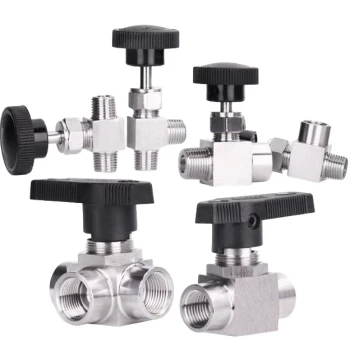
- 304 316 Stainless Steel High Vacuum Ball Stop Valve for Vacuum Systems
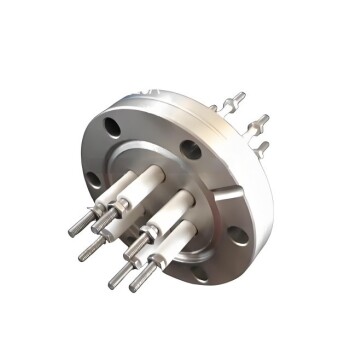
- CF KF Flange Vacuum Electrode Feedthrough Lead Sealing Assembly for Vacuum Systems
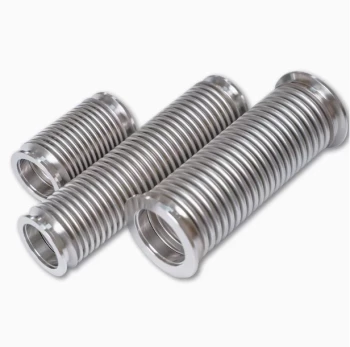
- High Performance Vacuum Bellows for Efficient Connection and Stable Vacuum in Systems
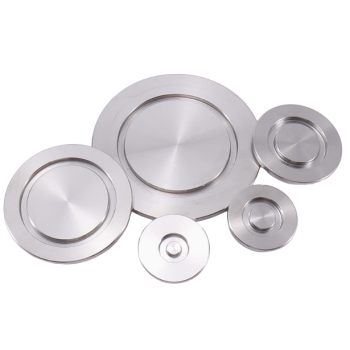
- Stainless Steel KF ISO Vacuum Flange Blind Plate for High Vacuum Systems
- Vacuum Induction Melting Furnace
People Also Ask
- What role do vacuum-sealed high-purity silica ampoules play in phase equilibrium experiments? Enhance Sample Integrity
- What is the function of quartz vacuum encapsulation in RhSeCl CVT? Mastering Pure Crystal Growth
- What role does a closed pressure vessel play during the carbonation of gamma-C2S? Unlock Rapid Mineralization
- What type of pump is used in water circulating vacuum pumps and how is it installed? Discover Robust Fluid-Based Vacuum Solutions
- What is the specific function of the water circulation cooler in zirconium sponge processing? Key for Purity & Safety