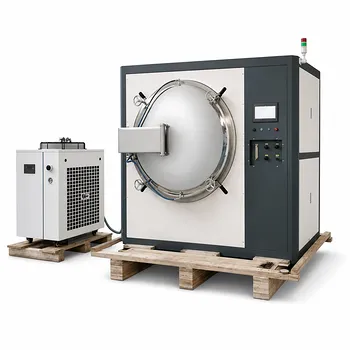
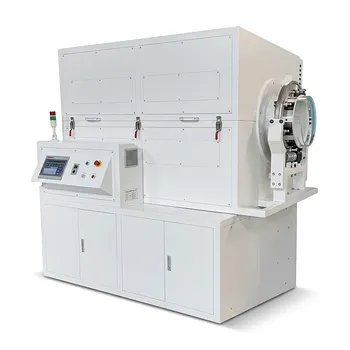
The microstructural gulf between cast and wrought aluminum alloys dictates fundamentally different heat treatment strategies. Cast alloys demand substantially higher solutionizing temperatures and longer soaking times to dissolve the coarse intermetallic compounds clustered at their grain boundaries. Unlike many wrought alloys, they rely almost entirely on artificial aging at 150–180 °C for 10–20 hours to reach peak strength. Precision laboratory heat treatment furnaces are essential for cast parts because only their tight temperature uniformity and control can prevent catastrophic incipient melting while ensuring every region of the part achieves full phase dissolution and a consistent hardening response.
The core difference sits in the as‑cast microstructure: large, stubborn intermetallics and severe chemical segregation force a more aggressive thermal cycle. Laboratory furnaces provide the exact thermal precision to walk the tightrope between complete dissolution and localized melting—making reliable, high‑strength cast aluminum components possible.
The Microstructural Roots of Heat Treatment Divergence
Cast Alloys: Coarse Grains and Segregated Phases
As‑solidified cast aluminum parts contain large grain sizes and coarse intermetallic particles (like CuAl₂, Mg₂Si, and Al₂CuMg‑type phases) that are heavily concentrated at grain boundaries.
This segregation creates a chemically heterogeneous structure that acts as a roadblock to uniform mechanical properties.
Wrought Alloys: A Legacy of Deformation
Wrought alloys undergo extensive rolling, extrusion, or forging. This mechanical work refines the grain structure, breaks up large particles, and distributes phases more evenly.
Consequently, the precipitates they contain are finer and more uniformly dispersed, making them less stubborn to dissolve during solution treatment.
Solution Treatment: Temperature and Soaking Time Divergence
Why Castings Need Higher Temperatures
Getting a homogeneous solid solution from a cast part requires pushing the temperature close to the alloy’s solidus point.
Only at these elevated super‑solvus temperatures can the large grain‑boundary intermetallics fully dissolve and the alloying elements diffuse evenly across the grain volume.
The Soaking Time Equation
Dissolution is diffusion‑controlled, and the diffusion distance in a cast structure is far greater due to the coarse segregation pattern.
Therefore, castings require significantly longer soaking times—often many hours—compared to the shorter cycles used for wrought products of the same nominal composition.
The Risk Runs Both Ways
If the solution temperature is too low or the soak too short, undissolved phases remain and the subsequent aging response is weak.
If the temperature overshoots even a few degrees, low‑melting eutectic phases at the grain boundaries melt—a defect called incipient melting that permanently ruins the part’s ductility and fatigue life.
Aging: Artificial vs. Natural
Cast Alloys: Peak Hardening through Artificial Aging
In cast aluminum, natural aging at room temperature is minimal and generally insufficient to develop usable strength.
The engineered strength comes entirely from artificial aging at 150–180 °C, where fine, coherent precipitates nucleate uniformly from the supersaturated solid solution. Holding times of 10–20 hours are typical to reach the peak‑aged condition.
Wrought Alloys: The Option for Natural Aging
Some wrought aluminum series (notably 2xxx and 7xxx) can develop significant strength through natural aging alone at room temperature.
While they are often artificially aged for stability, the as‑wrought microstructure gives them a natural aging response that cast alloys simply lack.
Why Only a Laboratory Furnace Will Do
The Peril of Incipient Melting
Cast alloys sit on a thermal knife‑edge. The solution temperature needed to dissolve coarse intermetallics lies just below the melting point of the lowest‑melting eutectic phase.
A laboratory heat treatment furnace provides temperature control within ±5 °C or better, along with forced air or inert atmosphere circulation that eliminates hot spots. This precision is what stops catastrophic localized melting while still hitting the required dissolution temperature.
Uniform Phase Dissolution Demands Uniform Temperature
For a 1‑inch‑thick casting, a ±15 °C variation across the part can mean under‑solutionizing in some areas and incipient melting in others.
Laboratory chamber furnaces are engineered to deliver tight thermal uniformity across the entire workspace, ensuring every grain boundary in the load sees the correct super‑solvus condition.
Precision Aging for Predictable Properties
The artificial aging step is equally unforgiving. A 10‑°C shift in aging temperature can dramatically alter the precipitate size, number, and distribution—changing hardness and tensile strength.
Lab‑grade furnaces hold the aging plateau with minimal drift, giving consistent results from batch to batch. This repeatability is why they are mandated for aerospace, defense, and critical structural castings.
Understanding the Trade‑offs
While laboratory furnaces are indispensable for cast aluminum, the approach comes with inherent constraints.
- Throughput Limitations: Lab furnace chamber dimensions are often compact. Large or high‑volume castings can require multiple runs, increasing lead time.
- Cost of Precision: High‑performance heating elements, multi‑zone PID controllers, and advanced insulating materials raise capital and operating costs compared to simple industrial ovens.
- Temperature Ramping Sensitivity: Thick‑section castings must often be ramped to solution temperature slowly to avoid thermal shock. The programmability of lab furnaces handles this, but it adds to overall cycle time.
- Over‑Aging Risk: In the pursuit of peak strength, overshooting the aging time will coarsen precipitates and rapidly degrade properties. A lab furnace’s precise soak timer prevents this, but the process still demands stringent recipe adherence.
Making the Right Choice for Your Goal
The correct heat treatment strategy hinges on your component’s microstructure and your performance requirements.
- If your primary focus is achieving maximum strength and reliability in cast aluminum parts: Specify a precision laboratory furnace with uniform temperature control (±5 °C or better) and rigorous temperature ramping capability. The investment is non‑negotiable to avoid incipient melting and under‑aging.
- If you are working with R&D or small‑batch castings: A benchtop high‑temperature muffle furnace enables the exact thermal profiles needed for process development, while its small chamber guarantees rapid thermal response and minimal gradient.
- If you are heat treating wrought alloys and part geometry is forgiving: You may have more flexibility in furnace choice, but still prioritize an oven with documented temperature uniformity if the application is safety‑critical.
- If your process involves 3D‑printed aluminum (WAAM) that mimics a cast‑like structure: The same strict laboratory furnace requirements apply. Post‑deposition solutionizing and aging in a precision furnace are essential to erase dendritic segregation and unlock deposited material’s full mechanical potential.
Remember: the furnace is not just a heat source—it is the primary tool that converts a brittle, segregated casting into an engineering‑grade component. Treat the thermal cycle with the exactness it demands, and the part will deliver the properties your design requires.
Summary Table:
| Feature / Requirement | Cast Aluminum Alloys | Wrought Aluminum Alloys |
|---|---|---|
| As-Processed Microstructure | Coarse grains, stubborn intermetallics at grain boundaries | Refined, fine grain structure with dispersed phases |
| Solution Temperature & Soak | Higher temperatures (near solidus), longer soaking times | Lower temperatures, shorter soaking times |
| Primary Aging Mechanism | Requires artificial aging (150–180 °C, 10–20 hours) | Natural aging viable; optional artificial aging |
| Thermal Over-temperature Risk | High: Risk of catastrophic incipient melting | Lower risk: Broader thermal processing window |
| Lab Furnace Requirement | Essential: Tight control (±5 °C) eliminates hot spots | Preferred for critical specs; higher general flexibility |
Maximize Mechanical Properties with KINTEK Precision Lab Furnaces
Don't let tight thermal windows ruin your cast aluminum components. KINTEK specializes in high-performance laboratory equipment, offering a complete line of high-temperature furnaces—including muffle, tube, atmosphere, vacuum, and custom-engineered chamber furnaces designed for strict temperature uniformity (±5 °C or better).
Whether you are processing advanced R&D alloys, aerospace castings, or 3D-printed metal parts, our customized heating solutions prevent incipient melting and guarantee complete phase dissolution.
👉 Contact KINTEK Thermal Experts Today to find the ideal customizable furnace for your metallurgical laboratory!
Related Products
- Laboratory Quartz Tube Furnace RTP Heating Tubular Furnace
- Small Vacuum Heat Treat and Tungsten Wire Sintering Furnace
- Vacuum Heat Treat Furnace with Ceramic Fiber Liner
- 2200 ℃ Graphite Vacuum Heat Treat Furnace
- Laboratory Muffle Oven Furnace with Bottom Lifting
People Also Ask
- What physical conditions does a laboratory Tube Furnace provide for SOEC? Precision Heat for Solid Oxide Characterization
- What are the main features and functions of a laboratory tube furnace? Unlock Precise High-Temp Control for Your Lab
- What parameters must be controlled when calcining freeze-dried oxide precursors in a laboratory tube furnace? A Guide
- What conditions does a tube furnace provide for post-ion-implantation? Achieve Precise Microstructural Repair
- What conditions do tube furnaces provide for Au-Seeded TiO2 nanowires? Master Precision Thermal Synthesis