The final architecture of a sol-gel silica network—from weakly branched fractals to dense colloidal spheres—is set by nothing more than the pH and the water-to-alkoxide ratio (w).
Under strongly acidic conditions (pH < 2) with high water content (w > 4), rapid hydrolysis followed by reaction-limited cluster–cluster aggregation yields open, low-density mass fractals (fractal dimension dm ≈ 2). Under basic conditions (pH > 7) with equally high water, monomer–cluster aggregation dominates, producing compact, dense, nonfractal silica particles (dm ≈ 3). Low water ratios (w < 4) in basic systems drive a poisoned Eden model that creates surface‑fractal or uniformly porous networks. This underlying skeletal architecture directly dictates drying shrinkage, sintering kinetics, and the thermal profile needed in a high‑temperature furnace—making it the single most important design parameter when preparing precursors for full densification.
Controlling pH and w decides whether the gel network is an open, polymer‑like fractal or a dense particulate structure. That architecture governs how much the gel shrinks during drying, the thermodynamic driving force for sintering from nanoscale pores, and the temperature required to reach a crack‑free, high‑density ceramic in a high‑temperature furnace.
How pH and Water Ratio Direct Silicate Structural Evolution
Acid‑Catalyzed, High Water Ratio (pH < 2, w > 4): Open Mass Fractals
Complete and fast hydrolysis occurs before substantial condensation can proceed.
Growth follows reaction‑limited cluster–cluster aggregation: small clusters collide and stick, forming weakly branched, open networks with a fractal dimension near 2.
The result is a low‑density, highly porous gel that is inherently a mass fractal—its structure looks the same over a range of length scales.
Base‑Catalyzed, High Water Ratio (pH > 7, w > 4): Dense Nonfractal Particles
Here, condensation reactions outcompete hydrolysis.
Preferential condensation between weakly acidic and strongly acidic species drives reaction‑limited monomer–cluster aggregation, producing compact, nearly spherical particles.
These particles are dense and nonfractal (dm ≈ 3), closely resembling monodisperse silica spheres when w is very large (w > 50).
Low Water Ratios (w < 4): Linear Chains and Surface Fractals
In acid‑catalyzed systems with w ≈ 1, hydrolysis is fast but condensation is sterically limited.
This favors linear polymer growth—ideal for drawing continuous fibers.
In base‑catalyzed low‑w systems, the mechanism follows a poisoned Eden model, creating structures that range from surface fractals to uniformly porous networks, depending on catalyst and stoichiometry.
Why Precursor Structure is the Linchpin of Furnace Sintering
Drying Shrinkage: The Fractal’s Hidden Cost
Open mass‑fractal gels contain large void spaces and a tortuous, low‑connectivity solid backbone.
During drying, capillary forces collapse these fragile pores, causing dramatic shrinkage that can easily lead to cracking.
Dense, particulate gels are far more resistant to shrinkage because their solid network is already compacted.
Sintering Kinetics and Pore Elimination: Nanoscale Pores Drive Lower Temperatures
The thermodynamic driving force for sintering varies inversely with pore radius.
Polymeric gels possess an interconnected network of 2–10 nm pores, generating a huge driving force for densification.
Consequently, such gels can fully densify by viscous flow sintering at only 800–1000 °C—far below the temperatures required for melt‑derived silica or compact particulate gels.
Controlling Ramp Rates and Atmosphere to Avoid Catastrophic Cracking
At the gel point, the spanning cluster locks in the network’s cross‑linking density and pore connectivity.
If heating is too rapid, violently escaping solvents and organics can fracture a tightly cross‑linked network.
A precise furnace profile—slow ramps, controlled gas flow, and sometimes a vacuum atmosphere—is essential to manage outgassing and prevent defects during calcination.
Understanding the Trade‑offs: Sinterability vs. Structural Integrity
Choosing a precursor structure is a deliberate compromise between easy sinterability and mechanical resilience during processing.
- Open fractal gels (acid, high w) sinter rapidly at low temperatures because of their nanoscale pores, but they shrink excessively and are highly susceptible to cracking during drying and early‑stage heating.
- Dense particulate gels (base, high w) withstand drying with minimal shrinkage, yet their coarser inter‑particle pores demand much higher furnace temperatures (often >1200 °C) and longer hold times to eliminate porosity.
- Low‑water acid systems yield linear polymers perfect for fibers, but the green fibers remain microporous and rich in organics; the furnace must carefully burn out organics while applying tension to maintain fiber integrity.
- Low‑water base systems produce surface‑fractal or uniformly porous networks that fall between the extremes—moderate shrinkage and moderate sintering temperatures—but require precise tuning to avoid heterogeneous pore collapse.
Making the Right Choice for Your High‑Temperature Process
Your process goal should dictate the pH and w you select. Use these guidelines to align precursor architecture with furnace capabilities.
- If your primary focus is a dense, crack‑free monolith: Choose acid‑catalyzed, moderate water (w 5–10) to build a homogeneous polymer network; employ slow, multi‑step furnace ramps to accommodate shrinkage.
- If your primary focus is continuous ceramic fibers: Use acid catalysis with w ≈ 1 to encourage linear polymer growth; sinter under tension in a controlled‑atmosphere tube furnace at moderate temperatures.
- If your primary focus is monodisperse powders or spherical particles: Use base catalysis with w > 50 to grow dense, unagglomerated spheres; be prepared to sinter at high temperatures (1200 °C and above) in a muffle furnace to achieve full densification.
- If your primary focus is low‑temperature sintering: Opt for an acid‑catalyzed high‑water system to create an open fractal gel that densifies between 800 and 1000 °C, but accept a higher risk of drying cracks and design your drying and ramp protocol accordingly.
By deliberately choosing pH and water stoichiometry, you write the blueprint for the gel’s architecture—and that blueprint ultimately determines whether your high‑temperature furnace produces a flawless ceramic or a shattered relic.
Summary Table:
| Processing Condition | pH & Water Ratio (w) | Gel Architecture | Sintering Temp & Key Characteristics |
|---|---|---|---|
| Acid-Catalyzed / High Water | pH < 2, w > 4 | Open Mass Fractals (dm ≈ 2) | 800–1000 °C: Fast viscous flow sintering, but high drying shrinkage risk. |
| Base-Catalyzed / High Water | pH > 7, w > 4 | Dense Nonfractal Spheres (dm ≈ 3) | >1200 °C: Minimal drying shrinkage, demands higher temps for full density. |
| Acid-Catalyzed / Low Water | pH < 2, w ≈ 1 | Linear Polymer Chains | Moderate: Ideal for drawing fibers; requires careful organic burnout under tension. |
| Base-Catalyzed / Low Water | pH > 7, w < 4 | Surface Fractals / Porous | Moderate: Balanced shrinkage and sintering temp; requires precise profile tuning. |
Whether your sol-gel route calls for low-temperature viscous flow sintering of fractal gels or high-temperature densification of compact silica spheres, precise thermal control is essential to prevent cracking. KINTEK specializes in advanced laboratory equipment and high-temperature furnaces—including customizable muffle, tube, atmosphere, vacuum, and CVD systems—designed to deliver exact ramp rates and atmosphere management for your unique precursor formulations.
Contact KINTEK today to find the perfect high-temperature furnace for your research!
Related Products
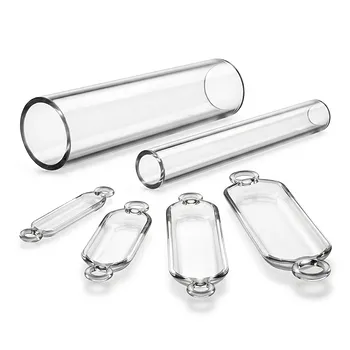
- High Purity Quartz Tube and Quartz Boat for Laboratory Furnaces
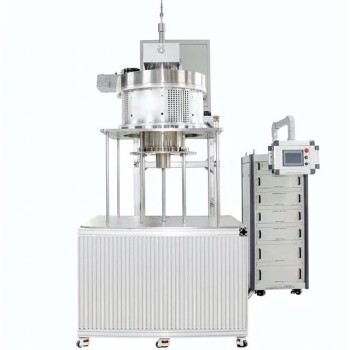
- High Temperature Muffle Oven Furnace for Laboratory Debinding and Pre Sintering
- Small Vacuum Heat Treat and Tungsten Wire Sintering Furnace
- Vacuum Dental Porcelain Sintering Furnace for Dental Laboratories
- Multi Heating Zones CVD Tube Furnace Machine for Chemical Vapor Deposition Equipment
People Also Ask
- What tube furnace protocols prevent hydrogen embrittlement in Pd membranes? Safe Heating Guide
- What parameters must be controlled when calcining freeze-dried oxide precursors in a laboratory tube furnace? A Guide
- Why is precise atmosphere control in a laboratory tube furnace required when evaluating palladium membranes?
- What is the relationship between chemical hydrolysis of metal alkoxides and lab tube furnace thermal processing?
- Why Avoid Particle Coagulation in Ceramic Prep? Prevent Defects in Tube & Vacuum Furnaces