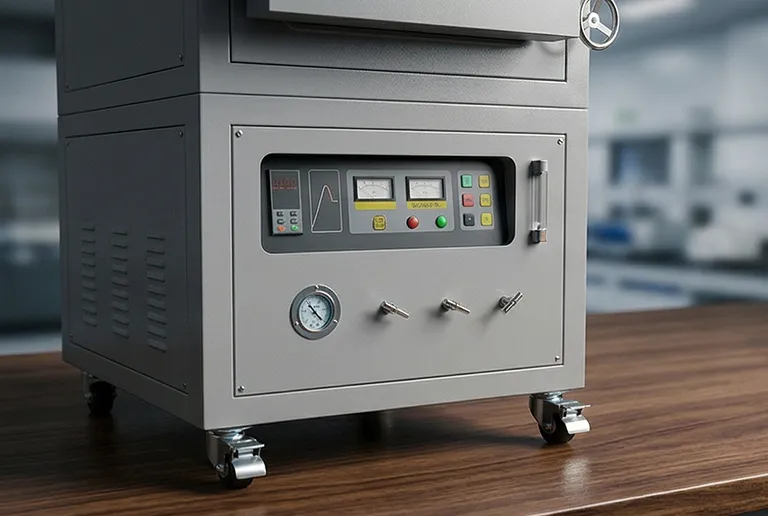
The Invisible Wall in TiO2 Research
You have meticulously executed the anodic oxidation process or perfected a complex sol-gel synthesis. Under the microscope, your TiO2 nanotube arrays or nanoparticles look perfect. Yet, when it comes to the actual performance test—whether it’s photoelectric conversion in a solar cell or photocatalytic degradation—the results are underwhelming.
The data is inconsistent, the stability is poor, and the electronic activity is nowhere near the theoretical benchmarks. If you have spent weeks tweaking your chemical precursors only to face a plateau in performance, you aren't alone. The problem often isn’t in how you grew the material, but in how you awakened it.
The Frustration of "Dead" Material
Many researchers and labs face a common hurdle: synthesized TiO2 is often "amorphous." In this state, the atoms are disorganized, acting like a structural maze that traps electrons and stifles activity.
To fix this, the standard response is to "just heat it up." However, imprecise thermal treatment often leads to a new set of headaches:
- Cracked Nanostructures: Heating too quickly causes internal stresses that shatter delicate nanotube arrays.
- Unwanted Phase Contamination: A few degrees of overshoot can accidentally tip your material from the active Anatase phase into the less catalytic Rutile phase.
- Persistent Impurities: Residual organic templates (like Pluronic F-127) or plant extracts from green synthesis remain trapped, poisoning the surface of your catalyst.
When your thermal process is a "black box," your research remains a gamble. Each failed batch isn't just a loss of material; it is a delay in publication, a blown project budget, and a setback in your department’s innovation timeline.
The Root Cause: The High-Stakes Physics of Phase Transition
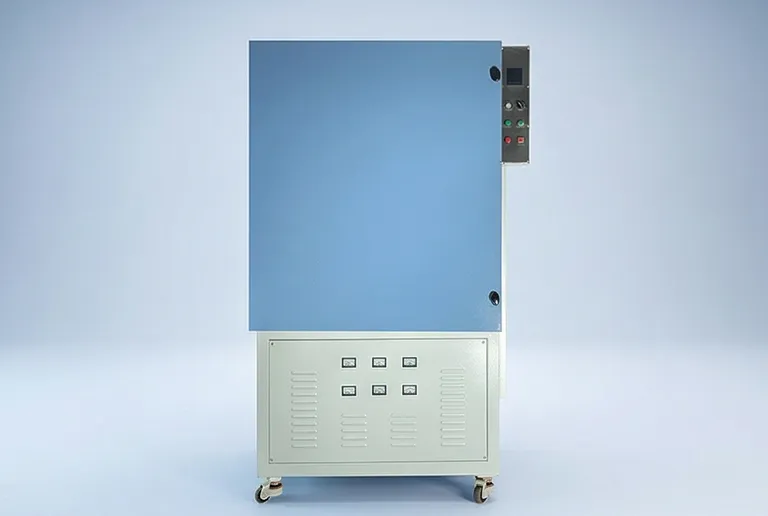
The leap from a "dead" precursor to a "live" functional material depends entirely on Crystalline Phase Transformation.
TiO2 exists in several states, but for high-efficiency applications like Dye-Sensitized Solar Cells (DSSCs), the Anatase phase is the "holy grail." It possesses the highest photoelectrochemical stability and activity. However, TiO2 is temperamental. At approximately 350°C to 450°C, the amorphous structure begins to reorganize into Anatase. If your furnace cannot maintain a perfectly uniform thermal field, one side of your sample might reach 450°C (Anatase) while the other hits 650°C—where the material begins transforming into Rutile.
Furthermore, this is not just about the final temperature. It is about the thermodynamic journey. To remove organic residues and eliminate internal stresses without destroying the nanotube architecture, you need a precise heating ramp—often as slow as 3°C per minute. Without this level of control, the "uniform thermal field" required to stabilize the nanotubes remains a theoretical dream.
Directing the Transformation: The Precision Muffle Furnace
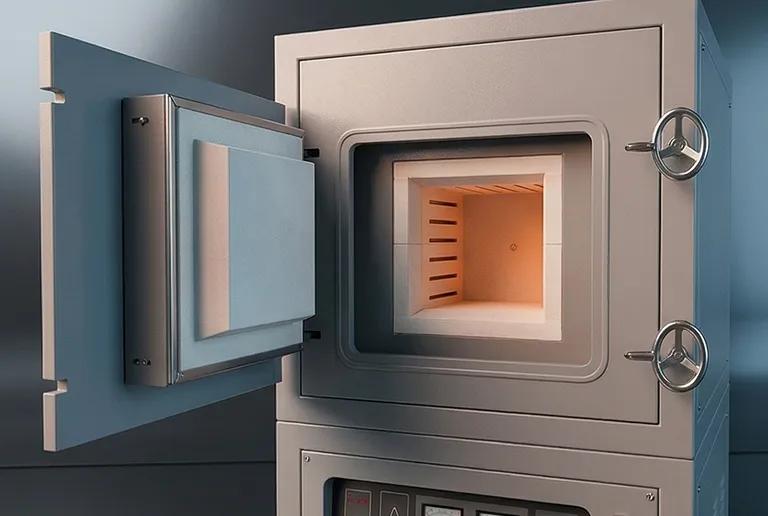
To bridge the gap between "synthesis" and "performance," you need a tool designed for the nuances of material science, not just basic heating. A high-temperature muffle furnace is the indispensable anchor of this process.
At KINTEK, our high-temperature furnaces are engineered to act as the precision "architect" of your TiO2 structure:
- Strict Phase Control: By maintaining stable holds at exact points—such as 450°C for nanotubes or 600°C for IrO2 crystallization—our furnaces ensure you get the exact crystal structure your application demands.
- Uniformity is Mandatory: Our heating elements and chamber insulation are designed to eliminate cold spots, ensuring that every square millimeter of your nanotube array undergoes the same crystalline transition.
- Controlled Decomposition: Our advanced controllers allow for the slow, steady ramp rates needed to burn off organic templates and volatiles thoroughly, leaving behind a pure, high-crystallinity product.
Our furnaces aren't just lab appliances; they are the calibrated environments that turn unstable orange precursor powders into stable, white, high-activity Anatase crystals.
Beyond the Fix: New Frontiers in Material Design
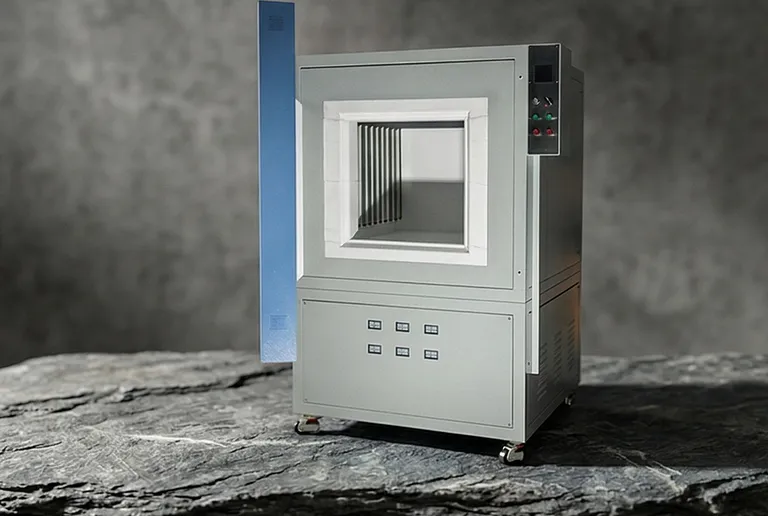
When you master the thermal environment, the "impossible" becomes routine. Solving the bottleneck of inconsistent annealing doesn't just improve your current data—it opens doors to higher-tier research and industrial applications:
- Maximized Efficiency: Achieve the peak photoelectric conversion rates required for the next generation of solar energy.
- Industrial Scalability: Transition from small lab samples to larger batches with the confidence that every piece meets the same structural standards.
- Advanced Doping: Explore complex materials like Ir-doped TiO2, knowing you have the thermal precision to manage multiple phase transitions simultaneously.
The difference between a failed experiment and a breakthrough often comes down to a few degrees of precision.
At KINTEK, we understand that your work in high-temperature synthesis is about more than just heat—it’s about the future of energy and chemical engineering. Whether you are working with nanotubes, powders, or complex thin films, our team is ready to help you select or customize the ideal furnace environment for your specific research goals. To move your project from the amorphous stage to peak performance, Contact Our Experts.
Related Products
- High Temperature Muffle Oven Furnace for Laboratory Debinding and Pre Sintering
- 1700℃ High Temperature Muffle Oven Furnace for Laboratory
- 1800℃ High Temperature Muffle Oven Furnace for Laboratory
- 1700℃ High Temperature Laboratory Tube Furnace with Alumina Tube
- 1400℃ High Temperature Laboratory Tube Furnace with Alumina Tube
Related Articles
- The Hidden Saboteur in Your HT-LiCoO2 Synthesis: Why Precise Ramp Rates Can Make or Break Your Battery Materials
- Why Your High-Temperature Experiments Fail: The Hidden Flaw in Your Furnace
- Why High-Purity Gas Fails Your High-Temp Brazing—And How Mono-Silane Doping Fixes It
- Your Furnace Meets Spec, So Why Are Your Results Inconsistent?
- Why Your Muffle Furnace Might Be Masking Your Alloy Kinetics—And How to Fix It



















