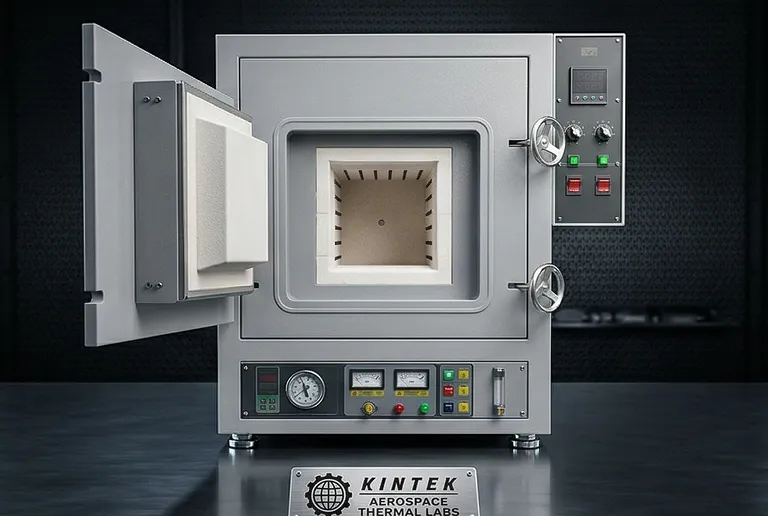
The Mystery of the "High-Purity" Failure
You have invested in the best equipment and ordered the highest grade of 99.999% ultra-high-purity (UHP) Argon. You’ve sealed your furnace and purged the chamber. Yet, when the cycle finishes and the door opens, the results are disheartening: the metal surfaces are slightly discolored, the brazing joints are inconsistent, or the material properties haven't reached their theoretical peak.
In the world of high-temperature processing, "clean" is often a relative term. For many advanced applications, even a few parts-per-million (ppm) of residual oxygen or water vapor can act as a persistent "invisible enemy," sabotaging your results and forcing you into a cycle of troubleshooting that seems to have no end.
The Common Struggle: More Flow, More Flux, More Risk
When faced with oxidation or poor joint quality, most laboratories and manufacturers turn to three traditional, yet flawed, solutions:
- Increasing Gas Flow: The logic is to "flush out" the problem. However, this is expensive, wasteful, and rarely addresses the trace oxygen molecules that remain stubbornly attached to surfaces or leak through microscopic seals.
- Using Fluxes: Chemical fluxes can strip away oxides, but they introduce a new set of problems. They leave behind corrosive residues that require intensive post-process cleaning and can trap inclusions within the joint, compromising structural integrity.
- The Hydrogen Gamble: High-flow hydrogen is an excellent deoxidizer, but it comes with a massive "safety tax." To use it safely, you must invest in expensive explosion-proof infrastructure, specialized gas monitoring, and rigorous safety protocols—not to mention the inherent risk of managing a highly flammable atmosphere.
These "fixes" are often sticking plasters that address the symptoms while leaving the underlying cause—residual oxygen activity—untouched.
The Root of the Problem: The Thermodynamics of "Almost Zero"
Why does 99.999% purity still fail? Because in high-temperature metallurgy, it’s not just the amount of oxygen that matters, but its activity.
Even in a vacuum or a high-purity inert atmosphere, tiny amounts of residual oxygen and moisture are present. At high temperatures, metals become incredibly "hungry" for this oxygen. To truly prevent oxidation or achieve "flux-free" brazing, you don't just need a low concentration of oxygen; you need an environment where the oxygen activity is virtually non-existent.
Traditional methods struggle to reach these extreme thermodynamic lows. This is where the chemistry of Mono-silane (SiH₄) changes the game.
The Solution: Chemical Scavenging via SiH₄ Doping
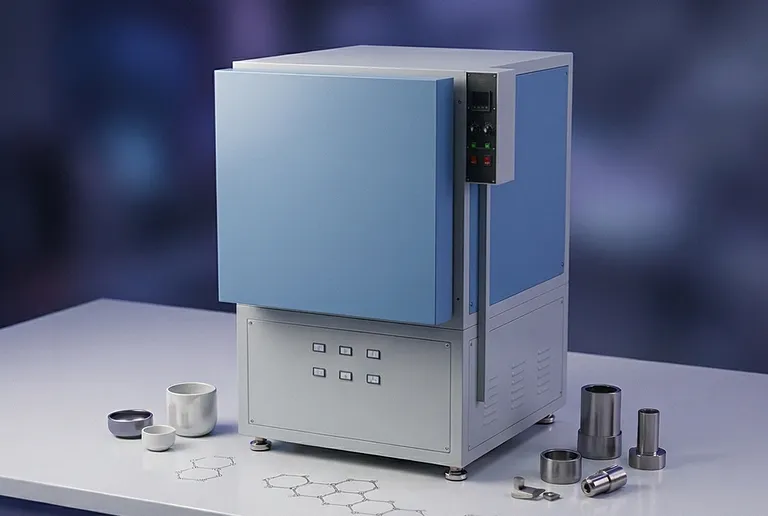
Unlike inert gases that simply displace oxygen, Mono-silane acts as a "chemical sponge." When doped into an inert gas like Argon or Nitrogen at incredibly low concentrations (typically less than 100 ppm), SiH₄ reacts quantitatively and instantaneously with residual oxygen and water vapor—even at room temperature.
This reaction effectively "scrubs" the gas to a level that mechanical purification cannot reach. The result is a near-absolute oxygen-free environment with thermodynamic oxygen activity levels as low as 10⁻²².
Why is this a breakthrough for your lab?
- Unmatched Purity: It achieves an environment so clean that oxides cannot form, enabling high-quality, flux-free brazing of even sensitive alloys.
- Safety Without Compromise: Because the SiH₄ is used at such low concentrations (often pre-diluted to 1% in Argon), the final mixture remains safely below explosive limits. You get the deoxidizing power of hydrogen without the need for expensive explosion-proof furnace modifications.
- Cost Efficiency: You can achieve superior results using industrial-grade gases doped with SiH₄, often proving more cost-effective than relying solely on ultra-high-purity gas chains.
Turning Theoretical Excellence into Process Reality
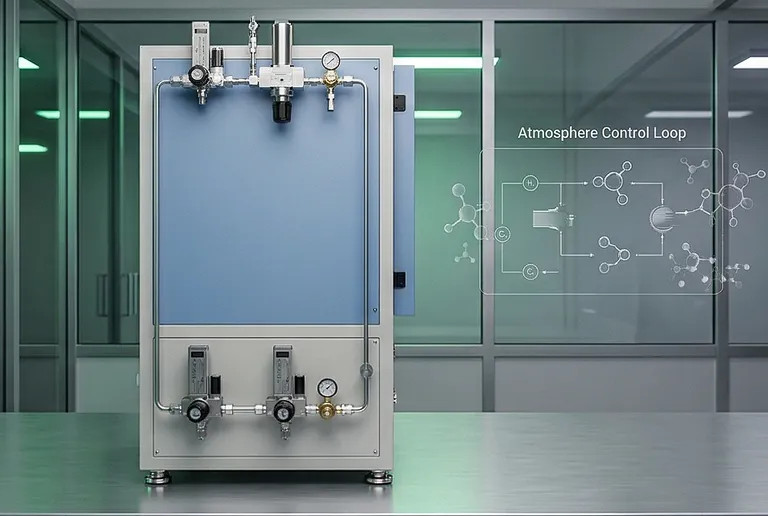
At KINTEK, we understand that a breakthrough in gas chemistry is only as good as the furnace that contains it. Our range of high-temperature furnaces—from Atmosphere and Vacuum furnaces to specialized CVD and Rotary systems—is engineered to provide the precision control required for advanced techniques like SiH₄ doping.
We don't just provide a "hot box." KINTEK systems are designed with the seal integrity, gas distribution manifolds, and customizable control interfaces necessary to maintain these extreme atmospheres. Our equipment acts as the reliable platform where the "invisible enemy" of oxidation is finally defeated, allowing the underlying science of your project to shine.
Beyond the Fix: Opening New Doors in Material Science
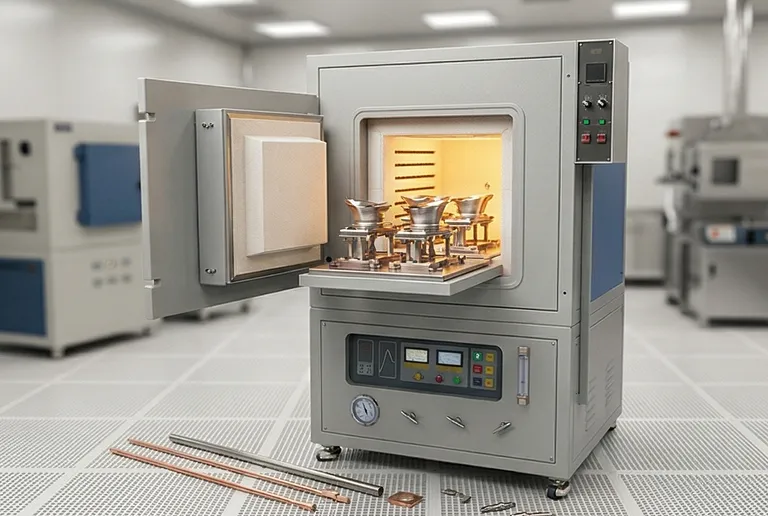
When the barrier of oxidation is removed, the ceiling for what you can achieve rises. By mastering atmosphere control through SiH₄ doping, you can move away from the "trial and error" of cleaning residues and focus on what really matters:
- Developing high-strength, flux-free brazed joints for aerospace or medical applications.
- Sintering advanced ceramics or powders with zero surface contamination.
- Accelerating R&D cycles by eliminating the variability of inconsistent gas quality.
The transition from "managing a problem" to "mastering a process" begins with understanding the chemistry of your atmosphere. At KINTEK, we are ready to help you bridge that gap. Whether you are looking to upgrade your current thermal processing capabilities or are starting a new, sensitive project from scratch, our team of experts can help you select and customize the ideal furnace system to meet your most demanding atmosphere requirements.
Contact Our Experts today to discuss how we can help you achieve an absolute oxygen-free environment for your next breakthrough.
Related Products
- 1400℃ High Temperature Laboratory Tube Furnace with Alumina Tube
- 1700℃ High Temperature Laboratory Tube Furnace with Alumina Tube
- 1800℃ High Temperature Muffle Oven Furnace for Laboratory
- 1700℃ High Temperature Muffle Oven Furnace for Laboratory
- 1200℃ Muffle Oven Furnace for Laboratory
Related Articles
- The Alchemy of Control: Mastering Material Properties with High-Temperature Tube Furnaces
- Beyond Max Temp: The Systems Thinking Approach to Selecting a High-Temperature Tube Furnace
- Why Your High-Temperature Experiments Fail: The Hidden Flaw in Your Furnace
- The Hidden Saboteur in Your HT-LiCoO2 Synthesis: Why Precise Ramp Rates Can Make or Break Your Battery Materials
- Beyond the Alarm: The Hidden Safety Risks in Your High-Temperature Furnace



















