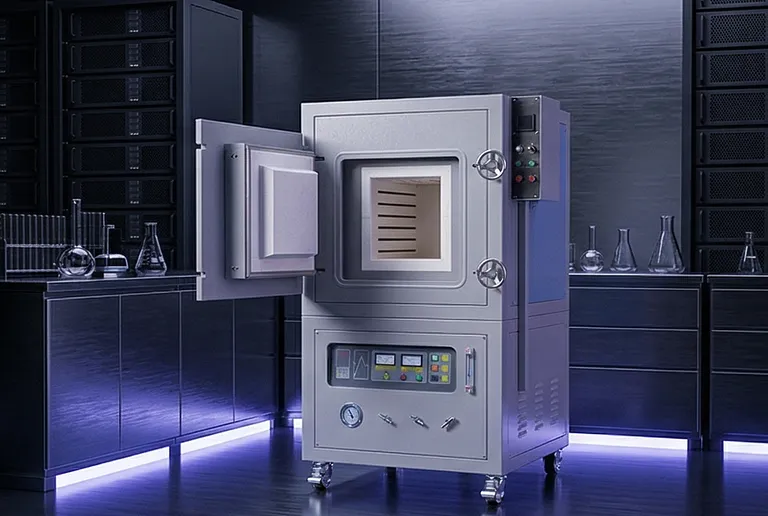
The Frustrating Mystery of the Mid-Process Crack
Imagine you are halfway through a critical production run. You’ve invested hours into rolling a high-performance alloy to the perfect thickness. Everything looks correct until, suddenly, the material snaps. Or worse, a series of microscopic cracks appear that render the entire batch useless.
You followed the protocol. You heated the material. Yet, the results are inconsistent. One batch is perfectly ductile; the next is as brittle as glass. If your lab or production floor has felt like a gamble where the "house always wins" through material failure, you are likely overlooking a silent killer in metallurgy: the lack of precision in intermediate annealing.
The Cost of "Good Enough" Heat Treatment
When a material fails during processing, the instinct is often to blame the raw material or the rolling pressure. To fix it, many teams try to compensate by increasing the time the alloy spends in the furnace or simply "cranking up the heat."
However, these "brute force" solutions often create more problems than they solve. Imprecise heating leads to:
- High Scrap Rates: Wasted expensive alloys and energy.
- Project Delays: Redoing cycles because the material lost its plasticity.
- Unreliable Final Products: Internal stresses that stay hidden until the product is in the customer's hands, leading to catastrophic field failures.
The commercial consequence isn't just a broken piece of metal; it’s the erosion of your profit margins and your reputation for quality.
The Science of the "Ticking Time Bomb"
To understand why your alloy is failing, we have to look at the atomic level. As you roll a metal, you are forcing its atoms into new positions. This process, known as work hardening, creates a massive buildup of internal dislocations—think of it as "atomic traffic jams." If you don't clear these jams, the material loses its ability to deform (plasticity) and simply breaks.
The solution is intermediate annealing—typically a 15-minute window at exactly 300 °C. But here is the catch: Temperature is not a single number; it is a environment.
In a standard furnace, the temperature might read 300 °C on the display, but "hot spots" or "cold zones" inside the chamber mean your material is experiencing a chaotic range of temperatures. If the temperature drops too low, the internal stresses aren't eliminated. If it spikes too high, you risk grain growth that weakens the metal.
This precision is even more critical when we look at advanced materials. For instance, in optical ceramics, being off by just a few degrees during annealing can lead to "oxygen vacancies" or valence imbalances in ions like Terbium (Tb⁴⁺), turning a clear ceramic dark and useless. In semiconductors, a slight deviation at 1000 °C can ruin the crystal structure of silicon, destroying its conductivity.
The Precision Muffle Furnace: A Tool Designed for Truth
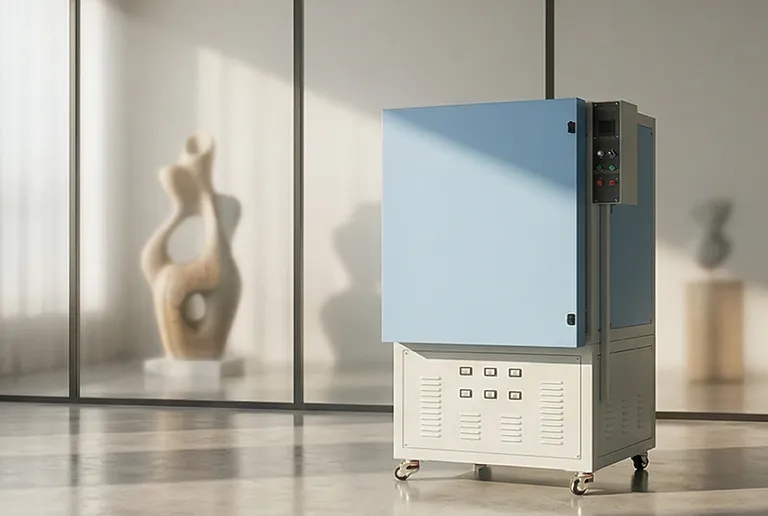
Solving the problem of material failure requires moving away from "ovens" and toward precision-controlled muffle furnaces. A high-quality muffle furnace, such as those engineered by KINTEK, isn't just a heater—it is a stabilized environment designed to solve the root cause of structural failure.
- Thermal Uniformity: By isolating the heating elements and using advanced refractory linings, these furnaces ensure that every square millimeter of your alloy reaches the exact same temperature at the exact same time.
- Controlled Gradients: For complex processes—like the slow sublimation of ammonium bicarbonate space holders at 50 °C—the furnace prevents pressure buildup and micro-cracks by managing the heat ramp with surgical precision.
- Atmospheric Integrity: Whether you need an air-atmosphere to re-oxidize ceramics at 1350 ℃ or a vacuum to prevent oxidation in semiconductors, a precision furnace provides the specific environment the chemistry demands.
Our furnaces are designed with the understanding that in high-stakes engineering, "close enough" is the same as "failure."
Beyond the Fix: Unlocking New Material Potential
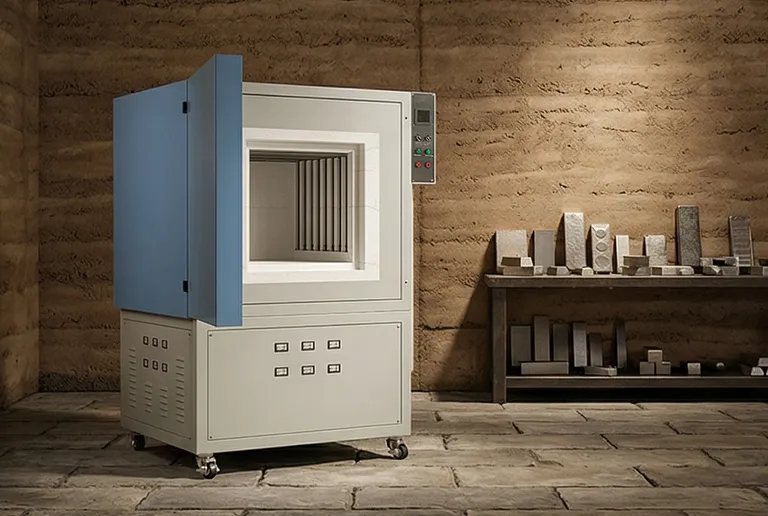
When you master the art of precision annealing, you stop playing defense. You are no longer just "preventing cracks"; you are optimizing performance.
With a stable, predictable thermal process, you can push your materials further. You can work with thinner gauges, more complex geometries, and exotic alloys that were previously "too difficult" to process. You gain the ability to guarantee the optical clarity of your ceramics and the electrical precision of your semiconductors.
By eliminating the variables of internal stress and work hardening, you transform your lab from a place of troubleshooting into a center of innovation.
At KINTEK, we understand that your laboratory equipment is the foundation of your technological breakthroughs. Our comprehensive range of muffle, tube, and vacuum furnaces is built to provide the exact thermal control your specialized projects demand. Whether you are dealing with standard alloy rolling or complex ceramic sintering, we can help you find—or customize—the perfect thermal solution to eliminate failure and accelerate your production. Contact Our Experts today to discuss how we can bring precision to your next project.
Related Products
- 1400℃ Muffle Oven Furnace for Laboratory
- Laboratory Muffle Oven Furnace with Bottom Lifting
- 1200℃ Muffle Oven Furnace for Laboratory
- 1700℃ High Temperature Muffle Oven Furnace for Laboratory
- High Temperature Muffle Oven Furnace for Laboratory Debinding and Pre Sintering
Related Articles
- Why Your Muffle Furnace Might Be Masking Your Alloy Kinetics—And How to Fix It
- Why Your Ceramic Sintering Fails Before It Even Starts—And How Strategic Pretreatment Rescues Your Yields
- The Hidden Saboteur in Your HT-LiCoO2 Synthesis: Why Precise Ramp Rates Can Make or Break Your Battery Materials
- Why High-Purity Gas Fails Your High-Temp Brazing—And How Mono-Silane Doping Fixes It
- Why Your High-Temperature Experiments Fail: The Hidden Flaw in Your Furnace



















