
Temperature monitoring is the critical safeguard for production viability. In the aluminum alloy refining cycle, monitoring temperature loss is mandatory to ensure the molten metal retains sufficient fluidity for the final casting process. If the temperature drops too low, the metal cannot fill molds correctly, compromising the entire production run.
While refining is necessary to remove impurities, the process inherently consumes heat. You must monitor the temperature drop to ensure a balance between thorough degassing and retaining the thermal energy required for successful casting.
Preserving Metal Fluidity
The Link to Castability
The primary technical reason for monitoring temperature loss is fluidity. Molten aluminum must remain hot enough to flow freely into molds during the casting stage.
The Consequence of Heat Loss
If the refining cycle allows the metal to cool excessively, its viscosity increases. This lack of fluidity prevents the alloy from properly filling complex mold geometries, leading to defective castings.
Typical Operating Ranges
In standard refining operations, the temperature drop often falls between 26 and 32 °C. Monitoring this specific range helps operators predict the final condition of the melt before it reaches the casting station.
Balancing Process Variables
The Time vs. Temperature Equation
Refining takes time, and time equals heat loss. As you extend the refining cycle to improve metal purity, you inevitably lose thermal energy.
Managing Degassing Requirements
The goal of refining is often thorough degassing to remove hydrogen and impurities. However, this process cannot be indefinite; it is constrained by the thermal limits of the molten bath.
Strategic Retention
Operators must maintain a strict balance between achieving the necessary chemical quality (degassing) and thermal retention. The cycle must end while the metal is still hot enough to cast, even if slightly more refining were theoretically possible.
Understanding the Trade-offs
The Risk of Over-Refining
Extending the refining time to achieve "perfect" purity is a common pitfall. If the refining time is too long, the temperature loss will exceed the safe threshold, rendering the metal unusable for the intended casting process.
Operational Compromise
You often cannot maximize both variables simultaneously. You must accept a calculated temperature drop to achieve necessary quality, but you must strictly limit that drop to protect downstream production capability.
Making the Right Choice for Your Goal
To optimize your refining cycle, you must weigh the priority of metal cleanliness against the physical constraints of your casting equipment.
- If your primary focus is Casting Reliability: Prioritize thermal retention by limiting cycle time to keep the temperature drop within the 26-32 °C range, ensuring high fluidity.
- If your primary focus is Metal Purity: Extend the refining cycle for maximum degassing only as far as your thermal buffer allows, monitoring the temperature constantly to prevent freezing issues.
Successful aluminum refining is not just about cleaning the metal; it is about delivering clean metal that is still fluid enough to cast.
Summary Table:
| Factor | Impact on Aluminum Refining | Target/Limit |
|---|---|---|
| Metal Fluidity | High viscosity prevents mold filling | Must maintain high fluidity |
| Temperature Drop | Standard heat loss during refining | Typical range: 26 - 32 °C |
| Degassing Time | Removes hydrogen/impurities | Limited by thermal buffer |
| Primary Risk | Over-refining leading to cold metal | Compromised production viability |
Optimize Your Thermal Precision with KINTEK
Don't let temperature loss compromise your production viability. Backed by expert R&D and manufacturing, KINTEK offers a comprehensive range of high-performance lab furnaces—including Muffle, Tube, Rotary, Vacuum, and CVD systems—all of which are fully customizable to meet your unique aluminum refining and material testing needs.
Our advanced heating solutions ensure you maintain the perfect balance between metal purity and thermal retention. Contact KINTEK experts today to discover how our high-temperature systems can enhance your lab's efficiency and guarantee casting reliability.
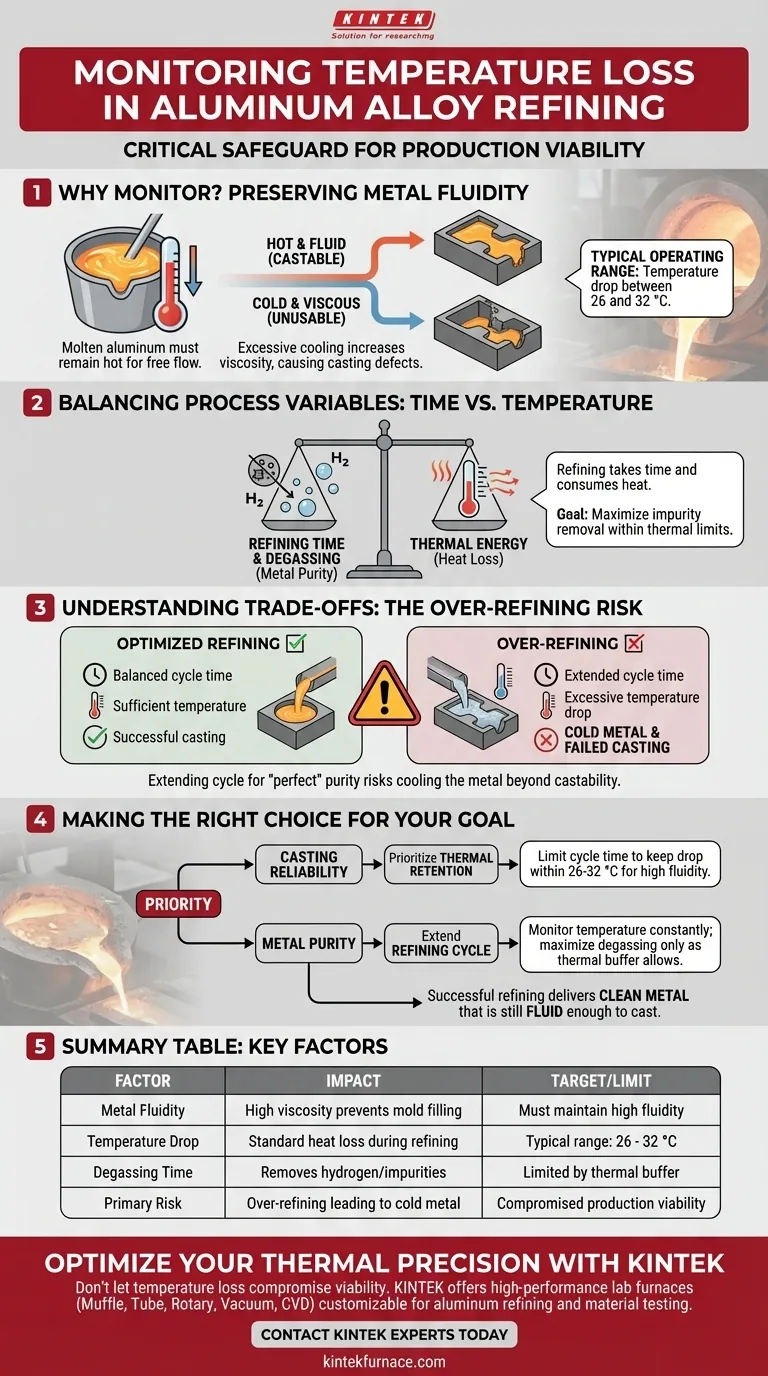
Visual Guide
References
- Ladislav Socha, Petr Nuska. Assessment of refining efficiency during the refining cycle in a foundry degassing unit in industrial conditions. DOI: 10.1038/s41598-024-51914-x
This article is also based on technical information from Kintek Furnace Knowledge Base .
Related Products
- 1400℃ High Temperature Laboratory Tube Furnace with Alumina Tube
- 1700℃ High Temperature Laboratory Tube Furnace with Alumina Tube
- High Temperature Muffle Oven Furnace for Laboratory Debinding and Pre Sintering
- 1700℃ High Temperature Muffle Oven Furnace for Laboratory
- Multi Zone Laboratory Quartz Tube Furnace Tubular Furnace
People Also Ask
- How do high-temperature laboratory tube furnaces ensure environmental stability? Precision Thermal Reduction Tips
- How are high-temperature laboratory tube furnaces applied in long-term vacuum homogenization heat treatments for intermetallic samples?
- How are high-temperature tube furnaces applied in testing ceramic-supported alloy membranes? Insights
- What is the function of a furnace in CuAlMn alloy treatment? Achieve Perfect Microstructural Homogenization
- What is the mechanism of a high-temperature furnace in Bi-2223 sintering? Achieve Precision Phase Transformation



















