Maintaining tight control over zeta potential is the single most powerful predictor of success in high-temperature ceramic sintering. By ensuring strong electrostatic repulsion between particles, it prevents the formation of agglomerates that would otherwise create irreversible density gradients in the green compact. These hidden flaws later cause differential shrinkage, warpage, and cracking when the body is fired in a high-temperature furnace, directly linking a simple electrokinetic measurement to the mechanical integrity of the final component.
Green compacts formed from high-zeta-potential suspensions pack uniformly and densely, removing the microstructural heterogeneities that become catastrophic during sintering. Monitoring zeta potential is not about colloidal science for its own sake—it is a frontline process control that dictates whether your kiln produces a reliable ceramic part or a fractured reject.
The Fundamental Link Between Zeta Potential and Colloidal Stability
Stable suspensions are the non-negotiable starting point for any ceramic shaping route, from slip casting to tape casting. Zeta potential quantifies how well that stability is maintained.
Understanding the Electrostatic Barrier
Zeta potential is the electrical potential at the shear plane of a suspended particle. A high absolute value—whether strongly positive or negative—creates a robust electrostatic double-layer repulsion that overwhelms the ever-present van der Waals attraction. When this repulsion dominates, particles remain individually dispersed. Without it, random collisions lead to rapid, irreversible flocculation into low-density clusters that trap micron-sized voids.
The Isoelectric Point and pH Control
Every ceramic powder has an isoelectric point (IEP), the pH at which the net surface charge is zero. Operating far from the IEP—at a pH where zeta potential plateaus at a high magnitude—is the practical goal. This simple adjustment of slurry chemistry is what gives you decades of processing stability in minutes, preventing the batch-to-batch variability that so often plagues furnace outcomes.
From Stable Suspension to Homogeneous Green Compacts
A well-dispersed slurry translates directly into a green body with ideal particle packing. This transition is where the true value of zeta potential monitoring becomes tangible.
How Electrostatic Repulsion Enables High-Density Packing
When particles repel each other, they settle or are consolidated into a configuration that minimizes interparticle spacing. This yields a uniform, high-density green compact with a density that can approach 70% of theoretical, versus just 50% for agglomerated powders. Every percentage point gained here lowers the thermal energy the furnace must later supply to eliminate porosity.
The Scale of Scrutiny: Why Uniformity at the Micron Level Matters
In advanced ceramics, the scale of scrutiny is often the grain size itself. A secondary phase or a density variation of just a few microns becomes a defect nucleus. Colloidal stability ensures that reinforcement particles—like the zirconia in ZTA composites—are homogeneously distributed at grain boundaries, rather than forming local agglomerates that create weak points during sintering.
The High-Stakes Transition to Furnace Sintering
The green compact’s microstructure is frozen in place during drying. All the good or bad decisions made at the slurry stage are then amplified by the intense heat of a laboratory or production furnace.
Preventing Differential Shrinkage and Warping
A non-uniform green body contains denser networks that begin to densify early, acting as rigid constraints against more porous regions. This triggers localized tensile stresses that cannot be relieved. The result is catastrophic: de-sintering voids, micro-cracks, or outright warping that scrapped parts before the firing cycle even completes. Zeta potential control erases the density gradients that cause this.
The Direct Influence on Sintering Temperature and Dwell Time
The economic and technical benefits are dramatic. With agglomerate-free, high-green-density powder, alumina that would normally require 1600°C and a 24–45 hour dwell can reach full densification at just 1150°C in 2 hours. This collapse in the thermal budget extends furnace heating element life, slashes energy consumption, and prevents excessive grain growth—all because the particles were properly dispersed at the start.
Microstructural Consequences: Grain Size and Defect Formation
The same packing uniformity that enables low-temperature sintering delivers a drastically refined final grain size—0.25 µm instead of 6–8 µm. Fine, uniform grains are the bedrock of high strength and Weibull reliability. Conversely, any density gradient that survives into the furnace will manifest as abnormal grain growth, where a few large grains consume the surrounding fine matrix, degrading fracture toughness.
Understanding the Trade-offs and Hidden Pitfalls
Even with perfect zeta potential and a dense green body, the path to a flawless sintered part contains cautions that a comprehensive process view must address.
The Debinding Challenge with Dense Green Compacts
High packing density reduces interparticle pore channels, which can slow the escape of binder decomposition gases during the burnout phase. If the furnace ramp rate is not adapted—with gradual heating and dedicated isothermal holds—internal pressure can build and cause delamination. Zeta potential gives you a dense part, but your thermal profile must be tuned to safely remove the organic vehicle from that dense ensemble.
When Zeta Potential Alone Isn’t Enough: Powder Quality Matters
Zeta potential ensures dispersion, but it cannot fix a fundamentally flawed powder. Wide particle size distributions, hard agglomerates from calcination, or chemical impurities all create independent density variations and grain-growth anomalies. Monitoring zeta potential must therefore be paired with rigorous incoming powder characterization for it to translate into superior sintering outcomes.
Making the Right Choice for Your Sintering Process
Your specific performance targets dictate how you leverage zeta potential control. Align your colloidal processing strategy with the outcome you most need.
- If your primary focus is achieving maximum final density with minimal energy: Use zeta potential to push green density above 65%, then exploit the dramatically lower sintering temperature and shortened dwell time that uniform packing enables.
- If your primary focus is preventing warping and cracking in complex shapes: Demand a slurry zeta potential far from the IEP to eliminate every hidden density gradient, and design your sintering cycle with moderate ramps to accommodate uniform shrinkage.
- If your primary focus is grain size refinement for mechanical reliability: Opt for colloidal processing that gives the highest possible green density; the low-temperature, short-duration sintering it unlocks will naturally constrain grain growth and yield a fine, homogeneous microstructure.
- If your primary focus is scaling up to production with reproducible quality: Turn zeta potential into a routine pass/fail gate. Maintaining a minimum absolute zeta potential value—say, ±40 mV—before casting or pressing statistically eliminates the largest source of furnace-fired rejections.
Mastering the suspension is mastering the entire thermal process. When you measure and control zeta potential, you are not just checking a chemistry parameter—you are directly programming the survival of your ceramic components through the furnace.
Summary Table:
| Process Aspect | Uncontrolled Zeta Potential (Agglomerated) | Optimized Zeta Potential (Dispersed) |
|---|---|---|
| Particle Packing | Heterogeneous with voids | Uniform, high-density (up to 70% theoretical) |
| Sintering Profile | Higher temp (e.g., 1600°C) & long dwell | Lower temp (e.g., 1150°C) & short 2-hr dwell |
| Defect Vulnerability | High risk of warpage, cracking, & de-sintering | Uniform shrinkage, defect-free green body |
| Microstructure | Abnormal grain growth (6–8 µm) | Fine, high-strength grains (~0.25 µm) |
Maximize Your Sintering Yields with KINTEK Precision Thermal Solutions
Optimizing colloidal chemistry is only the first step—achieving flawless material density requires a furnace capable of exact thermal ramp control and atmosphere regulation. KINTEK specializes in high-performance laboratory equipment and high-temperature furnaces, offering a comprehensive lineup including muffle, tube, rotary, vacuum, CVD, atmosphere, dental, and induction melting furnaces—all fully customizable to match your precise debinding and sintering cycles.
Don't let precise green compact preparation go to waste in an inconsistent kiln. Protect your ceramic integrity, cut energy costs, and ensure microstructural reliability with industry-leading thermal technology.
Contact KINTEK today to discuss your custom furnace needs!
Related Products
- Multi Heating Zones CVD Tube Furnace Machine for Chemical Vapor Deposition Equipment
- Multi Zone Laboratory Quartz Tube Furnace Tubular Furnace
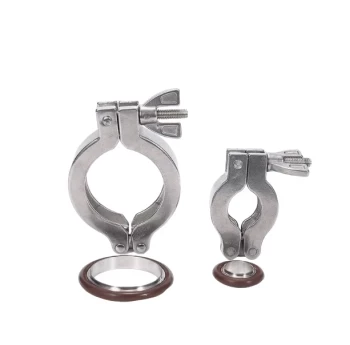
- Stainless Steel Quick Release Vacuum Chain Three Section Clamp
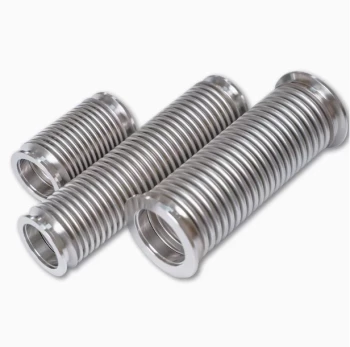
- High Performance Vacuum Bellows for Efficient Connection and Stable Vacuum in Systems
- Electric Rotary Kiln Small Rotary Furnace for Activated Carbon Regeneration
People Also Ask
- What is the function of a multi-zone tube furnace in CVD synthesis? Master 2D In2Se3 Nanosheet Precision
- What role do multi zone tube furnaces play in new energy research? Unlock Precise Thermal Control for Innovation
- What temperature-related capabilities make multi zone tube furnaces valuable for research? Unlock Precision Thermal Control
- Why are multi zone tube furnaces particularly useful for nanomaterial research? Unlock Precise Thermal Control for Advanced Synthesis
- What environmental protection applications utilize multi zone tube furnaces? Unlock Precision in Waste Treatment and Green Tech