
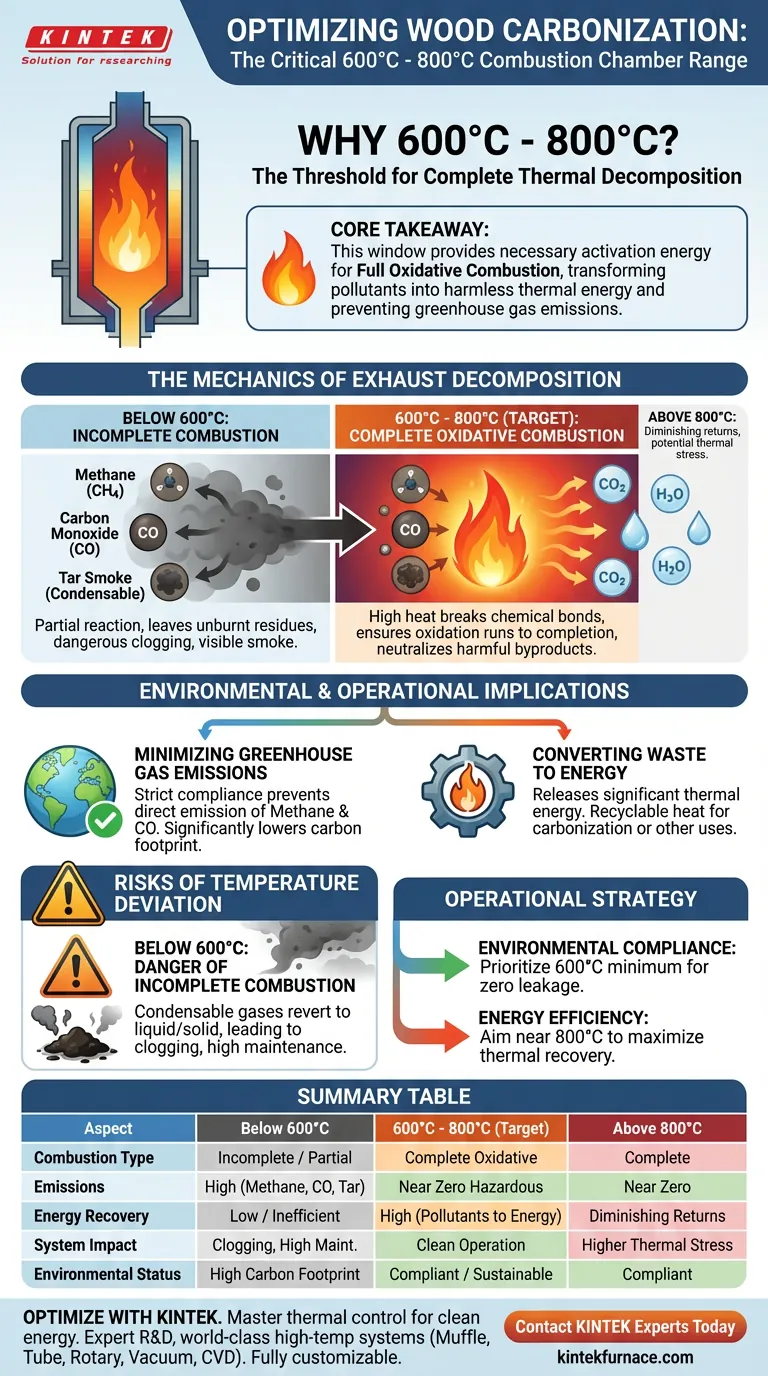
Maintaining a temperature range between 600°C and 800°C within the combustion chamber is the critical threshold for the complete thermal decomposition of carbonization exhaust. This specific high-heat environment is required to fully incinerate harmful byproducts—specifically methane, carbon monoxide, and tar smoke—before they can be released into the atmosphere.
Core Takeaway The 600°C to 800°C window is not arbitrary; it is the necessary activation energy required to achieve full oxidative combustion. Operating within this range transforms hazardous pollutants and condensable gases into harmless thermal energy, preventing the emission of potent greenhouse gases.
The Mechanics of Exhaust Decomposition
Achieving Complete Oxidative Combustion
The primary function of the combustion chamber is oxidative combustion. This process uses high temperatures to break the chemical bonds of the exhaust gases generated during wood carbonization.
Below 600°C, the chemical reaction is often partial or inefficient. By sustaining temperatures above this floor, the furnace ensures that the oxidation process runs to completion, leaving no unburnt residues.
Targeting Specific Pollutants
The carbonization process releases a complex mixture of volatile components. The primary reference highlights three specific targets that must be neutralized:
- Methane: A potent greenhouse gas.
- Carbon Monoxide: A poisonous, combustible gas.
- Tar Smoke: Condensable heavy gases that create visible smoke and buildup.
This temperature range ensures these distinct compounds are effectively broken down rather than vented.
Environmental and Operational Implications
Minimizing Greenhouse Gas Emissions
The most immediate benefit of this temperature standard is environmental compliance.
If the combustion chamber fails to reach 600°C, direct emissions of greenhouse gases occur. By strictly maintaining the 600°C–800°C range, the system prevents the escape of raw methane and carbon monoxide, significantly lowering the carbon footprint of the operation.
Converting Waste to Energy
This process does more than just eliminate waste; it creates value.
When these exhaust gases undergo complete combustion, they release significant amounts of heat. The furnace effectively converts potential pollutants into thermal energy, which can often be recycled back into the carbonization process or used for other heating requirements.
Risks of Temperature Deviation
The Danger of Incomplete Combustion
Falling below the 600°C threshold results in incomplete combustion.
In this state, "condensable gases" like tar do not fully vaporize or burn. Instead, they may cool and revert to liquid or solid states within the exhaust system, leading to dangerous clogging, increased maintenance, and visible smoke emissions.
Managing the Upper Limit
While the primary focus is often on achieving the minimum temperature, the upper limit of 800°C is generally a guideline for optimal efficiency and material safety.
Exceeding the necessary temperature for combustion does not necessarily yield better air quality results, but it may place unnecessary thermal stress on the furnace components without providing additional chemical breakdown benefits.
Operational Strategy for Your Project
To ensure your system operates safely and efficiently, consider the following strategic priorities:
- If your primary focus is Environmental Compliance: Prioritize the 600°C minimum strictly to ensure zero leakage of methane and carbon monoxide into the atmosphere.
- If your primary focus is Energy Efficiency: Aim for the higher end of the range (near 800°C) to maximize the thermal energy recovery from the combustion of tar and heavy gases.
Strict adherence to this thermal window is the defining factor that separates a polluting device from a clean energy system.
Summary Table:
| Aspect | Below 600°C | 600°C - 800°C (Target) | Above 800°C |
|---|---|---|---|
| Combustion Type | Incomplete / Partial | Complete Oxidative Combustion | Complete |
| Emissions | High (Methane, CO, Tar) | Near Zero Hazardous Waste | Near Zero |
| Energy Recovery | Low / Inefficient | High (Pollutants to Thermal Energy) | Diminishing Returns |
| System Impact | Clogging & High Maintenance | Clean Operation | Higher Thermal Stress |
| Environmental Status | High Carbon Footprint | Compliant / Sustainable | Compliant |
Optimize Your Carbonization Efficiency with KINTEK
Transition from a polluting operation to a clean energy system by mastering thermal control. Whether you require precise temperature regulation for waste-to-energy conversion or environmental compliance, KINTEK provides the expertise and technology you need.
Backed by expert R&D and world-class manufacturing, we offer a comprehensive range of lab high-temp systems, including Muffle, Tube, Rotary, Vacuum, and CVD furnaces—all fully customizable to meet your unique carbonization and material processing requirements.
Ready to enhance your lab's performance and sustainability?
Visual Guide
References
- Lívia Ferreira Da Silva, Fernando Colen. Kiln-Furnace System: Validation of a Technology for Producing Charcoal with Less Environmental Impact in Brazil. DOI: 10.3390/f15040645
This article is also based on technical information from Kintek Furnace Knowledge Base .
Related Products
- Electric Rotary Kiln Small Rotary Furnace for Activated Carbon Regeneration
- Vacuum Heat Treat Sintering Furnace with Pressure for Vacuum Sintering
- High Temperature Muffle Oven Furnace for Laboratory Debinding and Pre Sintering
- Spark Plasma Sintering SPS Furnace
- Vacuum Heat Treat Sintering Furnace Molybdenum Wire Vacuum Sintering Furnace
People Also Ask
- What are the main applications of a rotary kiln electric furnace? Achieve Uniform Heat Treatment for Powders
- What are the key components of a rotary kiln electric furnace? Unlock Efficient Thermal Processing
- What is the significance of the refractory lining in a rotary kiln electric furnace? Unlock Efficiency and Longevity
- What advantages do electric rotary kilns offer over fuel-based kilns? Boost Efficiency and Purity in Your Process
- What materials can be processed in an electric rotary kiln? Versatile Solutions for Advanced Materials



















