Atmosphere control is not a luxury—it is the defining parameter that dictates the success or catastrophic failure of ceramic thermal processing. In high-temperature laboratory furnaces, the surrounding gas environment directly governs chemical decomposition, the oxidation state of transition metals, volatilization of constituents, and the material’s final stoichiometry. Even when the chemistry appears stable, insoluble gases trapped in closed pores during late-stage sintering can arrest densification or cause compact swelling; only by switching the atmosphere or applying a high vacuum can these gases escape, enabling near-theoretical density and precise microstructural control.
The core challenge in ceramic processing is that almost every critical outcome—from defect chemistry and phase purity to final density and mechanical integrity—is profoundly influenced by the furnace atmosphere. Without precise control, reactions like oxidation, volatilization, or trapped gas pinning can derail an entire experiment or production run. Understanding this relationship turns the furnace from a simple heating device into a true materials engineering platform.
The Chemical Crucible: Reactions Driven by Atmosphere
Governing Decomposition and Volatilization
Many advanced ceramics decompose or lose volatile constituents when heated in air. Lead-based ferroelectrics can lose PbO, while beta-alumina loses sodium at elevated temperatures. The furnace atmosphere directly dictates whether these volatile species remain in the solid lattice or escape as gas.
By introducing an overpressure of the volatile species or using a sealed, controlled environment, you suppress decomposition. For non-oxide ceramics like silicon nitride (Si₃N₄), a nitrogen overpressure prevents the material from dissociating and losing nitrogen. Without this control, stoichiometry drifts, and the resulting properties deviate from the target design.
Controlling Oxidation States and Phase Stability
Transition metal oxides rely on specific valence states for their functional properties. Ferrites, for example, require precise Fe²⁺/Fe³⁺ ratios to achieve target magnetic behavior. The oxygen partial pressure in the furnace governs whether these metals oxidize or reduce.
A carefully set pO₂–temperature profile locks in the desired oxidation state. Run the same temperature with the wrong atmosphere, and you produce a completely different phase—often one with useless or even harmful properties. This is not a marginal effect; it is a deterministic on/off switch for phase formation.
Defect Engineering and Stoichiometry Control
How Gases Write the Defect Chemistry
Ceramic oxides do not tolerate stoichiometric violations without response. When the surrounding atmosphere changes, the lattice generates extrinsic defects—oxygen vacancies, cation interstitials, or valence alterations—to maintain charge neutrality. This is how the furnace atmosphere literally re-writes the point-defect population.
You can exploit this by selecting a reducing atmosphere, for instance, to create oxygen vacancies that enhance ionic conductivity in solid electrolytes. Similarly, an oxidizing atmosphere suppresses vacancies and stabilizes insulating behavior. The furnace becomes a tool for doping the crystal with vacancy-based “defect dopants,” without adding any foreign atoms to the mix.
Optimizing Dopant Incorporation
When you add intentional dopants like MgO into alumina, the resulting solid-solution mechanism depends on the surrounding atmosphere. The gas environment determines whether the dopant goes substitutionally with charge-compensating vacancies or forms precipitates.
Using atmosphere control, researchers can steer extrinsic defect reactions to maximize dopant solubility or to precipitate second phases for grain-boundary pinning. This level of microstructural engineering is impossible in an uncontrolled air furnace, where the atmosphere’s influence on defect equilibria remains a random variable.
Densification: Why Pores Need an Escape Route
The Trap of Insoluble Gases
During the final stage of sintering, ceramic bodies close off their remaining porosity. Any gas trapped inside those pores must dissolve into the lattice and diffuse outward, or the pore will persist forever. For many ceramics, gases like nitrogen or argon have very low solubility and diffusivity.
The result is arrested densification or even compact swelling as the trapped gas expands at high temperature. You can sinter for twice as long and never reach full density. The atmosphere thus imposes a hard physical limit on densification that no time-at-temperature can overcome.
Vacuum and Diffusive Gases as a Solution
Switching to a high vacuum or a highly diffusive gas (like hydrogen or helium) fundamentally changes the game. Under vacuum, there is simply no gas to become trapped. With a diffusive gas, the atoms can permeate through the ceramic lattice and exit the pore.
This is why vacuum furnaces consistently deliver higher final densities for many materials than even the cleanest inert-gas environment. The gas’s transport properties inside the solid matrix decide whether pores collapse or linger. Controlling the atmosphere is therefore a direct control over end-point porosity and mechanical performance.
Protecting Non-Oxide Ceramics from Catastrophic Oxidation
Oxidation: The Silent Destroyer of Non-Oxides
Non-oxide ceramics—carbides, nitrides, borides—are thermodynamically hungry for oxygen. Even ppm-level O₂ in a nominally inert furnace can trigger surface oxidation that degrades properties. For example, silicon carbide (SiC) fibers in a ceramic matrix composite oxidize to SiO₂, which then reacts with an Al₂O₃ matrix to form aluminosilicates that obliterate the fiber’s reinforcing function.
Without an oxygen-free atmosphere, you do not just lower performance—you destroy the very architecture that justifies the material’s use. In ultra-high-temperature ceramics (UHTCs) like ZrC, residual oxygen above 1000 °C causes rapid surface oxidation and exfoliation, dropping flexural strength from ~247 MPa to ~85 MPa. The structural capability vanishes with the atmosphere.
Inert and Reducing Gas Strategies
Using argon, nitrogen, or hydrogen atmospheres—or a vacuum—prevents the initial oxidation event. A nitrogen atmosphere not only excludes oxygen but also actively stabilizes nitrides against decomposition. For carbides, argon is a safe blanketing gas that avoids both oxidation and carburization.
This protective role is not passive; it actively enables the sintering of materials that would be completely consumed by oxygen in a conventional furnace. The furnace atmosphere is the only barrier between a high-value ceramic component and its rapid chemical destruction.
Understanding the Trade-offs
Cost and Complexity Are Real
Atmosphere-controlled furnaces demand gas supply systems, vacuum pumps, leak-tight chambers, and sophisticated control logic. They are more expensive to buy, operate, and maintain than a simple box furnace. Every additional gas means more regulators, more safety interlocks, and more failure modes to manage.
You must weigh the process benefit against the operational overhead. For some oxide ceramics processed in air, the added control simply does not justify the extra cost.
Gas Selection Is Not One-Size-Fits-All
Argon provides inert conditions but does nothing to assist defect chemistry or pore diffusion. Nitrogen can stabilize nitrides but may cause nitridation of other components. Hydrogen offers high diffusivity for pore gases but can reduce oxides unintentionally and creates a flammability hazard. Vacuum can cause preferential volatilization of some constituents.
The same atmosphere that saves one material can ruin another. Every choice requires a material-specific thermodynamic analysis. There is no universal “best” atmosphere, only an optimal one for a given chemistry and process goal.
Potential for Unintended Side Reactions
In carbon-containing atmospheres, you risk carburization that alters the material’s composition. In reducing gases, you may over-reduce a component and create metallic phases that melt and form unwanted liquid phases at grain boundaries. Even high vacuum can strip away protective oxide layers needed for surface stability.
Atmosphere control is a double-edged sword: it opens up new processing windows but demands deep understanding to avoid creating new problems. Blindly applying a gas without considering its full chemical interactions often yields worse results than no control at all.
Making the Right Choice for Your Goal
Your specific objective should dictate how you use atmosphere control. Apply it surgically, not generically.
- If your primary focus is achieving maximum densification: Prioritize vacuum or a highly diffusive gas like hydrogen to eliminate trapped pore gases and push density toward theoretical limits.
- If your primary focus is processing non-oxide ceramics (carbides, nitrides, borides): Use argon or nitrogen atmospheres to suppress oxidation and, for nitrides, to stabilize the phase against decomposition.
- If your primary focus is engineering specific defect populations or stoichiometry: Control the partial pressure of oxygen or the reducing potential of the gas to create the exact vacancy concentrations or valence states your application demands.
- If your primary focus is preventing volatilization of elemental constituents: Use an overpressure of the volatile species or a sealed environment to keep critical elements (Pb, Na, Li) inside the material lattice.
- If your primary focus is preserving fiber/matrix interfaces in composites: Operate under inert gas or vacuum to prevent oxidation-driven interfacial reactions that degrade reinforcing fibers.
Atmosphere control in high-temperature furnaces transforms thermal processing from a trial-and-error ordeal into a predictable, material-engineering discipline—and your choice of gas or vacuum is the decisive factor that separates a successful ceramic component from a failed experiment.
Summary Table:
| Processing Goal | Recommended Atmosphere | Key Material Impact |
|---|---|---|
| Volatilization Control | Overpressure of volatile species / Sealed gas | Suppresses decomposition; preserves stoichiometry |
| Valence & Phase Control | Specific $pO_2$ partial pressure profile | Locks in target oxidation states (e.g., $Fe^{2+}/Fe^{3+}$) |
| Defect Engineering | Reducing or oxidizing gas mixtures | Tailors vacancy concentrations & ionic conductivity |
| Maximum Densification | High Vacuum or diffusive gas ($H_2$, $He$) | Eliminates trapped pore gases to achieve full density |
| Non-Oxide Protection | Inert gas ($Ar$, $N_2$) or High Vacuum | Prevents catastrophic oxidation of carbides and nitrides |
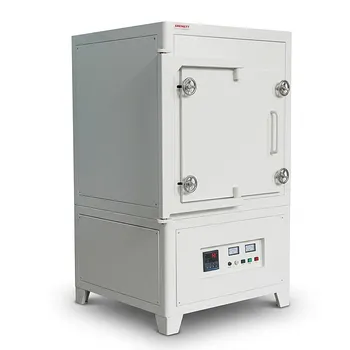
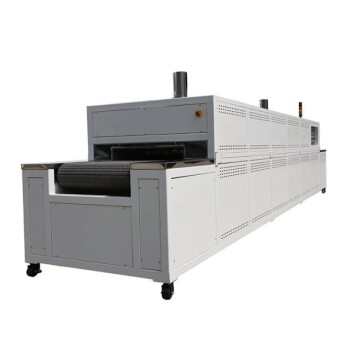
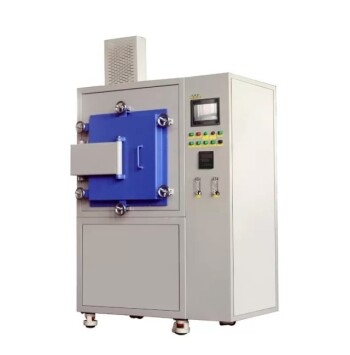
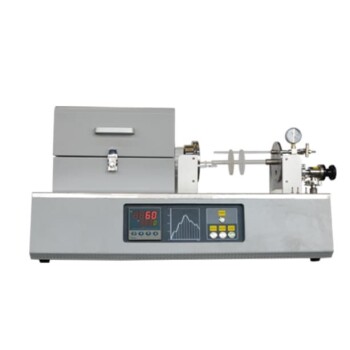
Ready to achieve precise microstructural control and eliminate thermal processing failures? KINTEK offers a comprehensive range of customizable high-temperature laboratory furnaces—including atmosphere, vacuum, tube, muffle, CVD, and induction melting systems—designed to meet the stringent atmosphere control demands of advanced ceramic research. Whether you need precise $pO_2$ control or high-vacuum sintering, our expert team is here to support your material innovations. Contact KINTEK today to discuss your custom furnace solution!
Related Products
- 1400℃ Controlled Inert Nitrogen Atmosphere Furnace
- 1700℃ Controlled Inert Nitrogen Atmosphere Furnace
- 1200℃ Controlled Inert Nitrogen Atmosphere Furnace
- 1200℃ Muffle Oven Furnace for Laboratory
- 1400℃ High Temperature Laboratory Tube Furnace with Alumina Tube
People Also Ask
- How does nitrogen atmosphere control in high-temperature furnaces prevent the decomposition of silicon nitride during sintering?
- How does oxygen partial pressure control affect ceramic sintering? Master Defect Chemistry
- How do controlled-atmosphere furnaces support polymer pyrolysis? Master SiC & Si3N4 Ceramic Conversion
- Why is thorough binder burnout necessary before sintering advanced ceramics? Ensure Peak Density & Zero Defects
- Why is controlled-atmosphere heating required for functional ceramics and sensors? Master Defect Engineering