Silicon nitride (Si3N4) decomposes into silicon liquid/vapor and nitrogen gas when heated above 1800°C in ambient conditions.
Nitrogen atmosphere control prevents this by applying pressurized nitrogen gas that shifts the decomposition reaction equilibrium back toward the solid phase – a direct application of Le Chatelier’s principle. By maintaining the nitrogen partial pressure above the material’s critical decomposition pressure, the furnace effectively stops the loss of nitrogen and enables full densification without thermal degradation.
Controlling the nitrogen atmosphere is not simply about applying pressure. It is about manipulating thermodynamic equilibrium and diffusion kinetics to keep Si3N4 stable long enough to achieve full density. The core strategy is to sustain a nitrogen partial pressure above the decomposition threshold – often 10–20 atm – while using sealed crucibles with sacrificial powder to create a protective local equilibrium that limits decomposition to the outermost surface.
The Thermodynamic Principle: Shifting Equilibrium to Suppress Decomposition
Why Silicon Nitride Breaks Down at High Temperatures
At elevated temperatures, Si3N4 spontaneously dissociates into liquid or vapor‑phase silicon and nitrogen gas. The reaction is entropy‑driven, and under 1 atm of pressure, it becomes thermodynamically favorable above ~1800°C. Without intervention, the solid nitride simply vanishes before densification can occur.
Le Chatelier’s Principle as the Central Defense
Increasing the concentration of a reaction product – in this case, nitrogen gas (N₂) – forces the equilibrium of the decomposition reaction to shift back toward the solid reactant. This is the same principle that governs all reversible chemical equilibria. By flooding the furnace chamber with nitrogen at a partial pressure that exceeds the decomposition pressure at the target sintering temperature, the furnace renders the dissociation reaction thermodynamically unviable.
Practical Implementation in High-Temperature Furnaces
Overpressure Sintering: The Primary Tool
The most direct method is gas‑pressure sintering: the furnace is filled with nitrogen and pressurized to 10–20 atm during the high‑temperature dwell. This creates a bulk overpressure that blankets the entire ceramic part, suppressing the release of nitrogen from the Si3N4 lattice. When the applied nitrogen pressure is kept above the critical decomposition pressure for the specific temperature, the material remains chemically stable and can densify via liquid‑phase sintering.
Protective Crucibles and Sacrificial Packing Powder
Even with high chamber pressure, surface decomposition can still occur because nitrogen must diffuse from the interior to maintain equilibrium. To counter this, parts are often placed inside sealed crucibles surrounded by a sacrificial packing powder – typically the same silicon nitride composition, mixed with sintering aids. As the powder decomposes slightly, it generates a localized pocket of nitrogen gas right at the sample surface. This local chemical equilibrium shields the compact from extensive mass loss and restricts decomposition to a thin, sacrificially removed skin.
Matching Pressure to the Sintering Cycle
The decomposition pressure of Si3N4 increases with temperature. An optimized profile therefore ramps the nitrogen overpressure in step with the heating curve. Early in the cycle, before closed porosity is sealed, the atmosphere protects open porosity networks; later, after pore channels close, the overpressure prevents gas evolution from the dense body and confines any residual decomposition to the immediate surface.
Understanding the Trade-offs and Limitations
Pressure, Cost, and Furnace Complexity
Maintaining 10–20 atm of nitrogen requires high‑strength pressure vessels, robust gas handling, and sophisticated safety systems. This adds capital and operating cost. For many applications, there is a practical ceiling on pressure that must be balanced against the required densification temperature.
Inevitable Surface Decomposition
No overpressure system eliminates decomposition perfectly. Once the ceramic seals its porosity, nitrogen diffusion through the solid becomes the rate‑limiting step. A thin surface layer will inevitably decompose. This is generally accepted as a sacrificial skin that is removed by post‑sintering machining, so the bulk material remains pristine.
Interaction with Liquid‑Phase Sintering Aids
Silicon nitride is almost always densified with oxide additives (e.g., Al₂O₃, Y₂O₃) that form an oxynitride liquid phase. At very high temperatures, reactions between the liquid phase, surface silica (SiO₂), and any SiC reinforcement can generate volatile species like SiO and CO – gases that are unaffected by nitrogen pressure alone. The nitrogen atmosphere suppresses the core Si3N4 decomposition, but additional strategies, like adding extra sintering aids or adjusting the composition of the packing powder, may be needed to prevent liquid‑phase depletion and trapped porosity.
Balancing Density and Phase Transformation
The α‑to‑β silicon nitride phase transformation, which is essential for developing high‑aspect‑ratio rod‑like grains that strengthen the final ceramic, also depends on the dissolution‑reprecipitation process within the liquid phase. While atmospheric pressure does not directly govern this transformation, operating under extremely high nitrogen pressure can subtly alter the chemistry of the liquid phase and shift transformation kinetics, potentially requiring a trade‑off in dwell time or heating rate.
Making the Right Choice for Your Sintering Process
Your optimal atmospheric control strategy depends on your part geometry, acceptable surface loss, and performance requirements.
-
If your primary focus is achieving near‑theoretical density in large, thick‑section parts: Invest in a gas pressure sintering furnace capable of 10–20 atm nitrogen overpressure and use sealed crucibles with sacrificial packing powder. This combination protects the entire compact from core decomposition and ensures full densification.
-
If your primary focus is minimizing surface decomposition in sensitive, thin‑walled components: Combine a moderate chamber overpressure (5–10 atm) with a tightly controlled packing powder. The local equilibrium created by the powder will suppress weight loss at the surface while keeping overall furnace cost and safety demands manageable.
-
If your primary focus is rapid process development and you plan to grind all surfaces post‑sinter: A standard gas‑pressure cycle (10 atm or more) without elaborate crucible setups is often sufficient. Accept the predictable surface skin as sacrificial material, and focus on optimizing the liquid‑phase composition for maximum bulk integrity.
By mastering the interplay between thermodynamic equilibrium and kinetic control, you can sinter silicon nitride reliably into fully dense, high‑strength components without fear of decomposition undermining your results.
Summary Table:
| Control Strategy | Operating Condition | Primary Mechanism & Benefit |
|---|---|---|
| Gas-Pressure Sintering | 10–20 atm N₂ bulk pressure | Shifts thermodynamic equilibrium (Le Chatelier's principle) to suppress Si3N4 dissociation. |
| Sacrificial Packing Powder | Sealed crucible with matching Si3N4 powder | Generates localized N₂ equilibrium, confining decomposition to a minor surface skin. |
| Dynamic Pressure Profiling | Pressure ramped with heating curve | Protects open pore networks early and suppresses gas evolution after density sealing. |
Master complex ceramic sintering with high-precision thermal solutions from KINTEK! We specialize in advanced laboratory equipment and consumables, offering customizable high-temperature furnaces—including atmosphere, vacuum, tube, muffle, CVD, and induction melting systems—engineered to meet your exact processing demands. Contact KINTEK today to optimize your lab's performance!
Related Products
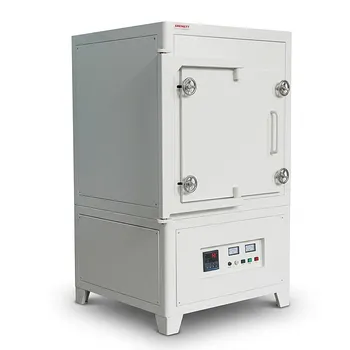
- 1700℃ Controlled Inert Nitrogen Atmosphere Furnace
- 1400℃ Controlled Inert Nitrogen Atmosphere Furnace
- 1200℃ Controlled Inert Nitrogen Atmosphere Furnace
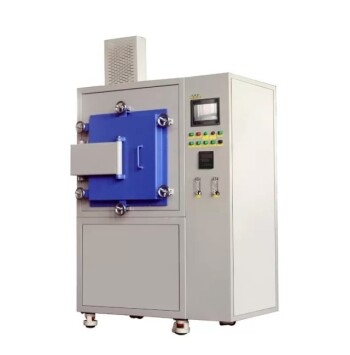
- Controlled Inert Nitrogen Hydrogen Atmosphere Furnace
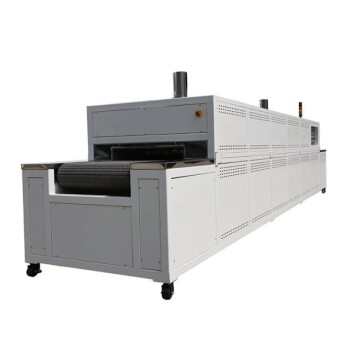
- Mesh Belt Controlled Atmosphere Furnace Inert Nitrogen Atmosphere Furnace
People Also Ask
- How does real-time dilatometric analysis in a controlled-atmosphere furnace optimize PZT ceramic sintering?
- How does oxygen partial pressure control affect ceramic sintering? Master Defect Chemistry
- Why is thorough binder burnout necessary before sintering advanced ceramics? Ensure Peak Density & Zero Defects
- How do controlled-atmosphere furnaces support polymer pyrolysis? Master SiC & Si3N4 Ceramic Conversion
- Why is controlled-atmosphere heating required for functional ceramics and sensors? Master Defect Engineering