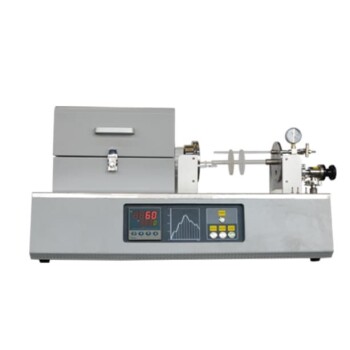
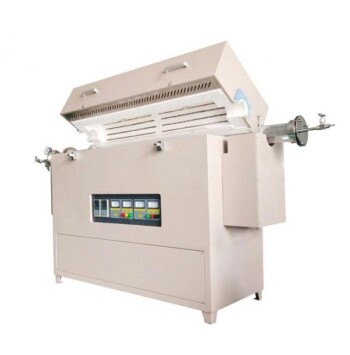
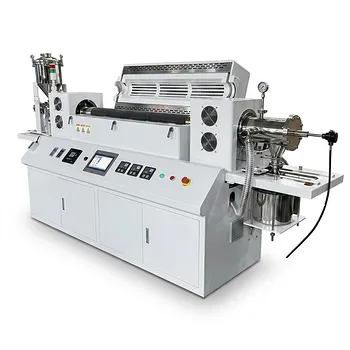
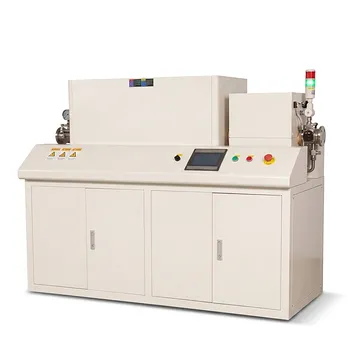
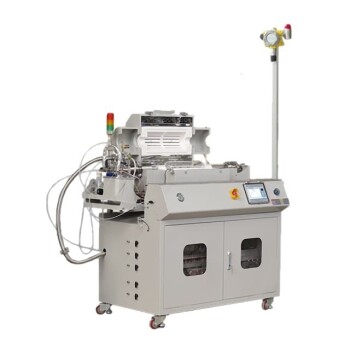
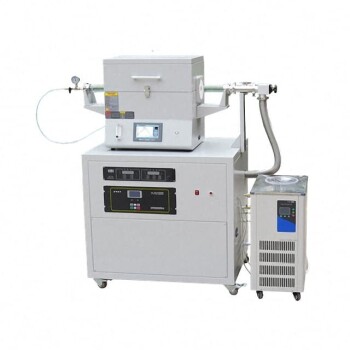
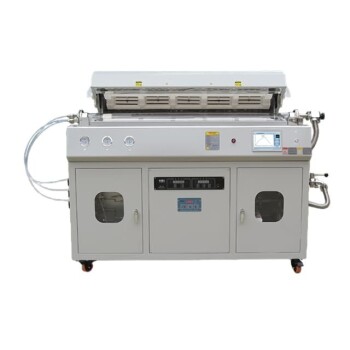
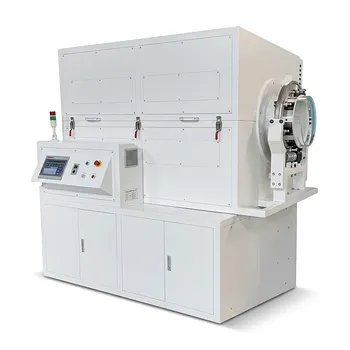
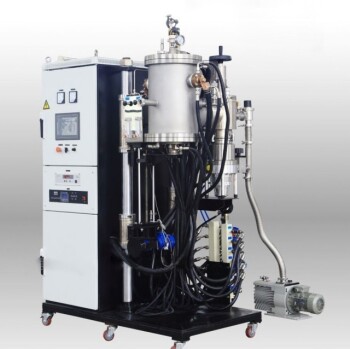
The primary reason for a high-purity nitrogen supply system is the creation of a strictly controlled inert atmosphere. This environment is essential to displace oxygen and moisture within the quartz tube furnace, preventing the coal samples from undergoing oxidative combustion at elevated temperatures. By excluding reactive gases, researchers can isolate and observe pure molecular structural thermal degradation and recombination rather than simple burning.
A high-purity nitrogen system serves as a chemical shield that prevents oxidation, manages gaseous byproducts, and ensures the integrity of the carbonization process, making it indispensable for precise thermal analysis and material synthesis.
Preventing Oxidative Combustion and Structural Damage
Displacement of Atmospheric Oxygen
The continuous flow of high-purity nitrogen effectively flushes the furnace chamber to remove residual air. Without this displacement, the oxygen present in the air would cause the coal to ignite and undergo aerobic combustion as temperatures rise. This would destroy the sample rather than allowing for the study of its thermal properties.
Preserving Molecular Integrity
Heat treatment aims to observe how coal’s molecular structure degrades and recombines under intense heat. An inert nitrogen atmosphere ensures that these changes are purely thermochemical. This allows for the formation of highly ordered carbon structures or crystalline frameworks without interference from oxygen-driven reactions.
Maintaining Chemical Stability
High temperatures, sometimes reaching up to 1600°C, make materials highly reactive. Nitrogen provides a stable, non-oxidizing environment that protects both the precursor material and the resulting solid products. This stability is vital for maintaining the functional properties of the coal or biochar being produced.
Managing the Chemical Environment
Removal of Gaseous Byproducts
As coal is heated, it undergoes pyrolysis, releasing various volatile organic compounds and gases. A steady nitrogen flow (typically 100-200 cm³ per minute) acts as a carrier gas to sweep these byproducts out of the quartz tube. This prevents the re-deposition of contaminants onto the sample surface, which could compromise the purity of the results.
Exclusion of Environmental Moisture
Atmospheric moisture can interfere with sensitive chemical reactions during high-temperature activation. Nitrogen systems purge this moisture, preventing unwanted hydrolysis or oxidation of metallic nanoparticles often studied in conjunction with carbon supports. This ensures that the carbon framework is precisely etched by intended activating agents rather than environmental water vapor.
Optimizing Pore Development
In applications like biochar activation, nitrogen ensures that the development of micropores and mesopores is controlled. By preventing uncontrolled burning, nitrogen allows the activating agents to work specifically on the carbon framework. This results in a higher quality material with optimized surface area and photoelectric efficiency.
Understanding the Trade-offs
Flow Rate Sensitivities
While a continuous flow is necessary to maintain purity, the rate of flow must be carefully calibrated. If the nitrogen flow is too slow, it may fail to completely displace oxygen or remove heavy tars, leading to sample contamination. Conversely, an excessively high flow rate can cause localized cooling of the sample, potentially leading to uneven thermal treatment.
Purity Levels vs. Material Quality
Using lower-grade nitrogen (containing trace oxygen) can result in partial oxidation, which skews analytical data and reduces the yield of solid carbon. While high-purity nitrogen increases operational costs, it is the only way to ensure that weight loss measured during the process is due to pure pyrolysis rather than accidental combustion.
Gas Pre-heating Requirements
In some high-temperature applications, introducing cold nitrogen into a hot quartz tube can cause thermal shock or temperature gradients. Expert setups sometimes require pre-heating the nitrogen gas. This ensures that the internal environment of the furnace remains thermally stable throughout the treatment cycle.
How to Apply This to Your Project
Making the Right Choice for Your Goal
- If your primary focus is coal pyrolysis analysis: Ensure a constant nitrogen flow to isolate thermal degradation pathways and prevent any sample mass loss from oxidative combustion.
- If your primary focus is synthesizing high-purity carbon materials: Use the highest purity nitrogen available to exclude moisture and oxygen, ensuring the development of a precise, uncontaminated crystalline structure.
- If your primary focus is maximizing pore development in biochar: Maintain a steady flow to carry away volatile byproducts, allowing the activating agent to interact cleanly with the carbon surface.
By meticulously controlling the nitrogen environment, you ensure that your thermal treatment results are a true reflection of the material's properties rather than an artifact of atmospheric interference.
Summary Table:
| Feature | Function in Coal Heat Treatment | Impact on Result |
|---|---|---|
| Oxygen Displacement | Prevents aerobic combustion/ignition | Preserves sample molecular integrity |
| Byproduct Removal | Carries away volatile organic compounds | Prevents surface re-deposition/contamination |
| Moisture Exclusion | Eliminates atmospheric water vapor | Prevents unwanted hydrolysis or oxidation |
| Pore Control | Creates an inert environment for etching | Optimizes micropore and mesopore development |
| Thermal Shielding | Maintains chemical stability up to 1600°C | Ensures results reflect pure thermochemistry |
Elevate Your Research with KINTEK Precision Furnaces
Achieving accurate pyrolysis and material synthesis requires more than just high temperatures—it demands a perfectly controlled environment. KINTEK specializes in advanced laboratory equipment, providing high-performance atmosphere furnaces, quartz tube furnaces, and CVD systems designed for seamless integration with high-purity gas supply systems.
Whether you are studying coal carbonization, biochar activation, or nanoparticle synthesis, our customizable solutions—including muffle, rotary, vacuum, and induction melting furnaces—ensure maximum thermal stability and purity.
Ready to optimize your thermal treatment process? Contact our laboratory experts today to find the ideal furnace configuration for your unique research needs.
References
- Meng Wu, Lele Feng. The Effect of Temperature on Molecular Structure of Medium-Rank Coal via Fourier Transform Infrared Spectroscopy. DOI: 10.3390/ma16206746
This article is also based on technical information from Kintek Furnace Knowledge Base .
Related Products
- Laboratory Quartz Tube Furnace RTP Heating Tubular Furnace
- 1200℃ Split Tube Furnace Laboratory Quartz Tube Furnace with Quartz Tube
- Vertical Laboratory Quartz Tube Furnace Tubular Furnace
- Multi Zone Laboratory Quartz Tube Furnace Tubular Furnace
- High Pressure Laboratory Vacuum Tube Furnace
People Also Ask
- What physical conditions does a laboratory Tube Furnace provide for SOEC? Precision Heat for Solid Oxide Characterization
- What are the main features and functions of a laboratory tube furnace? Unlock Precise High-Temp Control for Your Lab
- Why is a laboratory tube furnace necessary for BiVO4/RGO synthesis? Achieve Precise Nano-Structure Control
- Why is control of heating rate and gas flow in a lab tube furnace critical for EM wave absorption materials?
- What role does a laboratory tube furnace play in geological and mineralogical research? Unlock Earth's Secrets with Precision