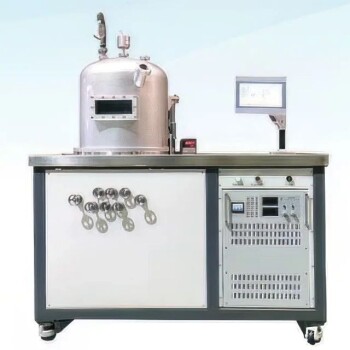
Achieving a high-performance dielectric composite from a phenolic novolac matrix requires treating thermal processing not as a simple heating step, but as the primary design tool that dictates final properties. The essential considerations are: applying exceptionally uniform heat during compression molding, using a staged, multi-step temperature ramp to safely purge volatile curing by-products, and implementing a precise, extended post-cure cycle above the intended service temperature. Master these steps, and you eliminate micro-voids, complete crosslinking, and lock in the permittivity and thermal stability the application demands.
Phenolic novolac composites for high-temperature dielectrics live or die by their thermal history. Uniform heat prevents internal stresses, a slow cure profile vents reaction gases before the matrix solidifies, and a post-cure above 455 K (182 °C) stabilizes permittivity and structural integrity. Cutting corners on any of these stages inevitably traps volatiles, creates voids, and degrades both electrical performance and service life.
Why Thermal Processing Defines Dielectric Performance
A dielectric composite’s ability to store charge and survive high temperatures is inseparable from how its resin matrix cures. In phenolic novolac systems loaded with up to 80 vol% ceramic filler, the matrix must turn from a brittle oligomer into a fully crosslinked, void-free solid. Every thermal choice either enables or sabotages that transformation.
The Chemistry: From Novolac to Thermoset
Phenolic novolac resins do not self-cure. They require a curing agent—typically hexamethylenetetramine (HMTA). When heated, HMTA decomposes, releasing formaldehyde and ammonia that form methylene bridges between novolac chains.
This chemistry is temperature-dependent and gas-generating. If heat is applied too quickly, the resin gels while still saturated with evolved gases, trapping them as micro-voids. A staged cure profile that allows the agent to decompose at lower temperatures before the matrix vitrifies is therefore not optional—it is essential.
How Micro-Voids Destroy Dielectric Performance
Even sub-micron voids are catastrophic for high-voltage, high-permittivity dielectrics. Air has a dielectric constant of approximately 1, and a breakdown strength far lower than the surrounding ceramic-polymer matrix.
Voids act as field concentrators, initiating partial discharge that degrades the composite over time. They also dilute the effective permittivity. Achieving relative permittivity values near 200, as reported for BaTiO₃-filled novolac systems, is impossible if the matrix contains dispersed gas pockets. Thermal processing is the only lever that eliminates these defects before they are permanently locked in.
The Three Non-Negotiable Thermal Stages
Uniform heat, controlled volatilization, and post-cure do not represent best-practice suggestions—they are physically required stages. Each addresses a distinct failure mechanism that would otherwise undermine the part.
1. Preheating and Uniform Mold Heat-Up
Compression molding of highly filled novolac compounds demands that every region of the tool and material reach the initiation temperature simultaneously. Ceramic fillers like BaTiO₃ alter the compound’s thermal conductivity and heat capacity, making passive heat soaking inadequate.
Specialized laboratory presses with multi-zone heated platens and precisely machined molds are used to eliminate cold spots. Without this uniformity, outer regions cure first, locking in density gradients and leaving the core under-cured and porous.
2. Controlled Curing Ramp with Volatile Management
This is the critical window. The cure cycle must include a deliberate low-temperature dwell, typically between 90 °C and 120 °C, where the HMTA decomposes while the resin viscosity remains low enough to allow gas escape.
After this outgassing hold, the temperature is raised gradually to the final cure plateau (often 150–180 °C) while still under pressure. The ramp rate must be slow enough to prevent skin formation that would seal in residual volatiles, yet fast enough to achieve economic cycle times. Precision lab furnaces or press controllers capable of ramps as gentle as 0.5–1 °C/min are standard for these materials.
3. Post-Curing for Complete Crosslinking and Stress Relief
A compression molding cycle alone rarely achieves the ultimate degree of cure or the glass-transition temperature required for high-temperature service. The composite leaves the press partially crosslinked, containing frozen-in stresses and unreacted sites.
A free-standing post-cure in a forced-air or inert-atmosphere oven drives the reaction to completion. The thermal schedule typically progresses in steps above the expected service temperature of 455 K (182 °C), often peaking at 200–220 °C for controlled durations. This stabilizes the dielectric response, raises the glass-transition temperature, and prevents property drift during the first thermal cycles in the field.
Understanding the Trade-offs
Choosing a thermal profile is an exercise in managing competing risks. Ignoring these trade-offs leads to either defective parts or a process that is impossible to scale.
Thermal Gradients from High Filler Loading
Ceramic fillers increase bulk thermal conductivity in the final solid, but during cure the loose powder in the uncured resin can act as an insulator. At 80 vol% loading, the compound may exhibit significant thermal lag.
Address this by incorporating longer soak times at each ramp step and using thinner mold cavities that minimize the heat transfer path. Relying on a standard unfilled resin cure cycle guarantees an under-cured core and surface-to-center permittivity gradients.
The Risk of Over-Curing and Embrittlement
Phenolic novolac resins do not simply “stop” crosslinking. If post-cure temperatures are too high or dwell times excessive, the network becomes embrittled and susceptible to micro-cracking during thermal cycling.
The 455 K limit is a property-retention threshold, not a processing target. Ensure that the peak post-cure temperature does not needlessly approach the resin’s onset of thermal decomposition. A well-designed cycle balances complete crosslinking with retained toughness.
Choosing Between Air and Inert Atmosphere
The primary reference emphasizes preventing thermal oxidation. During post-cure, oxygen can attack methylene bridges, causing discoloration and a drop in molecular weight at the surface. For dielectric applications where surface properties matter, an inert nitrogen purge or vacuum post-cure eliminates this risk.
The trade-off is complexity and cost. Many applications tolerate a thin oxidized skin if it is subsequently removed, but for precision dielectrics, inert atmosphere is the safer default.
How to Apply This to Your Project
The right thermal profile is the one that best aligns with your dominant performance goal. Use the following guides to anchor your decisions.
- If your primary focus is maximizing permittivity: Prioritize the slowest, most uniform heat-up and a lengthy low-temperature dwell to ensure every volatile escapes before gelation; invest in inert-atmosphere post-cure to eliminate any dielectric-loss contributions from oxidation.
- If your primary focus is long-term thermal stability above 455 K: Build a post-cure schedule that incrementally exceeds the service temperature by 20–30 °C, holding at each step until dimensional change plateaus, locking in a glass-transition temperature well above operational stress.
- If your primary focus is process repeatability at scale: Use multi-zone heated tooling with embedded thermocouples to directly measure the compound temperature, not the platen temperature, and validate the cure cycle by cross-referencing degree-of-cure measurements rather than time alone.
The thermal processing of phenolic novolac composites is a discipline of patience and control—invest in the slow, deliberate transformation of the resin, and the dielectric will return that investment in stable, high-performance service life.
Summary Table:
| Thermal Stage | Key Process & Parameters | Primary Objective | Risk Mitigation & Equipment |
|---|---|---|---|
| 1. Preheating & Mold Heat-Up | Multi-zone heated platen soaking | Ensure simultaneous thermal initiation across tool and resin | Eliminates cold spots and density gradients; requires precision heated lab presses |
| 2. Controlled Curing Ramp | Low-temp dwell (90–120 °C); gradual ramp (0.5–1 °C/min) to 150–180 °C under pressure | Vents HMTA reaction by-products (ammonia/formaldehyde) before gelation | Prevents micro-void formation and surface skinning; requires lab furnaces with fine ramp control |
| 3. Extended Post-Curing | Stepwise post-cure > 182 °C (up to 200–220 °C) in inert atmosphere | Maximizes crosslinking density and relieves internal stresses | Stops property drift and surface oxidation; requires forced-air or vacuum/inert atmosphere ovens |
Ready to optimize your composite curing profile and eliminate dielectric defects? KINTEK specializes in premium laboratory equipment and consumables, offering a comprehensive range of high-temperature furnaces—including muffle, tube, rotary, vacuum, atmosphere, CVD, and induction melting furnaces—all fully customizable to meet your unique thermal processing demands. Whether you need multi-zone heated tooling or controlled-atmosphere post-curing ovens, our solutions deliver the temperature uniformity and precise control required for advanced materials. Contact KINTEK today to discover how our tailored laboratory furnace solutions can boost your processing repeatability and product performance!
Related Products
- Vacuum Dental Porcelain Sintering Furnace for Dental Laboratories
- Vacuum Hot Press Furnace Machine Heated Vacuum Press
- High Temperature Muffle Oven Furnace for Laboratory Debinding and Pre Sintering
- Dental Porcelain Zirconia Sintering Ceramic Vacuum Press Furnace
- 9MPa Air Pressure Vacuum Heat Treat and Sintering Furnace
People Also Ask
- What is the purpose of dental sintering furnaces? Transform Zirconia into Durable, High-Quality Dental Restorations
- How does a dental vacuum porcelain furnace maintain restoration quality? Precision Sintering for Superior Esthetics
- What general precautions should be followed when using the Fast Slow Dental Sintering Furnace? Ensure Safe, High-Quality Dental Restorations
- What is a dental sintering furnace and what is its purpose? Achieve High-Strength Dental Restorations
- What are the main advantages of a dental sintering furnace? Boost Quality, Efficiency, and Profits