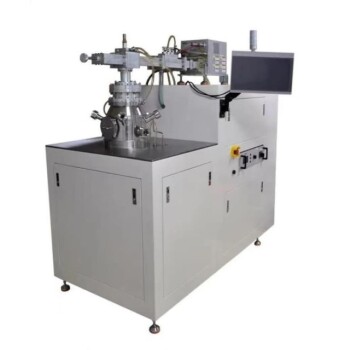
A high-precision laboratory stirring device serves as the kinetic engine for simulating industrial-scale Kambara Reactor (KR) desulfurization. Its primary function is to drive a specific rotor—typically composed of calcium aluminate—at a controlled speed of 200 rpm to replicate the intense mechanical agitation found in full-scale steel production.
The core value of this device lies in its ability to generate specific hydrodynamic conditions that increase the contact area between desulfurizers and molten metal, effectively overcoming the diffusion barriers that otherwise inhibit reaction efficiency.
The Mechanics of Effective Simulation
Replicating Industrial Agitation
The device is not merely a mixer; it is a simulator of industrial energy.
In a real-world KR process, mechanical stirring is powerful and continuous. To study this in a lab, the device must maintain a stable rotation, specifically cited at 200 rpm in this context.
Driving the Correct Rotor Material
The simulation relies on the interaction between the stirring element and the fluid.
The device drives a calcium aluminate rotor. This material choice is critical for accurately modeling the chemical environment of the desulfurization process.
Overcoming Kinetic Barriers
Increasing Collision Frequency
The fundamental goal of the stirring is to force interaction.
By maintaining high-precision speed, the device increases the frequency of collisions between the desulfurizer particles and the molten metal. Without this forced frequency, the reaction rate would drop significantly.
Maximizing Contact Area
Chemical reactions occur at the interface of materials.
The mechanical agitation expands the total contact area available for the reaction. This ensures that the desulfurizing agents are fully utilized rather than sitting idle in the mixture.
Breaking Down Diffusion Resistance
This is the most critical function of the stirring mechanism regarding reaction efficiency.
Solid calcium oxide naturally forms a dense calcium silicate layer on its surface during the process. This layer acts as a barrier, creating high diffusion resistance that stops the reaction.
The mechanical force generated by the stirring device helps overcome this resistance, allowing the reaction to proceed past the surface layer.
Understanding the Trade-offs
Precision vs. Realism
While the device simulates industrial power, it is limited by the parameters set by the operator.
If the speed deviates from the target (e.g., 200 rpm), the simulation no longer reflects the industrial KR process. The data regarding collision frequency would become unreliable.
Material Specificity
The effectiveness of the simulation is tied to the rotor material.
The reference highlights a calcium aluminate rotor; using a substitute material could alter the formation or disruption of the calcium silicate layer. This would skew the results regarding diffusion resistance.
Making the Right Choice for Your Goal
To ensure your simulation yields valid data, align your equipment settings with your specific research objectives.
- If your primary focus is Kinetic Modeling: Prioritize the device's ability to lock in exactly at 200 rpm to ensure the collision frequency matches the theoretical model.
- If your primary focus is Chemical Efficiency: Ensure the device is compatible with a calcium aluminate rotor to accurately test the breakdown of the calcium silicate diffusion layer.
Precision in mechanical stirring is the only way to turn a laboratory experiment into an accurate predictor of industrial performance.
Summary Table:
| Key Parameter | Role in Simulation | Impact on Experiment |
|---|---|---|
| Rotational Speed (200 rpm) | Industrial Replicator | Ensures consistent collision frequency between materials. |
| Rotor Material (Calcium Aluminate) | Chemical Driver | Accurately models the industrial desulfurization environment. |
| Interface Dynamics | Contact Area Expansion | Maximizes interaction between desulfurizers and molten metal. |
| Diffusion Control | Barrier Penetration | Breaks down the dense calcium silicate layer to sustain reactions. |
Elevate Your Research with Precision Lab Solutions
Precision in mechanical stirring is the bridge between a laboratory simulation and industrial success. At KINTEK, we understand that even a minor deviation in speed or material compatibility can compromise your kinetic modeling.
Backed by expert R&D and manufacturing, KINTEK offers a comprehensive range of lab equipment including Muffle, Tube, Rotary, Vacuum, and CVD systems, along with specialized high-temperature furnaces. Whether you are replicating KR desulfurization or developing new chemical processes, our systems are fully customizable to meet your unique experimental needs.
Ready to achieve superior accuracy in your lab?
Contact KINTEK Today to Discuss Your Custom Solution
Visual Guide

References
- Jyun-Ming Shen, Weite Wu. Effects of Different CaO/Al2O3 Ratios on the Phase Composition and Desulfurization Ability of CaO-Based Desulfurizers in Hot Metal. DOI: 10.3390/met14030363
This article is also based on technical information from Kintek Furnace Knowledge Base .
Related Products
- High Temperature Muffle Oven Furnace for Laboratory Debinding and Pre Sintering
- Small Vacuum Heat Treat and Tungsten Wire Sintering Furnace
- Vacuum Dental Porcelain Sintering Furnace for Dental Laboratories
- 1400℃ Muffle Oven Furnace for Laboratory
- 1800℃ High Temperature Muffle Oven Furnace for Laboratory
People Also Ask
- What thermal phenomena occur during polymer binder burnout in ceramic green bodies? Lab Furnace Guide
- Why is controlled heat treatment in a muffle furnace necessary for calcined clay? Achieve Optimal Pozzolanic Activity
- What role does a high-temperature muffle furnace play in STFO synthesis? Achieve Pure Perovskite Results
- How does a high-temperature muffle furnace facilitate the formation of LaNbxAl1−xO3+δ perovskite structures? Key Roles
- What role does a high-temperature muffle furnace play in the multi-stage synthesis of Li0.5MnFe1.5O4? Key to Pure Spinel