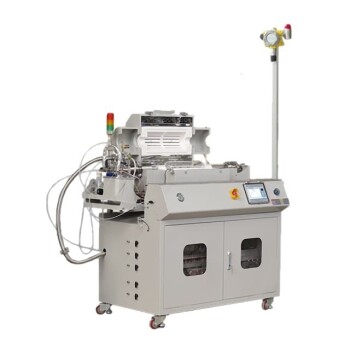
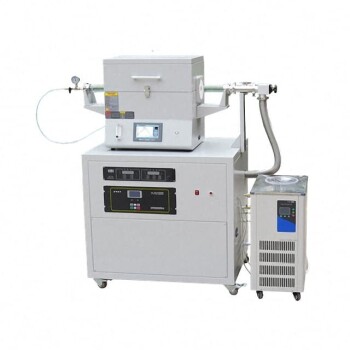
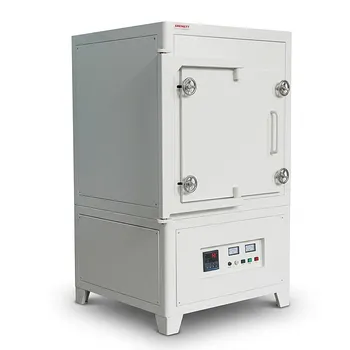
The operational window for ceramic thin film deposition and densification via high-temperature CVD furnaces typically centers between 600°C and 1000°C. This range is where gaseous precursors like silanes or halides thermally decompose to form dense, adherent layers of silicon carbide (SiC) or diamond-like carbon on substrate surfaces. In Chemical Vapor Infiltration (CVI), the same thermal energy drives precursor gases deep into porous preforms, converting them into a solid matrix without prematurely clogging exterior pores. Success hinges on far more than just hitting a target temperature—it demands precise, multi-zone thermal uniformity, controlled gas flow dynamics, and a furnace architecture that prevents atmosphere contamination.
High-temperature CVD and CVI share a common thermal foundation, yet their process mechanisms diverge dramatically. CVD demands a hot surface to grow a film outward, while CVI requires a carefully managed temperature gradient so that reactions happen inside the preform, not just on its skin. Mastering both means treating temperature not as a single setpoint, but as the master variable that balances reaction kinetics, diffusion rates, and structural integrity.
Mapping the Temperature Requirements for Ceramic Deposition
The temperature you choose does more than activate chemistry; it dictates film microstructure, infiltration depth, and process viability.
The Core Range for Mainstream Ceramics
The 600°C to 1000°C bracket is the workhorse regime for depositing dense protective coatings such as SiC and diamond-like carbon (DLC). Within this window, common precursor mixtures (SiCl₄/CH₄ or CH₃SiCl₃) break down efficiently on heated substrates. The furnace must hold stable setpoints across the entire deposition zone so that reaction kinetics remain consistent from edge to center.
Pushing Beyond 1000°C for Advanced Non-Oxide Ceramics
Synthesizing materials like silicon nitride (Si₃N₄), boron nitride (BN), or pyrolytic carbon often demands temperatures of 1500°C and even up to 2400°C. These endothermic reactions require higher thermal input to achieve target stoichiometry and crystalline order. Operating in this regime demands furnace insulation, heating elements, and vacuum sealing that can withstand extreme heat without outgassing or distortion.
Why Uniformity Is Non-Negotiable
A temperature gradient of just a few degrees across a substrate can cause uneven film thickness, grain size variation, and residual thermal stress. Even in CVI, hot spots near the preform surface accelerate reactions that seal pores prematurely, trapping voids deep inside. Multi-zone heating and precise thermocouple placement are the only ways to guarantee that the entire deposition zone experiences the intended thermal profile.
The Process Mechanisms that Drive CVD and CVI Performance
Temperature is the engine, but the process mechanisms determine whether you build a flawless coating or a porous infiltrated composite.
The CVD Mechanism: Surface-Limited Growth
In standard CVD, gaseous reactants flow over a heated substrate and thermally decompose directly at the surface. The film grows layer by layer, driven by reaction kinetics that are exponentially sensitive to temperature. If the substrate is too cool, precursor conversion is sluggish and films are amorphous or poorly adherent. If it is too hot, gas-phase nucleation can create powdery deposits instead of a dense coating. The sweet spot maintains a surface-limited regime where precursors react promptly on arrival, yielding tight, conformal films.
The CVI Mechanism: Diffusion-Controlled Infiltration
CVI turns the problem inside out. Instead of coating a flat exterior, precursor gases must diffuse through a labyrinth of internal pores within a fiber preform. The process mechanism is a delicate race between gas transport and chemical reaction. If the reaction rate outpaces diffusion—often caused by excessive temperature—the exterior pores fill first and block access to the interior. The result is a densified shell around a hollow core. Lowering the temperature or reducing pressure slows kinetics, giving gas molecules time to penetrate deep into the preform before reacting.
How Pressure and Flow Rate Shape the Mechanism
Temperature alone is insufficient. Reduced pressure (typically around 125 Pa or lower) increases the mean free path of gas molecules, enhancing their ability to navigate narrow pore channels. Mass flow controllers meter precursor and carrier gas ratios precisely, preventing concentration gradients that would otherwise cause asymmetric growth. In CVI, a slow, continuous flow ensures a fresh supply of reactants without creating stagnant zones that starve the preform center.
Furnace Design Features that Translate Temperature into Quality
The furnace is not a passive oven—it is an active instrument that must enforce the chosen thermal and chemical conditions.
Multi-Zone Heating and Thermal Gradients
A single-zone furnace inevitably develops a bell-shaped temperature profile, making uniform deposition impossible. Multi-zone heating elements with independent control loops flatten the thermal landscape. In CVI, some processes intentionally impose a mild temperature gradient—cooler at the gas inlet, hotter downstream—to promote progressive densification from the inside out.
Vacuum Integrity and Atmosphere Control
Even trace oxygen or moisture at 1000°C can oxidize precursors and poison the reaction. Leak-tight vacuum flanges, high-purity gas lines, and robust vacuum pumping are the first line of defense. Maintaining a clean, inert or reactive atmosphere ensures that every joule of thermal energy goes into the intended chemical conversion, not into parasitic side reactions.
Gas Distribution and Reactant Delivery
CVD and CVI furnaces integrate gas distribution manifolds that inject precursors uniformly over the substrate or preform. Poor manifold design creates impingement jets that disrupt boundary layers, leading to local thickness spikes. Laminar flow with minimal turbulence is the goal, and it must be maintained from startup to cooldown.
Understanding the Trade-offs and Avoiding Process Pitfalls
Operating at high temperature brings transformative capability, but it also amplifies challenges that can silently ruin a batch.
Too Hot: Pore Sealing, Grain Growth, and Thermal Stress
Pushing temperature too high in CVI accelerates surface reactions faster than diffusion can replenish the interior, permanently trapping voids. In CVD, excessive heat can coarsen grain size, causing films to crack under thermal cycling. Substrates with mismatched coefficients of thermal expansion will warp or delaminate when cooled from 1000°C, so post-deposition cooling ramps are just as critical as the hold temperature.
Too Cold: Incomplete Reactions and Poor Adhesion
Insufficient substrate temperature leads to unreacted precursor fragments trapped in the film, making it soft, unstable, or electrically defective. In CVI, low temperature may prevent full matrix conversion altogether, leaving behind a brittle, under-densified composite with no load-bearing capability.
The Calibration Catch-22
Even with perfect recipes, furnace thermocouple drift and aging heating elements can shift actual temperatures away from setpoints. Regular thermal profiling and calibration against reference standards are essential to avoid unknowingly operating outside the validated process window. A furnace that reads 800°C but is actually 30°C hotter will silently produce failed infiltrations batch after batch.
Making the Right Choice for Your Application
The target material and end-use performance dictate where you land on the temperature spectrum and which process mechanism you must prioritize. Use these goal-oriented guidelines to translate theory into practice.
- If your primary focus is depositing a dense, wear-resistant SiC coating: Operate in the 600–1000°C range with a focus on surface temperature uniformity and tight gas flow control to achieve a surface-limited growth regime.
- If your primary focus is infiltrating a thick fiber preform with minimal void content: Lower the setpoint within the typical range or reduce pressure to slow kinetics, ensuring diffusion outpaces the reaction. Consider a mild intentional thermal gradient to direct infiltration from the inside out.
- If your primary focus is synthesizing ultra-high-temperature ceramics like pyrolytic carbon: Select a furnace rated for sustained operation at 1500–2400°C, with specialized high-temperature insulation and elements, and pair it with extremely stable, automated ramp controls to manage stress.
Every successful CVD or CVI outcome begins not with the recipe, but with a furnace that faithfully translates your thermal strategy into a flawless, repeatable physical reality.
Summary Table:
| Process Type | Temp Range | Core Mechanism | Key Objective / Challenge |
|---|---|---|---|
| Mainstream CVD (SiC, DLC) | 600°C – 1000°C | Surface-limited kinetic growth | Ensure multi-zone thermal uniformity & dense, adherent film layer |
| Advanced Ceramics (BN, PyC) | 1500°C – 2400°C | Endothermic thermal decomposition | High-temperature resistance, stoichiometry control & zero outgassing |
| Matrix Infiltration (CVI) | 600°C – 1000°C (Reduced P) | Diffusion-controlled pore penetration | Prevent premature exterior pore sealing & achieve uniform deep infiltration |
Master Your Deposition & Infiltration Processes with KINTEK
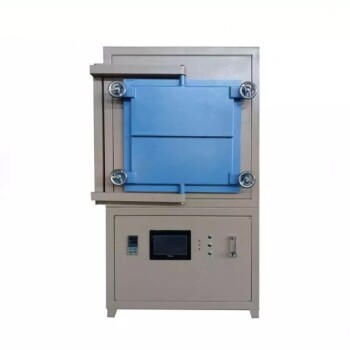
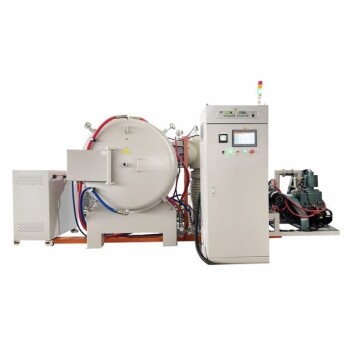
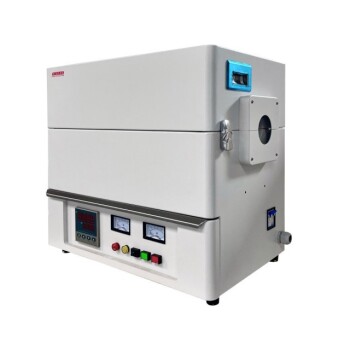
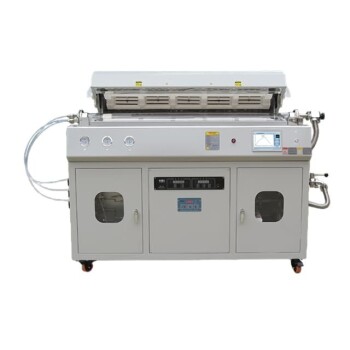
Achieve precision multi-zone thermal control and flawless ceramic matrix infiltration with custom-engineered furnace solutions. KINTEK specializes in advanced laboratory equipment and high-temperature furnaces, offering a comprehensive range of CVD, vacuum, tube, atmosphere, and muffle furnaces fully customizable to your specific temperature and gas delivery needs.
Ready to enhance your film quality and process repeatability? Contact our high-temperature furnace specialists today to build your ideal CVD/CVI system!
Related Products
- 1700℃ Controlled Inert Nitrogen Atmosphere Furnace
- 2200 ℃ Graphite Vacuum Heat Treat Furnace
- 1400℃ Controlled Inert Nitrogen Atmosphere Furnace
- 2200 ℃ Tungsten Vacuum Heat Treat and Sintering Furnace
- 1400℃ High Temperature Laboratory Tube Furnace with Alumina Tube
People Also Ask
- Why is thorough binder burnout necessary before sintering advanced ceramics? Ensure Peak Density & Zero Defects
- How does oxygen partial pressure control affect ceramic sintering? Master Defect Chemistry
- How do controlled-atmosphere furnaces support polymer pyrolysis? Master SiC & Si3N4 Ceramic Conversion
- How does real-time dilatometric analysis in a controlled-atmosphere furnace optimize PZT ceramic sintering?
- Why is controlled-atmosphere heating required for functional ceramics and sensors? Master Defect Engineering