
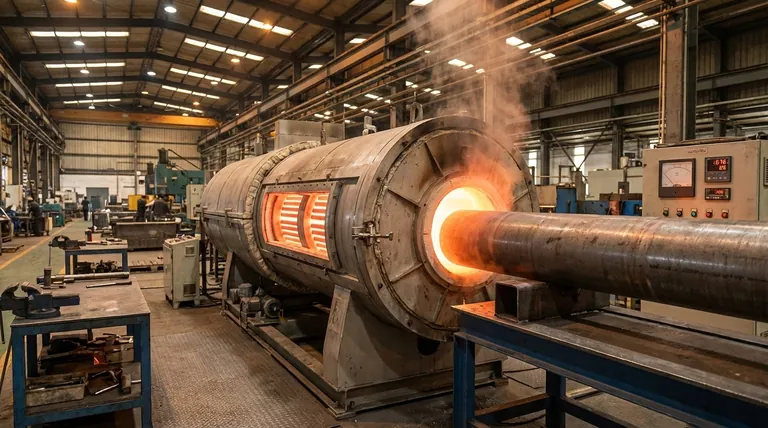
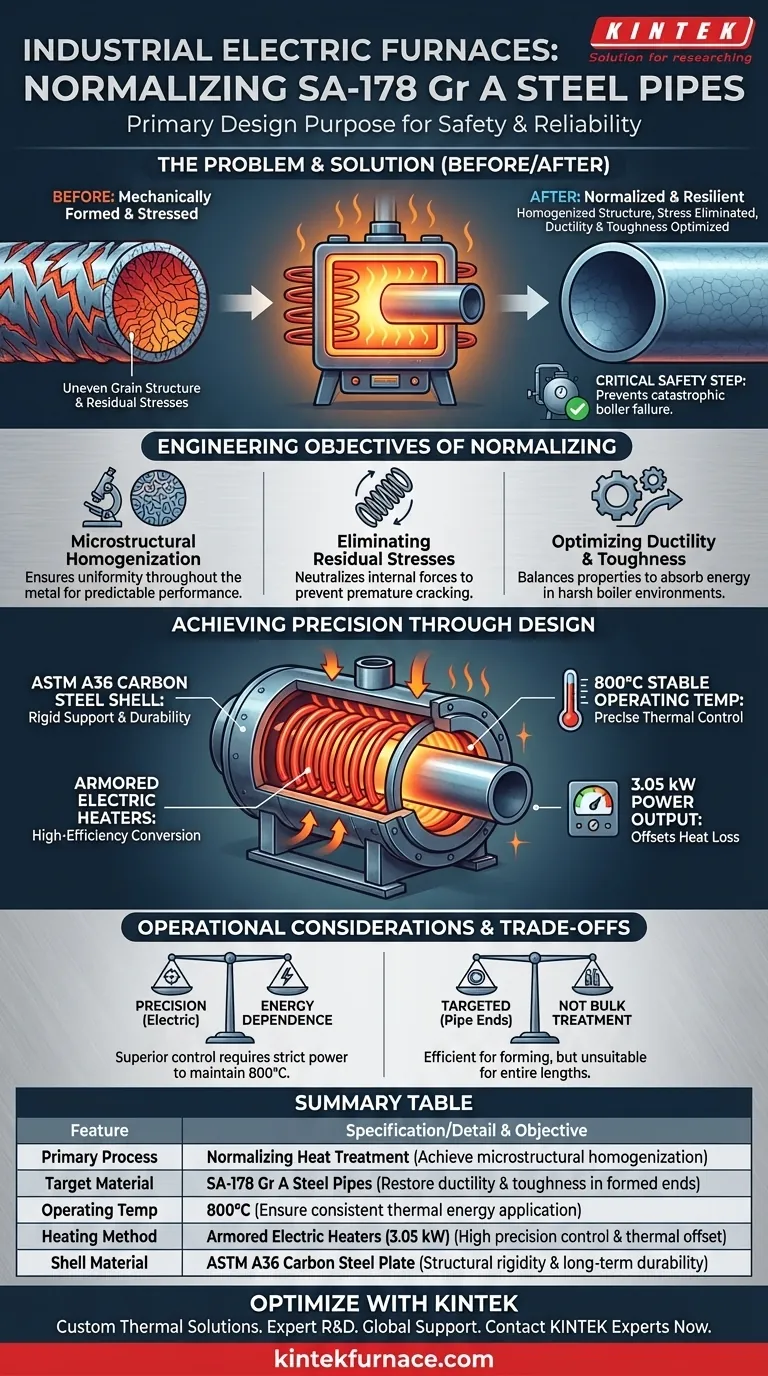
The primary design purpose of these industrial electric furnaces is to perform normalizing heat treatment specifically on the mechanically formed ends of SA-178 Gr A steel pipes. This equipment is engineered to apply precise thermal energy to achieve microstructural homogenization and eliminate the residual stresses caused by mechanical shaping.
By restoring the material's internal structure, the furnace ensures the pipe ends possess the necessary ductility and toughness. This is a critical safety step designed to prevent catastrophic failure during high-pressure industrial boiler operations.
The Engineering Objectives of Normalizing
The heat treatment process is not merely about reaching a temperature; it is about reversing the effects of mechanical deformation. The furnace is the tool used to reset the steel's physical properties.
Microstructural Homogenization
When SA-178 Gr A pipes are mechanically formed, their internal grain structure can become uneven. The furnace provides a controlled environment to homogenize this microstructure, ensuring uniformity throughout the metal. This uniformity is essential for predictable performance under stress.
Eliminating Residual Stresses
Mechanical forming introduces significant internal tension, known as residual stress. If left untreated, these stresses create weak points susceptible to cracking. The furnace heats the pipe ends to relax these internal forces, effectively neutralizing the risk of premature failure.
Optimizing Ductility and Toughness
The ultimate metallurgical goal is balancing the steel's properties. By normalizing the steel, the furnace optimizes both ductility (the ability to deform without breaking) and toughness (the ability to absorb energy). This makes the pipes resilient enough for the harsh environment of an industrial boiler.
Achieving Precision Through Design
To achieve the metallurgical goals above, the furnace requires a design focused on thermal stability and structural rigidity.
Precision Thermal Control
Unlike gas-based systems, these electric furnaces utilize armored electric heaters. These components convert electrical energy into thermal energy with high efficiency, capable of maintaining a stable operating temperature of 800°C.
Combating Heat Loss
The heating elements are calibrated with specific power outputs (e.g., 3.05 kW) to actively offset heat losses. This ensures the constant high-temperature environment required for consistent normalization is never compromised.
Structural Stability with ASTM A36
The furnace's external shell is constructed from ASTM A36 carbon steel plate. This material is selected for its high cost-effectiveness and excellent weldability, providing a rigid support frame that maintains structural integrity despite the intense internal heat.
Operational Considerations and Trade-offs
While electric furnaces offer superior control, understanding their limitations is vital for efficient operation.
Energy Dependence vs. Precision
Electric heating offers higher thermal control precision than gas systems, which is critical for normalizing. However, this comes at the cost of strict electrical power requirements to maintain the 3.05 kW output needed to offset thermal losses.
Targeted vs. Bulk Treatment
These furnaces are explicitly designed for treating the ends of pipes. This specialized focus makes them highly efficient for joining or forming applications but renders them unsuitable for bulk heat treatment of entire pipe lengths without modification.
Making the Right Choice for Your Goal
The selection of this equipment should be driven by your specific manufacturing requirements regarding precision and safety.
- If your primary focus is process reliability: Prioritize the use of armored electric heaters over gas systems to ensure the strict temperature stability (800°C) required for normalizing.
- If your primary focus is equipment longevity: Ensure the external structure utilizes ASTM A36 carbon steel to guarantee mechanical strength and weldability over long-term industrial use.
- If your primary focus is component safety: verify that the heat treatment specifically targets the mechanically formed ends to eliminate the residual stresses that lead to boiler failure.
Ultimately, the value of this furnace lies in its ability to transform a mechanically stressed pipe component into a reliable, safety-critical element of a boiler system.
Summary Table:
| Feature | Specification/Detail | Engineering Objective |
|---|---|---|
| Primary Process | Normalizing Heat Treatment | Achieve microstructural homogenization |
| Target Material | SA-178 Gr A Steel Pipes | Restore ductility and toughness in formed ends |
| Operating Temp | 800°C (Stable Environment) | Ensure consistent thermal energy application |
| Heating Method | Armored Electric Heaters (3.05 kW) | High precision control and thermal offset |
| Shell Material | ASTM A36 Carbon Steel Plate | Structural rigidity and long-term durability |
Optimize Your Industrial Heat Treatment with KINTEK
Don't compromise on the safety of your high-pressure components. KINTEK provides industry-leading thermal solutions backed by expert R&D and precision manufacturing. Whether you require Muffle, Tube, Rotary, Vacuum, or CVD systems, our high-temperature furnaces are fully customizable to meet the rigorous normalizing demands of SA-178 Gr A steel and other specialized materials.
Take the next step in process reliability today:
- Expert Consulting: Tailored solutions for pipe end treatment and stress relief.
- Precision Engineering: Systems designed for 800°C+ stability and microstructural uniformity.
- Global Support: Equipment built to ASTM standards for maximum durability.
Visual Guide
References
- Gustavo Ribeiro Zanini, LUIS CARLOS GERON. PROJETO DE UM FORNO ELÉTRICO INDUSTRIAL PARA TRATAMENTO TÉRMICO TUBOS DE AÇO SA-178 GR A. DOI: 10.52138/citec.v17i01.437
This article is also based on technical information from Kintek Furnace Knowledge Base .
Related Products
- Silicon Carbide SiC Thermal Heating Elements for Electric Furnace
- Electric Rotary Kiln Continuous Working Small Rotary Furnace Kiln for Pyrolysis Plant Heating
- Vacuum Heat Treat Sintering and Brazing Furnace
- Vacuum Heat Treat Sintering Furnace with Pressure for Vacuum Sintering
- 2200 ℃ Graphite Vacuum Heat Treat Furnace
People Also Ask
- How do the different types of silicon carbide heating elements compare in terms of applications? Find the Best Fit for Your High-Temp Needs
- What are the temperature capabilities and mounting options for silicon carbide heating elements? Unlock High-Temp Flexibility and Durability
- How do silicon carbide heating elements enhance the heat treatment of alloys? Achieve Superior Temperature Control
- What is the recommended surface load for silicon carbide heating elements at different furnace temperatures? Maximize Lifespan & Performance
- What are the advantages of using silicon carbide heating elements in industrial furnaces? Boost Efficiency and Durability














