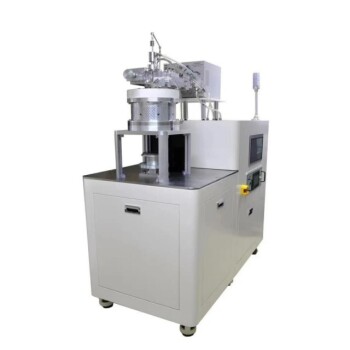
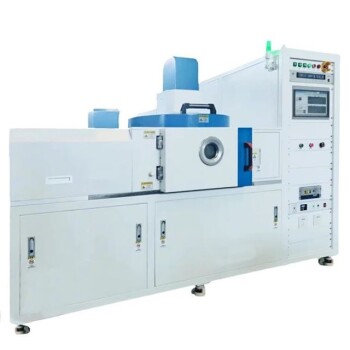
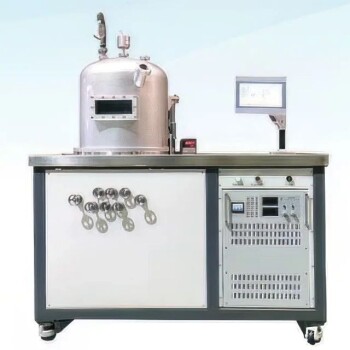
Laboratory plasma nitriding equipment serves as a precision surface transformation system that uses high-voltage electric fields to infuse nitrogen into the surface of high-speed steel (HSS) tools. By creating a plasma discharge, the equipment forms an ultra-hard nitrided layer that drastically reduces friction and wear while operating at temperatures low enough to preserve the tool's core structural integrity.
Core Takeaway: Plasma nitriding equipment utilizes ionized nitrogen gas to harden HSS tool surfaces through low-temperature diffusion and cathodic sputtering. This process creates a wear-resistant "shield" that enhances tool longevity and performance without compromising the toughness of the base material.
The Mechanics of Plasma Surface Activation
Ionization and the Glow Discharge
The equipment operates by applying a high-voltage electric field within a vacuum environment to ionize nitrogen gas mixtures. This process creates a glow discharge, which generates a high-energy plasma consisting of positive nitrogen ions.
Cathodic Sputtering and Surface Cleaning
Before diffusion begins, the high-energy particles bombard the tool surface in a process known as cathodic sputtering. This effectively "scrubs" the tool at a molecular level, removing the surface passivation oxide layer that would otherwise block nitrogen absorption.
Surface Activation and Adsorption
Once the oxide layer is removed, the tool surface becomes highly reactive and activated. This state promotes the rapid adsorption and nucleation of nitrogen atoms, allowing them to begin the transition from the gas phase into the solid metal.
Enhancing High-Speed Steel (HSS) Performance
Precision Diffusion at Lower Temperatures
A primary advantage of this equipment is its ability to facilitate efficient nitrogen diffusion at relatively low temperatures. This is critical for high-speed steel, as it prevents the base material from softening or losing the heat-treatment properties carefully engineered during its manufacture.
Formation of the Nitrided Layer
The diffused nitrogen reacts with the steel to form a high-hardness nitrided layer. This layer acts as a functional gradient, transitioning from an extremely hard exterior to the tough, shock-resistant core of the tool.
Friction Reduction and Adhesive Wear Resistance
The resulting surface modification significantly reduces the friction coefficient of the tool during operation. By lowering friction, the equipment enhances the tool's resistance to adhesive wear, which is the primary cause of tool failure during heavy industrial cutting or forming.
Understanding the Trade-offs and Limitations
The Complexity of Vacuum Environments
Laboratory plasma nitriding requires a controlled vacuum environment to maintain the stability of the glow discharge. This increases the complexity of the operation compared to traditional salt-bath or gas nitriding methods, requiring specialized training and maintenance.
Risk of Surface Brittleness
While the nitrided layer is exceptionally hard, improper settings can lead to a layer that is too thick or contains a "white layer" that is prone to chipping. Precise control of the nitrogen gas mixture and voltage is essential to ensure the layer is durable rather than brittle.
Thermal Energy Management
Although the process is "low temperature," the ionic bombardment itself generates the thermal energy required for diffusion. Researchers must carefully calibrate the power input to ensure that localized heating does not exceed the tempering temperature of the specific HSS grade being treated.
How to Apply This to Your Project
If you are considering laboratory plasma nitriding for your specific HSS application, use the following guidelines:
- If your primary focus is maximizing tool life in high-friction environments: Utilize plasma nitriding to create a thin, high-hardness layer specifically designed to prevent "chip welding" and adhesive wear.
- If your primary focus is preserving the toughness of complex geometries: Ensure the equipment is calibrated for low-temperature diffusion to prevent thermal distortion or softening of the tool's delicate cutting edges.
- If your primary focus is surface cleanliness and coating adhesion: Leverage the cathodic sputtering phase of the process to provide a pristine, oxide-free surface that is ideal for subsequent PVD or CVD coating layers.
By mastering the plasma nitriding process, you can achieve a superior balance between surface hardness and core ductility for high-performance steel tools.
Summary Table:
| Process Feature | Key Mechanism | Benefit to HSS Tools |
|---|---|---|
| Glow Discharge | Ionized nitrogen plasma generation | High-precision surface activation |
| Cathodic Sputtering | Molecular-level surface scrubbing | Removes oxides for superior layer adhesion |
| Low-Temp Diffusion | Nitrogen infusion below tempering point | Preserves core toughness and structural integrity |
| Nitrided Layer | Formation of a high-hardness gradient | Drastically reduces friction and adhesive wear |
Optimize Your Material Performance with KINTEK Precision
Ready to elevate the durability of your high-speed steel tools and components? KINTEK specializes in high-performance laboratory equipment and consumables, providing a comprehensive range of high-temperature solutions including muffle, tube, rotary, vacuum, CVD, and atmosphere furnaces.
Whether you require precise plasma nitriding environments or specialized heat treatment systems, our equipment is fully customizable to meet your unique research and industrial needs. Partner with us to achieve a superior balance between surface hardness and core ductility.
Contact our technical experts today for a custom solution!
References
- Sanja Šolić, Vlado Tropša. Cutting performance of deep cryogenic treated and nitrided HSS cutting tool inserts. DOI: 10.31803/tg-20190513114458
This article is also based on technical information from Kintek Furnace Knowledge Base .
Related Products
- Spark Plasma Sintering SPS Furnace
- Slide PECVD Tube Furnace with Liquid Gasifier PECVD Machine
- Inclined Rotary Plasma Enhanced Chemical Deposition PECVD Tube Furnace Machine
- Inclined Rotary Plasma Enhanced Chemical Deposition PECVD Tube Furnace Machine
- 915MHz MPCVD Diamond Machine Microwave Plasma Chemical Vapor Deposition System Reactor
People Also Ask
- Why is it necessary to maintain a high vacuum environment during the SPS of SiC? Key to High-Density Ceramics
- How does the heating mechanism of Spark Plasma Sintering (SPS) function? Enhance TiC/SiC Composite Fabrication
- What are the technical advantages of using an SPS sintering furnace? Elevate Al2O3-TiC Material Performance
- What are the steps in the discharge plasma sintering process? Master Fast, High-Density Material Consolidation
- What are the advantages of spark plasma sintering (SPS) over traditional forging? Precision Microstructural Control