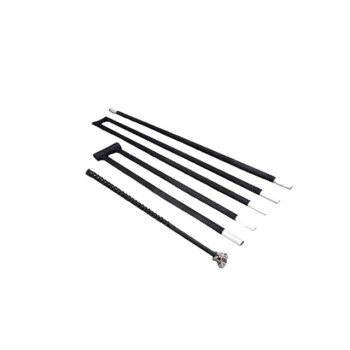
In short, future developments in high-temperature heating elements are moving away from one-size-fits-all solutions. The focus is now on creating highly specialized elements, primarily through advanced material compositions and innovative designs, tailored to solve specific, challenging industrial process requirements like reactive atmospheres, rapid temperature changes, and ultra-clean environments.
The core evolution in high-temperature heating is a shift from developing a single, incrementally "better" element to creating a portfolio of specialized solutions. Future advancements are less about a universal upgrade and more about providing the perfect tool for a specific, demanding job.
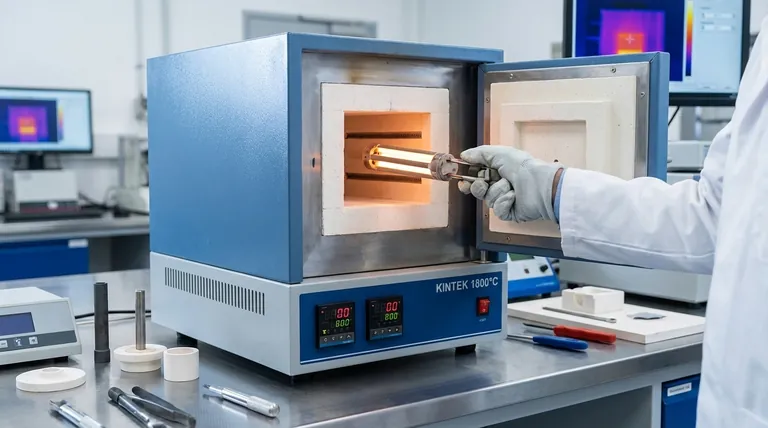
The Shift from General-Purpose to Application-Specific Design
Historically, the goal was to create robust, general-purpose heating elements like standard Silicon Carbide (SiC) or Molybdenum Disilicide (MoSi2) that worked well in a variety of common applications.
The Limits of a Universal Approach
While effective, traditional elements face limitations in increasingly demanding modern processes. A standard element may struggle with rapid heating and cooling cycles, react negatively with certain process gases, or introduce contaminants that are unacceptable in high-purity manufacturing.
The Rise of Tailored Solutions
The future lies in optimizing elements for a single, difficult task. We are seeing this most clearly in the evolution of MoSi2 elements, where new designs are engineered specifically for niche applications, setting the trend for the entire industry.
Key Areas of Innovation
Future progress is not isolated to one area but is advancing on multiple fronts. These developments aim to create more resilient, efficient, and precise heating systems.
1. Designs for Reactive Atmospheres
Many industrial processes, such as nitriding, use atmospheres that are highly reactive with standard heating elements, causing them to degrade quickly.
Future developments include elements with modified surface chemistries or protective glazes specifically designed to operate reliably in gases like nitrogen or in atmospheres that change mid-process.
2. Elements for Rapid Thermal Cycling
Processes in laboratory settings or advanced manufacturing require extremely fast heating and cooling. Standard elements can crack or fail under this thermal stress.
New element designs are being engineered to withstand the mechanical stress of rapid thermal cycling, enabling faster production times and more agile process development in lab and sintering furnaces.
3. Solutions for Contamination-Sensitive Processes
In industries like semiconductor and medical device manufacturing, even microscopic contamination from a heating element can ruin a product batch.
A significant area of R&D is focused on creating ultra-pure elements or elements with surfaces that prevent shedding or outgassing, ensuring the pristine environment required for these high-value processes.
4. Advanced Materials and Composites
Beyond refining existing materials, research is underway on entirely new composites. These next-generation materials promise to push operating temperatures even higher or provide unparalleled resistance to chemical corrosion, opening the door to new industrial capabilities.
Understanding the Trade-offs
Embracing these specialized advancements requires a clear understanding of their inherent trade-offs. There is no "perfect" element, only the optimal choice for a specific goal.
Performance vs. Cost
Highly specialized elements are a result of significant R&D and often use more exotic materials. Consequently, their initial procurement cost will almost certainly be higher than that of a general-purpose element.
Specialization vs. Versatility
An element perfectly optimized for a high-temperature nitrogen atmosphere may perform poorly or fail quickly in an oxidizing (air) atmosphere. This specialization increases performance for one task at the cost of operational flexibility.
System Integration Complexity
New element designs may have different electrical characteristics. Adopting them may require investment in new power control systems (like specialized SCRs) or furnace modifications to accommodate a different form factor.
How to Prepare for Future Heating Technologies
To make an informed decision, you must align your technology choices with your primary operational goal.
- If your primary focus is process speed: Prioritize developments in elements designed for rapid thermal cycling to dramatically reduce furnace run times.
- If your primary focus is product purity: Investigate elements engineered for contamination-sensitive processes to improve yield and quality.
- If your primary focus is operating in difficult atmospheres: Focus on specialized elements with protective glazes or unique material properties designed for reactive gases.
- If your primary focus is pushing temperature boundaries: Monitor advancements in new material composites that promise higher maximum operating temperatures.
Ultimately, understanding your specific process need is the key to leveraging these powerful future technologies.
Summary Table:
| Development Area | Key Focus | Benefits |
|---|---|---|
| Reactive Atmospheres | Modified surface chemistries, protective glazes | Enhanced reliability in gases like nitrogen, reduced degradation |
| Rapid Thermal Cycling | Engineered designs for stress resistance | Faster production times, improved durability in lab and sintering furnaces |
| Contamination-Sensitive Processes | Ultra-pure elements, reduced shedding | Higher yield and quality in semiconductor and medical manufacturing |
| Advanced Materials and Composites | New material R&D for higher temperatures and corrosion resistance | Expanded industrial capabilities and process innovation |
Ready to upgrade your lab with cutting-edge high-temperature furnace solutions? At KINTEK, we leverage exceptional R&D and in-house manufacturing to provide advanced systems like Muffle, Tube, Rotary Furnaces, Vacuum & Atmosphere Furnaces, and CVD/PECVD Systems. Our deep customization capabilities ensure we meet your unique experimental needs, whether for reactive atmospheres, rapid cycling, or ultra-clean processes. Contact us today to discuss how our specialized heating elements can enhance your efficiency and results!
Visual Guide

Related Products
- Molybdenum Disilicide MoSi2 Thermal Heating Elements for Electric Furnace
- Silicon Carbide SiC Thermal Heating Elements for Electric Furnace
- 2200 ℃ Graphite Vacuum Heat Treat Furnace
- 1400℃ Muffle Oven Furnace for Laboratory
- 2200 ℃ Tungsten Vacuum Heat Treat and Sintering Furnace
People Also Ask
- What are the typical application temperatures for molybdenum disilicide (MoSi2) heating elements? Master High-Temp Performance
- What is the primary use of molybdenum disilicide? Ideal for High-Temp Heating Elements
- What are the characteristics of molybdenum disilicide heating elements? Unlock High-Temp Performance
- What are the properties of molybdenum disilicide (MoSi2) that make it suitable for high-temperature applications? Discover Its High-Temp Resilience
- What are the applications of molybdenum disilicide heating elements? Achieve Extreme Heat Stability for Industrial Processes