Lead substitution in barium titanate directly elevates the Curie temperature (Tc) from 128.5°C up to 184.5°C or higher. This upward shift moves the ferroelectric-to-paraelectric transition to a significantly higher temperature, which in turn redefines the PTCR characteristic—the abrupt resistivity increase now occurs at this elevated Tc. High-temperature thermal processing is indispensable to form a homogeneous (Ba,Pb)TiO₃ solid solution and to engineer the grain-boundary microstructure that makes this PTCR effect both sharp and reproducible.
Shifting the Curie point with lead expands the operational window of PTCR ceramics beyond pure BaTiO₃ limits, but the final electrical performance hinges equally on precise high-temperature sintering. Without uniform firing profiles and tight stoichiometry control, even a well-calculated lead substitution cannot produce a consistent, multi-order resistivity jump above Tc.
The Chemistry Behind the Shift: Understanding Lead Substitution in BaTiO₃
The Curie Temperature and Ferroelectric Transition
Pure barium titanate (BaTiO₃) undergoes a phase change at ~128.5°C. Below Tc, it is ferroelectric with a spontaneous polarization; above Tc, it becomes paraelectric and cubic. This transition is at the heart of PTCR behavior—the grain-boundary potential barriers rise sharply only once the material crosses into the paraelectric state.
How Lead Atoms Raise Tc
Substituting lead (Pb²⁺) onto the barium A-site increases the lattice distortion. The larger, more polarizable Pb²⁺ ion strengthens the long-range dipole alignment, making it thermally harder to disrupt. As a result, the transition temperature rises. In compositions like Ba0.84Pb0.16TiO₃, Tc climbs from 128.5°C to 184.5°C, and higher lead contents can push it further, directly tuning the switching point of the ceramic.
Direct Impact on PTCR Behavior
What Is PTCR and Why It Matters
The positive temperature coefficient of resistivity (PTCR) effect is an abrupt, orders-of-magnitude increase in electrical resistance. It appears in donor-doped BaTiO₃ ceramics just above Tc. This non-linear response makes them ideal for self-regulating heaters, overcurrent protection, and temperature sensing—provided the switching temperature aligns with the application’s needs.
Shifting the Switching Temperature
Lead substitution directly moves the PTCR switching temperature to the new, higher Curie point. The rapid resistivity rise now activates at ~184.5°C instead of 128.5°C. This enables high-temperature sensor and controller applications where pure BaTiO₃ would already be in a low-resistance, paraelectric state. The Curie-Weiss law describes how the potential barrier height at grain boundaries grows rapidly above Tc, and a higher Tc extends this barrier-forming capability upward.
Grain Boundary Potential Barriers and Resistivity Jump
The PTCR effect originates from Schottky-type barriers at grain boundaries. These barriers form when donor dopants segregate to intergranular regions during sintering. Above Tc, the abrupt drop in dielectric permittivity causes the barrier height to skyrocket, choking off current. With lead substitution, this entire mechanism is shifted to the higher Tc, so the resistance transition temperature and the magnitude of the jump (temperature coefficient up to 17.8%/K) become tied to the lead-adjusted Curie point.
The Critical Role of High-Temperature Thermal Processing
Ensuring Complete Solid Solution Formation
High-temperature calcination and sintering (often 1320°C–1380°C) drive solid-state diffusion. Lead must integrate fully into the perovskite lattice to form a single-phase (Ba,Pb)TiO₃ solid solution. Incomplete reaction leaves compositional gradients that blur the Curie transition and degrade PTCR sharpness. Precision laboratory furnaces with uniform thermal profiles prevent such chemical inhomogeneity.
Sintering for Optimal Microstructure and Dopant Segregation
The grain boundary microstructure responsible for PTCR is built during high-temperature sintering. At these elevated temperatures, donor or acceptor dopants (e.g., Sb, Mn) segregate near intergranular contacts, creating the very potential barriers that produce the resistivity jump. Thermal stability and precise temperature control are non-negotiable: they ensure consistent grain size, minimum low-temperature resistance (Rmin), and a reproducible resistance-temperature curve that aligns with the lead-elevated Tc.
Understanding the Trade-offs
The Challenge of Lead Toxicity
Lead is a hazardous material. Using lead in electroceramics introduces strict handling, disposal, and regulatory requirements. While lead elevates Tc effectively, manufacturers must weigh these environmental and safety costs against the performance gain. In some regions, lead-free alternatives (like Ba1-xSrxTiO₃) can cover a similar temperature range, albeit with different processing demands.
Processing Precision and Reproducibility
A higher Tc alone does not guarantee a useful PTCR device. Lead-substituted powders require extremely tight stoichiometry control during furnace processing. Slight lead volatilization at very high temperatures can shift the final composition and Tc. This demands atmosphere-controlled furnaces and repeatable thermal cycles, adding complexity and cost to production.
Making the Right Choice for Your Application
Before committing to lead-substituted BaTiO₃, align the material’s elevated Tc with your specific performance requirements and production realities.
- If your primary focus is high-temperature sensing above 150°C: Lead substitution provides a direct, reliable way to shift the PTCR switching point upward. Invest in furnace equipment that can maintain uniform temperatures and minimize lead loss.
- If your primary focus is a sharp, reproducible PTCR jump: Focus equally on dopant chemistry and sintering profiles as on lead content. Without proper grain-boundary engineering, raising Tc alone will not deliver a multi-order resistivity change.
- If your primary focus is regulatory compliance and simpler processing: Explore alternative A-site modifiers (like strontium) that can tune Tc over a wide range without lead, accepting a potentially lower ceiling temperature.
By treating lead substitution as just one part of a holistic processing strategy, you can harness its full potential to create ceramics that switch exactly where you need them—reproducibly, sharply, and reliably.
Summary Table:
| Parameter / Feature | Pure BaTiO3 Ceramic | Lead-Substituted (Ba,Pb)TiO3 | High-Temp Processing Requirement |
|---|---|---|---|
| Curie Temperature (Tc) | ~128.5°C | Shifted up to 184.5°C+ | Precise high-temp firing (1320°C–1380°C) |
| PTCR Switching Point | Triggers at ~128.5°C | Triggers at elevated Tc (~184.5°C+) | Uniform thermal profiles for single-phase solution |
| Grain Boundary Barrier | Standard potential rise | Enhanced barrier rise above higher Tc | Controlled profile for optimal dopant segregation |
| Processing Risk | Standard stoichiometry | Lead volatilization at high temp | Atmosphere-controlled, repeatable thermal cycles |
Master High-Temperature Ceramic Processing with KINTEK
Achieving exact Curie temperature shifts and sharp, reproducible PTCR behavior requires strict thermal control and uniform firing profiles. KINTEK specializes in advanced laboratory equipment and consumables, offering a complete lineup of high-temperature furnaces—including muffle, tube, atmosphere, vacuum, and custom-engineered lab furnaces—tailored to meet your exact material synthesis requirements.
Prevent chemical inhomogeneity and lead volatilization in your advanced electroceramics. Contact KINTEK today to consult with our heating equipment experts!
Related Products
- High Temperature Muffle Oven Furnace for Laboratory Debinding and Pre Sintering
- Chairside Dental Porcelain Zirconia Sintering Furnace with Transformer for Ceramic Restorations
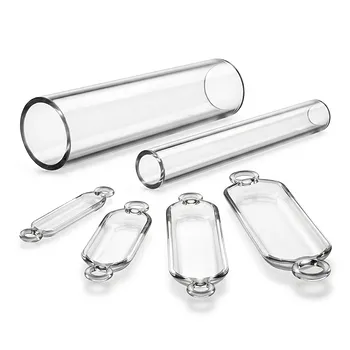
- High Purity Quartz Tube and Quartz Boat for Laboratory Furnaces
- Vacuum Dental Porcelain Sintering Furnace for Dental Laboratories
- Dental Porcelain Zirconia Sintering Ceramic Vacuum Press Furnace
People Also Ask
- What thermal phenomena occur during polymer binder burnout in ceramic green bodies? Lab Furnace Guide
- Why is controlled heat treatment in a muffle furnace necessary for calcined clay? Achieve Optimal Pozzolanic Activity
- What role does a high-temperature muffle furnace play in STFO synthesis? Achieve Pure Perovskite Results
- How does a high-temperature muffle furnace facilitate the formation of LaNbxAl1−xO3+δ perovskite structures? Key Roles
- What role does a high-temperature muffle furnace play in the multi-stage synthesis of Li0.5MnFe1.5O4? Key to Pure Spinel