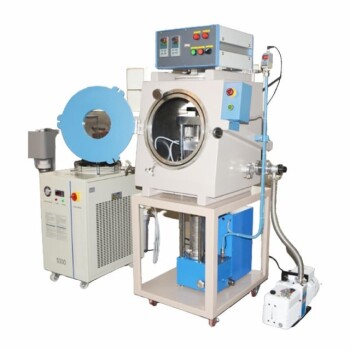
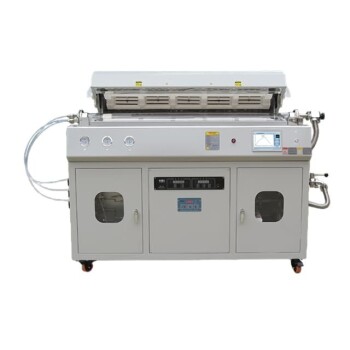
Hot pressing and hot isostatic pressing (HIP) are not just “heat and squeeze” processes. They demand extremely precise orchestration of a handful of interdependent variables to reliably reach near‑theoretical density while preserving a fine, defect‑free microstructure. The answer to your surface‑level question is clear: the critical control parameters are peak processing temperature, heating and cooling rates, applied pressure (magnitude and type), hold time at maximum conditions, and atmosphere purity (composition and pressure/vacuum level).
Core Takeaway: Successful densification via hot pressing or HIP is a balancing act. The goal is to activate pore‑closing mechanisms like diffusion and plastic flow before grain boundaries race out of control. Mastering the interplay of temperature, time, pressure, and atmosphere is the only way to consistently produce fully dense, high‑integrity components from hard‑to‑sinter materials.
The Five Pillars of Process Control
Every dense ceramic, metal, or composite part emerges from the careful dance of these variables. Let’s break down what each one governs and why it matters.
Peak Processing Temperature: The Densification Engine
Temperature provides the necessary thermal energy for atomic motion. It directly accelerates diffusion rates, lowers the vapor pressure inside residual pores, and reduces the material’s flow stress.
However, more heat is not always better. The objective is to reach a temperature where pore removal and grain‑boundary sliding proceed rapidly, but grain growth is still suppressed. Because the superimposed pressure reduces the required activation energy, hot pressing and HIP typically operate at temperatures several hundred degrees lower than pressureless sintering. This lower thermal load is what keeps the grain structure fine.
Applied Pressure: Uniaxial vs. Omnidirectional Force
Pressure supplies the mechanical driving force to collapse pores. In a hot press, a hydraulic ram pushes on a graphite die, generating uniaxial stress. This direct mechanical path is highly effective but limits shapes to simple cross‑sections and introduces anisotropic properties along the pressing direction.
In HIP, the pressure is delivered by an inert gas (argon or helium) uniformly from all directions. This omnidirectional squeeze eliminates anisotropy and handles complex geometries. The critical nuance is that for HIP, the powder compact must either be encapsulated in a gas‑tight can or pre‑sintered to closed porosity (>90–92% relative density). If open channels remain, the pressurizing gas infiltrates and wrecks the part.
Hold Time: Soaking for Perfection
Dwell time at peak temperature and pressure gives diffusion the minutes it needs to finish the job. A hold that is too short leaves entrapped porosity; one that is too long wastes energy and invites grain coarsening.
Modern HIP cycles run from 1 to 8 hours, while hot press cycles often last minutes to a few hours. The optimal soak duration depends on the part thickness, material’s diffusivity, and the final density target. Continuous monitoring of ram position (shrinkage) in a hot press or temperature uniformity in a HIP can signal when densification has plateaued, helping operators avoid guesswork.
Heating & Cooling Rates: Steering the Microstructure
The speed at which you cross the temperature landscape controls grain size, residual stress, and crack formation. Heating too fast can create large thermal gradients that drive uneven densification or, in some ceramics, cause a surface skin to seal before the interior pores can vent. A controlled, gradual ramp evens out temperature distribution and ensures uniform pore closure.
Cooling rate is equally important. Quenching a dense component under high pressure can lock in massive residual stresses, while a carefully managed cool‑down minimizes distortion and prevents thermal shock micro‑cracking. Multi‑zone furnace controllers and closed‑loop cooling systems are essential to maintain the programmed ramp throughout the part’s volume.
Atmosphere Composition & Purity: The Invisible Protector
The furnace atmosphere does more than prevent oxidation. In a vacuum hot press, a deep vacuum (often <10⁻³ mbar) pulls out volatile impurities and helps nascent diffusion bonds form. In HIP, ultra‑high‑purity argon or helium maintains a chemically inert blanket at pressures up to 200 MPa (~30,000 psi).
Even trace oxygen or moisture in the pressure vessel will oxidize heating elements and contaminate the workpiece. Reactivity matters too: if you need to process in oxygen or nitrogen, you must use a specialized furnace that sacrifices some upper temperature and pressure capability for material compatibility. Closed‑loop analysis of the atmosphere’s dew point or oxygen partial pressure is a non‑negotiable quality checkpoint.
How These Parameters Interact
The five variables never operate in isolation. Their combined effect can push a material toward full densification before grain boundaries have a chance to migrate far. The fundamental sintering theory ties together geometric (particle size, green density), material (diffusion coefficients, surface energy), and processing (K) factors. In that framework, the processing parameters you control directly influence the K‑factor, making or breaking the final density, hardness, and thermal conductivity.
For example, raising the peak temperature reduces the required hold time but may trigger grain growth if pressure isn’t also increased. Cooling too fast after a HIP run might freeze in beneficial fine grains but at the risk of micro‑cracks. Achieving repeatability means programming all five parameters in a synchronized thermal‑mechanical profile and validating it against microstructural benchmarks, not just density numbers.
Understanding the Trade‑offs
Shape Complexity vs. Process Simplicity
Hot pressing is quick and mechanically straightforward, but it creates near‑net shapes in only one axis and shears the powder, which can induce texture. HIP delivers shape freedom and isotropic properties, but it demands costly pre‑consolidation steps (canning or pre‑sintering) and longer cycle times. If your business case favors simple plates or disks, hot pressing may win on cost and speed; for complex manifolds or turbine components, HIP is the only game in town.
Pressure Limits and Equipment Compatibility
Not all materials can be pressed to the extremes offered by modern HIP systems. Graphite dies in hot presses soften at ~2500 °C, and the mechanical rams are limited by force, not pressure uniformity. In HIP, the maximum available pressure may tempt you to push higher, but reactive furnace internals or insufficient pre‑sintering can lead to gas entrapment defects rather than higher density. Always cross‑check the material’s phase stability, grain‑growth sensitivity, and any unwanted pressure‑enhanced reactions before selecting the maximum vessel rating.
Cost and Energy Footprint
Ultra‑high pressure HIP cycles (200 MPa) demand heavy‑walled pressure vessels and powerful compression systems, significantly raising capital and operational expense. Hot pressing at lower uniaxial forces and moderate temperatures can deliver equivalent densification for many materials, often with shorter cycle times and lower energy consumption. The most cost‑effective solution is to map the minimum temperature‑pressure‑time envelope that achieves the specified density and microstructure, rather than defaulting to the machine’s maximum capabilities.
Making the Right Choice for Your Goal
Your application dictates which parameter set deserves the most attention. Use these goal‑oriented guides to prioritize.
- If your primary focus is achieving theoretical density in a refractory material: Maximize peak temperature and applied pressure while limiting hold time just enough to close the last pores. Verify atmosphere purity to prevent any gas‑phase contamination.
- If your primary focus is retaining a sub‑micron grain size after full densification: Lower heating rates and choose a shorter soak at the lowest temperature that still enables pore closure under the available pressure. A rapid cool‑down under pressure can freeze the fine grains if part size allows.
- If your primary focus is complex, net‑shape production with mechanical isotropy: Use HIP with an inert gas medium and ensure the green body is pre‑sintered to closed porosity or properly canned. Focus then on uniform ramp rates and precise pressure‑temperature synchronization throughout the entire 1‑to‑8‑hour cycle.
- If your primary focus is cost‑efficient production of large, simple‑shape parts: Lean toward uniaxial hot pressing, optimizing the die‑material compatibility, maximum ram force, and cycle time. The capital and energy savings can be substantial as long as the shape’s anisotropy is acceptable.
Precision in thermal‑mechanical processing is what transforms a porous powder compact into a dense, reliable component. Command of these five parameters gives you the power to design a cycle that balances densification and microstructure every time.
Summary Table:
| Process Parameter | Core Function | Key Microstructural Impact |
|---|---|---|
| Peak Temperature | Provides thermal energy for atomic diffusion | Accelerates densification; excessive heat risks grain growth |
| Applied Pressure | Mechanical force to collapse internal pores | Reduces needed sintering temp; choice dictates geometry & isotropy |
| Hold Time (Soak) | Allows time for pore removal to complete | Ensures maximum density; over-soaking causes grain coarsening |
| Heating & Cooling Rates | Manages thermal gradients & internal stress | Prevents surface sealing, thermal shock, and micro-cracking |
| Atmosphere Purity | Prevents oxidation & aids bond formation | Vacuum or pure inert gas (Ar/He) prevents material contamination |
Optimize Your Thermal Processing Operations with KINTEK
Achieving theoretical density while preserving microstructural integrity requires precise temperature and atmosphere control. At KINTEK, we specialize in advanced laboratory equipment and customizable high-temperature furnaces—including muffle, tube, rotary, vacuum, CVD, atmosphere, and specialized induction heating systems tailored to your material requirements.
Ready to elevate your lab's densification capabilities and material performance? Contact KINTEK today to consult with our high-temperature equipment experts!
Related Products
- 600T Vacuum Induction Hot Press Vacuum Heat Treat and Sintering Furnace
- Vacuum Hot Press Furnace Machine Heated Vacuum Press
- Vacuum Hot Press Furnace Machine Heated Vacuum Press Tube Furnace
- Vacuum Hot Press Furnace Machine for Lamination and Heating
- High Pressure Laboratory Vacuum Tube Furnace
People Also Ask
- Why use Vacuum Hot Press (VHP) for ZnS Ceramics? Achieve Superior IR Transparency and Mechanical Strength
- How does a vacuum hot press sintering furnace mitigate copper sintering swelling? Solve Fe-Cu Expansion Issues
- What are the key advantages of vacuum hot press sintering furnaces? Achieve Superior Density and Purity in Materials
- What are the benefits of using a vacuum hot press sintering furnace for the preparation of SiCw/2024 aluminum matrix composites? Achieve High-Performance Aerospace Materials
- What is the core function of a vacuum hot press sintering furnace in the preparation of high-density RuTi alloys? Achieve Maximum Density and Purity