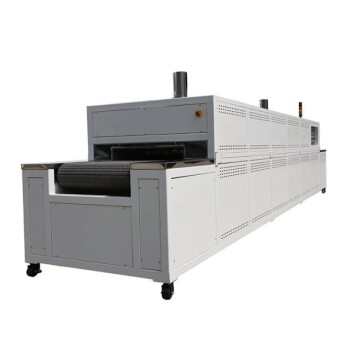
The primary role of a laboratory muffle furnace in the processing of titania-silica composite coatings is to provide the high-temperature environment necessary for thermal calcination and crystallization.
This process typically occurs at temperatures around 500°C, where the furnace facilitates the conversion of amorphous titania precursors into a stable, photoactive anatase phase. Beyond phase transformation, the furnace drives the chemical reinforcement of the coating by promoting the formation of Si-O-Si and Ti-O-Ti functional bonds, which are essential for the film's structural integrity.
Core Takeaway: The muffle furnace acts as the catalyst for structural evolution, transforming a volatile liquid precursor into a dense, mechanically durable, and chemically stable ceramic coating with specific hydrophilic properties.
Phase Transformation and Molecular Reinforcement
Conversion to the Photoactive Anatase Phase
The muffle furnace provides the thermal energy required to reorganize the atomic structure of the titanium dioxide component. This heat treatment converts the amorphous precursor into the anatase crystalline structure, which is the specific phase responsible for the coating's photocatalytic activity.
Strengthening the Molecular Network
High-temperature exposure facilitates the condensation of functional groups, leading to the reinforcement of Si-O-Si and Ti-O-Ti bonds. This molecular cross-linking creates a robust inorganic framework that significantly improves the mechanical durability and wear resistance of the thin film.
Establishing Hydrophilic Properties
The thermal environment within the furnace is critical for defining the final surface chemistry of the composite. By precisely controlling the temperature, researchers can ensure the coating achieves the desired hydrophilic properties, which are vital for self-cleaning and anti-fogging applications.
Densification and Substrate Integration
Removal of Organic Residues
During the initial stages of heating, the muffle furnace eliminates organic solvent residues and volatile byproducts left over from the deposition process. This purification is necessary to prevent defects and ensure the final coating consists of a pure, dense amorphous network of silica and crystalline titania.
Enhancing Bonding Strength
The furnace induces a thermal induction effect that can facilitate the diffusion of coating components into the surface of the substrate, such as aluminum. This results in a tight diffusion layer, which drastically increases the bonding strength and prevents the coating from peeling or delaminating under stress.
Achieving Material Densification
As the inorganic components undergo heat treatment, the silica-titania matrix experiences densification. This reduction in porosity leads to a more impermeable protective barrier, enhancing the material's chemical stability and resistance to environmental corrosion.
Understanding the Trade-offs and Limitations
Thermal Stress and Cracking
While high temperatures are necessary for crystallization, rapid heating or cooling within the muffle furnace can induce thermal stress. If the heating rate is not carefully controlled (often maintained at specific increments like 5°C per minute), the difference in thermal expansion between the coating and the substrate may cause micro-cracking.
Phase Over-Transformation
Exceeding the optimal temperature range can lead to unwanted phase transitions. For example, overheating may cause anatase to transform into rutile, which can diminish the photocatalytic efficiency of the titania-silica composite in certain applications.
Substrate Temperature Sensitivity
The choice of furnace temperature is often limited by the melting point or phase stability of the underlying substrate. When processing coatings on aluminum or specific alloys, the heat treatment must be balanced to achieve coating densification without compromising the structural integrity of the base metal.
How to Apply This to Your Project
Optimizing Your Heat Treatment Protocol
To achieve the best results with titania-silica coatings, your furnace settings should be tailored to the specific performance requirements of your application.
- If your primary focus is Photocatalytic Activity: Target a stable soak temperature of 500°C to ensure complete conversion to the anatase phase while preventing transition to rutile.
- If your primary focus is Mechanical Hardness: Prioritize a longer dwell time to maximize the density of the Si-O-Si amorphous network and ensure complete elimination of organic residues.
- If your primary focus is Substrate Adhesion: Implement a stepped heating treatment to allow for gradual diffusion and the formation of a robust interface layer, reducing the risk of delamination.
By treating the muffle furnace as a precision instrument for chemical synthesis rather than a simple heating tool, you can ensure the consistent production of high-performance composite coatings.
Summary Table:
| Process Function | Physical/Chemical Impact | Key Outcome |
|---|---|---|
| Thermal Calcination | Anatase phase crystallization | Enhanced photocatalytic activity |
| Molecular Cross-linking | Formation of Si-O-Si & Ti-O-Ti bonds | Improved mechanical durability |
| Organic Removal | Elimination of solvent residues | Material densification & purity |
| Diffusion Bonding | Creation of substrate interface layer | Superior coating adhesion |
Elevate Your Material Research with KINTEK Precision
Achieving the perfect anatase phase and structural integrity in titania-silica coatings requires uncompromising thermal control. KINTEK specializes in high-performance laboratory equipment, offering a comprehensive range of customizable furnaces, including:
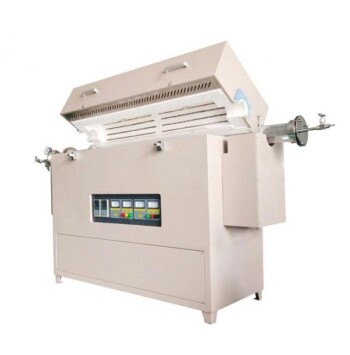
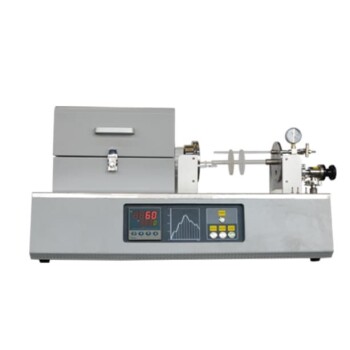
- Muffle & Tube Furnaces for precise calcination.
- Vacuum & CVD Furnaces for advanced thin-film deposition.
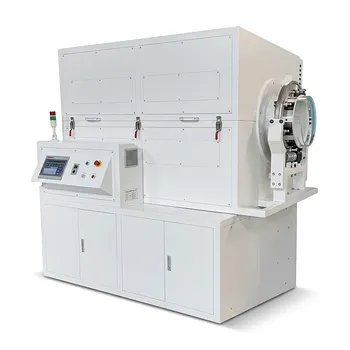
- Atmosphere & Rotary Furnaces for specialized material processing.
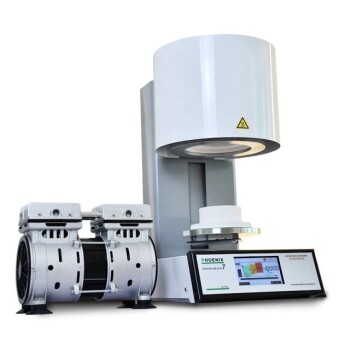
- Dental & Induction Melting Furnaces for unique lab requirements.
Whether you are a researcher aiming for superior photocatalytic properties or a manufacturer seeking durable industrial coatings, KINTEK provides the reliability and technical expertise you need.
Ready to optimize your heat treatment protocol? Contact our experts today to find the ideal furnace solution for your laboratory.
References
- M. Francis Luther King, G. Robert Singh. Sol-gel Spin Coated Hydrophilic Composite Titania-Silica Coatings on the Glass Substrates for Automotive Applications. DOI: 10.1051/e3sconf/202450901001
This article is also based on technical information from Kintek Furnace Knowledge Base .
Related Products
- 1200℃ Muffle Oven Furnace for Laboratory
- Laboratory Muffle Oven Furnace with Bottom Lifting
- 1800℃ High Temperature Muffle Oven Furnace for Laboratory
- 1400℃ Muffle Oven Furnace for Laboratory
- High Temperature Muffle Oven Furnace for Laboratory Debinding and Pre Sintering
People Also Ask
- Why is a muffle furnace essential for photoanode material annealing? Achieve high phase purity and conductivity.
- How does a high-temperature laboratory muffle furnace affect material properties? Transform Anodic Oxide Films Fast
- What is the primary function of a high-temperature laboratory muffle furnace in chemical synthesis? Achieve Precision.
- Why is a laboratory high-temperature muffle furnace required for the production of rGO? Optimize Thermal Exfoliation
- How is a laboratory muffle furnace used in 3D-printed PP-CF cross-linking? Achieve Thermal Stability at 150 °C